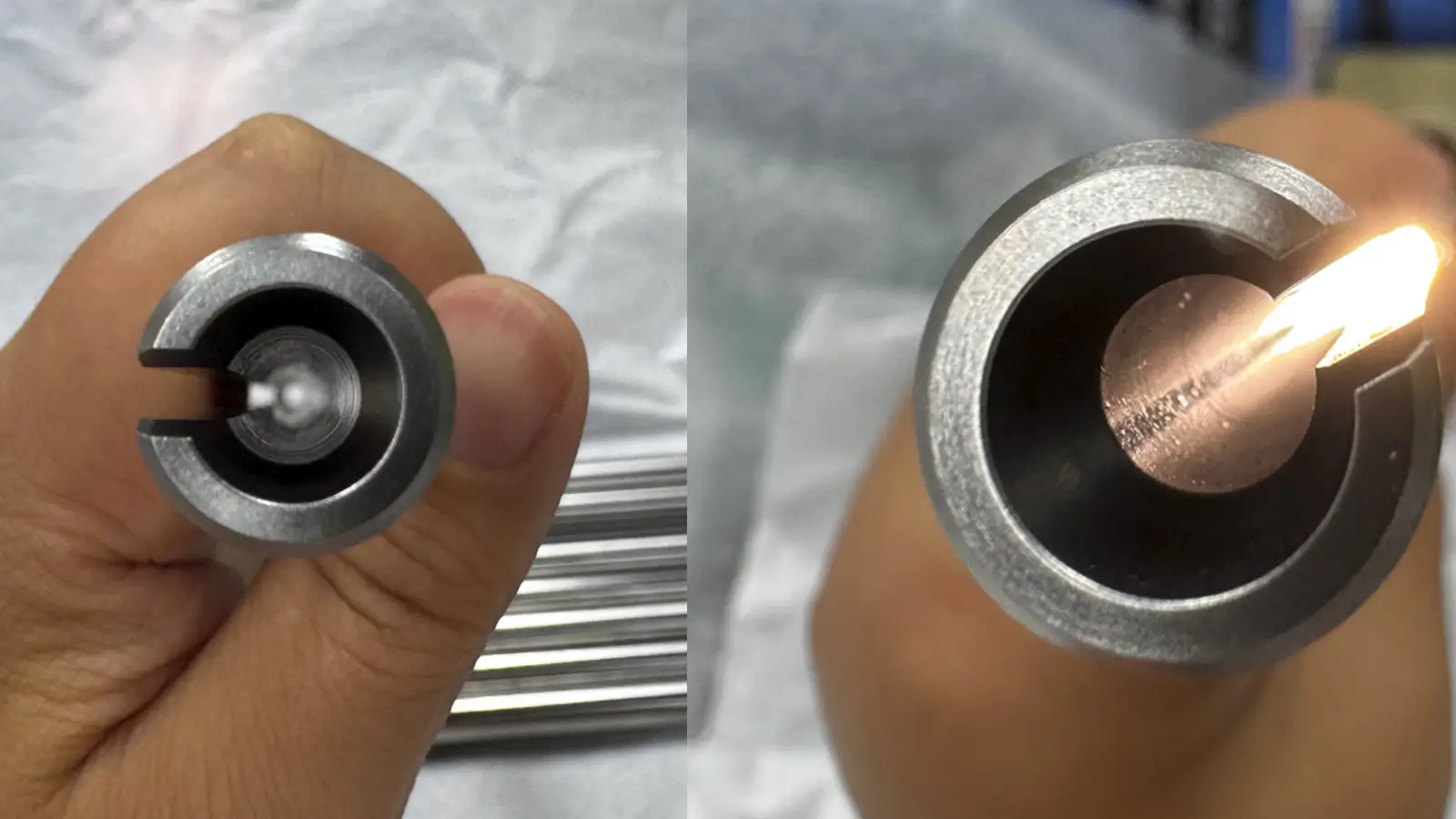
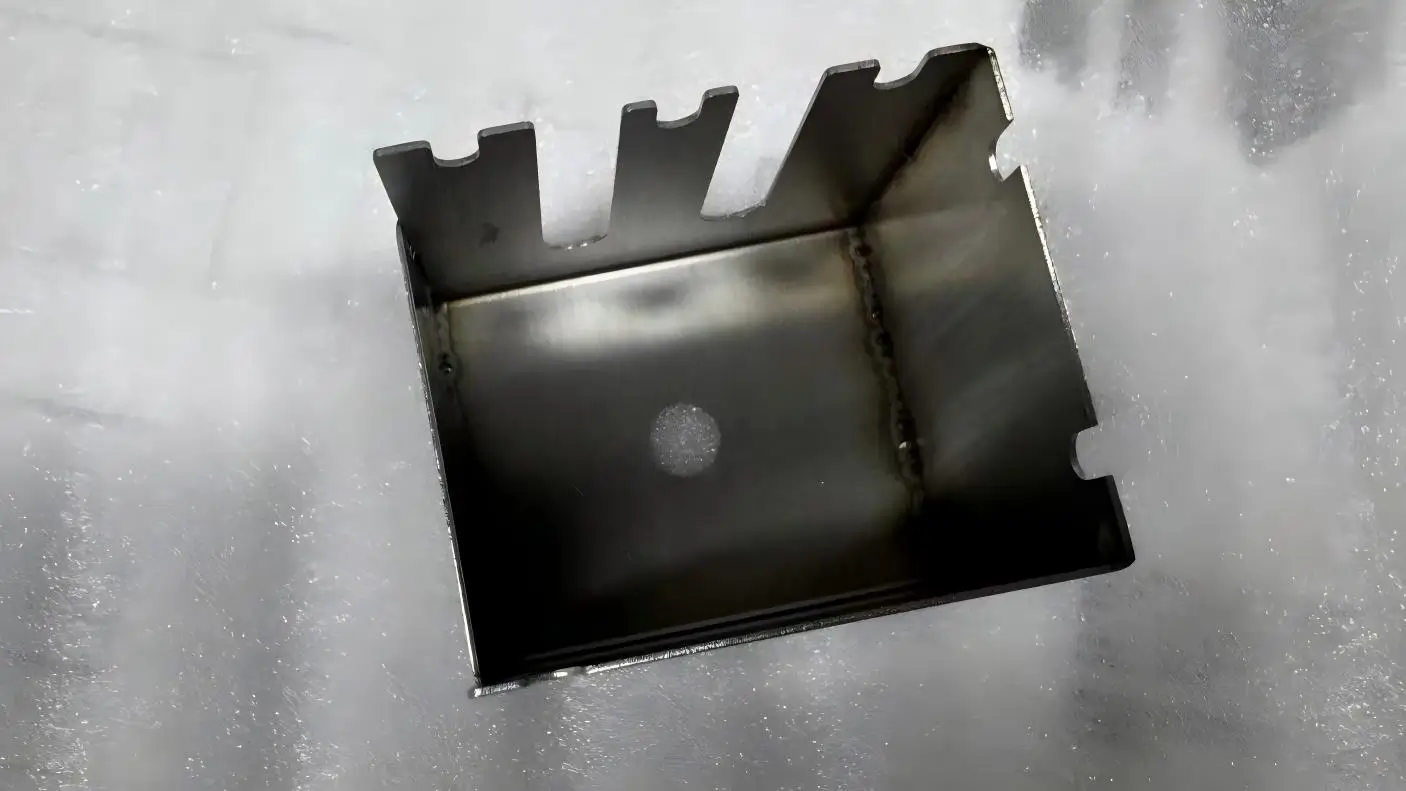
Stainless steel is widely used in CNC machining for components that require precision, strength, and corrosion resistance. Even high-quality machined parts often retain minor burrs, tool marks, or uneven surfaces.
Sandblasting stainless steel, also known as bead blasting, is a key post-machining process that cleans, smooths, and textures surfaces without affecting critical dimensions. It enhances surface appearance, coating adhesion, and consistency, making it essential for aerospace, automotive, medical, and decorative CNC parts.
This guide covers the benefits, proper blasting media, step-by-step process, and expert tips to optimize sandblasting stainless steel in CNC applications.
Key Takeaways:
Sandblasting stainless steel enhances CNC machined parts by removing imperfections and creating smooth, uniform, matte surfaces.
Proper abrasive media selection (glass beads, ceramic beads, steel shots, aluminum oxide) is critical for finish quality and corrosion resistance.
Sandblasting stainless steel, often performed using bead blasting media such as glass beads or ceramic beads, is a surface finishing process.is a surface finishing treatment process in which fine abrasive media, such as glass beads, sand, or aluminum oxide, are propelled at high velocity onto the stainless-steel surface by compressed air.

The process can make the surface cleaner and smoother without imperfections, and more textured or etched with matte finish. Besides, sandblasting is also a common base surface finishing for further treatments or coatings.
During the process of blasting fine abrasive media onto the surface by compressed air at high speed, various surficial contaminants can be totally cleaned away like rust, paint, or scale, making the surface smoother and cleaner.
What’s more, with the blasting media finely propelled on it, the surface can achieve a slightly textured feel instead a brightly polished one. And the final finish of the stainless steel crucially depends on the size and hardness of the abrasive media.
By cleaning off imperfections from the surface with particular abrasive media, sandblasting can make the stainless-steel part achieve specific surface finishes as design. There are various functions and benefits of sandblasting stainless steel.
Sandblasting can achieve a unique and appealing finish on stainless steel. By impacting the stainless-steel surface at high speed with spherical media, countless microscopic dimples are formed onto the part, creating a uniform, soft, non-reflective matte or satin texture.
Sandblasting stainless steel usually delivers a more modern, industrial, or understated elegant appearance.
Sandblasting would typically create a matte or stain textured surface, which means the surface is non-reflective or low-glare.
The textured surface can diffusely scatter light, rather than producing specular reflection as seen on a polished surface.
Therefore, sandblasted stainless-steel parts are suitable for applications where glare reduction is desired for better visual comfort, such as architectural settings, decorative components, interior design, or display device.
Sandblasting can mask or remove machining marks, weld discoloration, minor scratches, scale, rust, greases, or other contaminants and imperfections left on stainless steel during the machining process.
This makes the sandblasted surface cleaner and smoother.
In addition, the process permits the fine-tuning of the finishing level, which allows uniformity in performance and appearance.
Since sandblasting can present a level of surface on the stainless steel to roughen it, the process can finally enhance the adhesion of primers, paints, sealants or other further coatings.
It is established that the levels and roughness added by the sandblasting procedure can increase the surface area, resulting in better bonding strength of the new layer.
Sandblasting is also commonly applied as a pre-process before further coatings, paints, or other surface treatments.
Due to that, sandblasting can remove contaminants and create a clean and roughened surface, the adhesion and longevity of subsequent treatments can certainly be enhanced.
Sandblasting can enhance the intrinsic strength of stainless steel. In some cases, bead blasting may introduce mild compressive residual stresses on the surface, which can contribute to improved fatigue resistance.
These stresses counteract tensile stresses generated during service, thereby inhibiting the initiation and propagation of fatigue cracks.
What’s more, the hardness of part can be improved slightly for more resistance to wear, scratching, and minor impacts.
It can help maintain or improve corrosion performance when followed by proper cleaning and passivation.
Therefore, it can improve the overall corrosion resistance of the stainless steel.
Compared with polished surfaces, sandblasted stainless steel can be maintained well much easier.
Because of the uniform textured finish, new fingerprints, smudges, and minor scratches tend to blend into the texture.
Sandblasted stainless steel can maintain clean for longer periods than polished parts. Regular cleaning with common cleaners for stainless steel is typically sufficient to keep the appearance of sandblasted stainless steel freshly clean.
It is essential to select the appropriate blasting media for stainless steel sandblasting.
Various blasting media are used for sandblasting, including glass beads, ceramic beads, steel shots, aluminum oxide, silicon carbide, sand, and carbon grit.
The type of abrasive media crucially determines the cleaner, roughness, and corrosion resistance of the final surface. Here are the list of proper blasting media for stainless steel.
Glass beads are typically the preferred blasting media for stainless steel, especially when a fine, decorative surface finish is required.
The common glass beads are usually made of soda-lime glass or borosilicate glass, with 5.5-6.5 Mohs hardness and 50-500 μm grit size. They are spherical and smooth.
Sandblasting with glass beads can achieve a uniform, matte or stain finish. And the abrasive action is gentle and uniform by spherical smooth beads without cutting action but impact only, which would not damage the base material.
Additionally, the glass beads are completely iron-free, meaning that it would not leave free iron on the surface to cause contaminant and corrosion. And surface compressive stress can be slightly increased to improve fatigue performance.
However, glass bead blasting has limited ability to remove stubborn oxide layers or heavy rust, so it is typically used for slight deburring and cleaning. And glass beads are fragile and prone to breakage, resulting in a shorter service life.
Ceramic beads are commonly regarded as a better alternative to glass beads with superior performance. They are made of zirconia or alumina, with 7-8.5 hardness and spherical shape. Its abrasive action is gentle between that of glass bead and aluminum oxide.
Sandblasting process with ceramic beads can create extremely fine and uniform matte appeal, without free iron left. And with more stable controllable toughness for surfaces, it is suitable for parts requiring high surface consistency.
What’s more, with excellent toughness, ceramic beads resist fracture, thereby can remove harsh contaminants without damaging the base material. Compared with glass beads, they are much more durable and can be used much more times.
However, the cost of ceramic beads are high. And if the grit size is excessive, slight cut might appear due to the extreme hardness.
Stainless steel shots are comprised with small spherical particles made from hardened stainless steel. They are usually applied to parts requiring strong cleaning for heavy contaminants or shot peening without any free iron. Steel shots are useful to remove heavy scale and rust from the surface.
Aluminum oxides are very hard and angular abrasive media made of pure synthetic corundom. With 9 Mohs hardness and strong cutting power, sandblasting with aluminum oxides can remove hard scale, heavy rust, and weld spatter efficiently and effectively.
The method is also suitable for profiling to enhance adhesion of subsequent coatings and binders. It can create a coarser and darker matte surface with etched texture. And the durability of aluminum oxide is also good enough for repeat usage.
However, for possible damages caused by the strong cut, it is suggested to apply aluminum oxide sandblasting for preliminary heavy cleaning before finer surface finishing. And the process would generate much dust, needing a proper dust extraction system.
Note: common sand and carbon steel grit are not suitable for sandblasting stainless steel. The former particles are irregularly shaped and contain free silica. It poses a silicosis risk to operators and has been banned in many countries. The latter would leave free iron within the surface.
Sandblasting stainless steel involves securely setting up the workspace, cleaning the surface, preparing and calibrating the equipment, safely blasting abrasive media onto the metal at controlled angles and pressures, continuously monitoring the process for uniformity, and finally removing residual media and dust to achieve a smooth, clean, and textured finish.
Sandblasting stainless steel is a critical surface finishing technique that can achieve a matte and smooth appearance. The final sandblasting effect depends on the proper abrasive media, pressure, angle, and distance.
This blog concludes the functions and benefits of sandblasting stainless steel and meanwhile provides a list of proper blasting media for stainless steel.
Additionally, the processes and tips for stainless steel sandblasting are also presented on this blog.

5-Axis CNC machining is a manufacturing process that uses computer numerical control systems to operate 5-axis CNC machines capable of moving a cutting tool or a workpiece along five distinct axes simultaneously.

China is the best country for CNC machining service considering cost, precision, logistic and other factors. Statistical data suggests that China emerges as the premier destination for CNC machining.

Selecting the right prototype manufacturing supplier in China is a critical decision that can significantly impact the success of your product development project.

Machining tolerances stand for the precision of manufacturing processes and products. The lower the values of machining tolerances are, the higher the accuracy level would be.