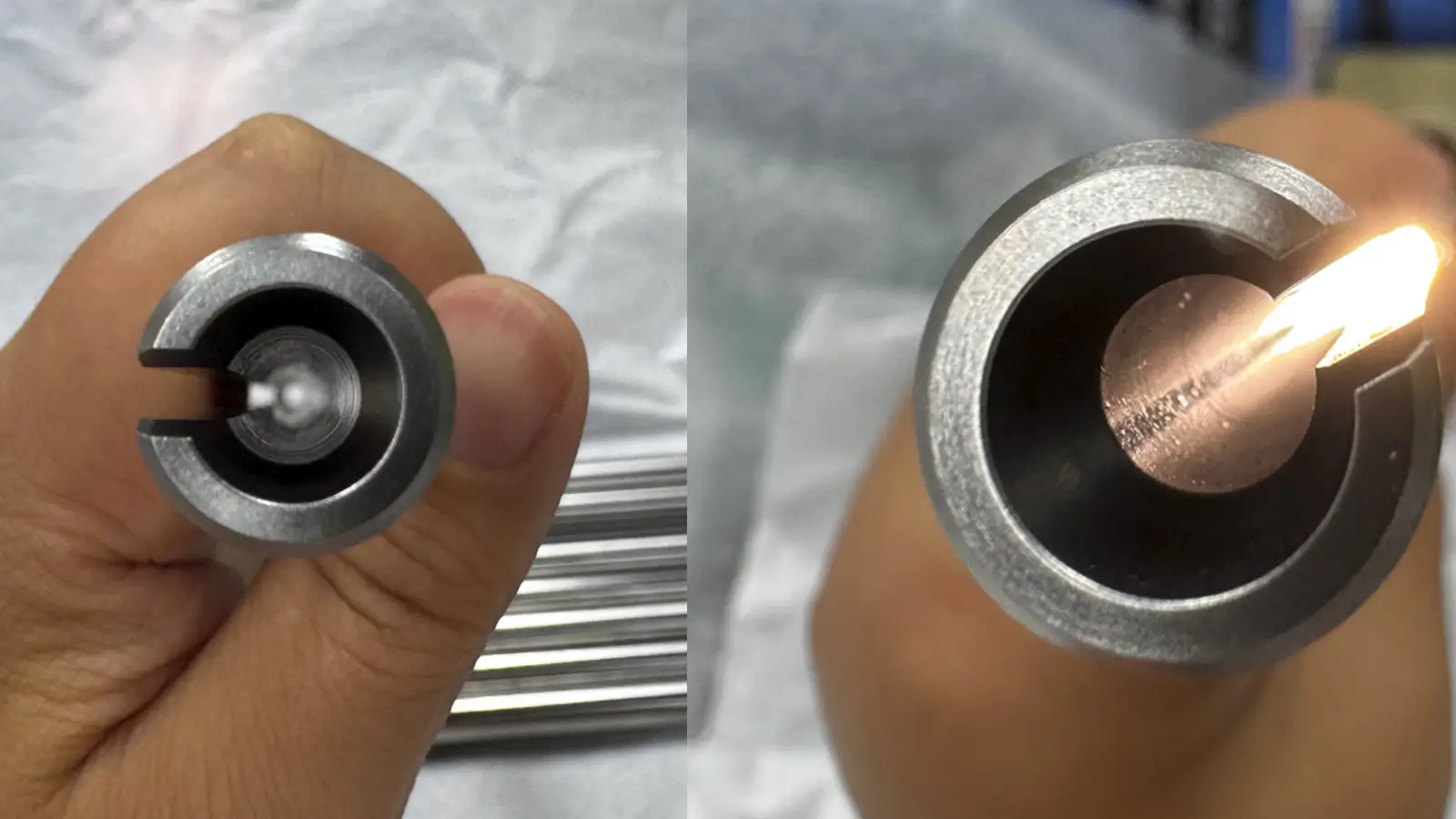
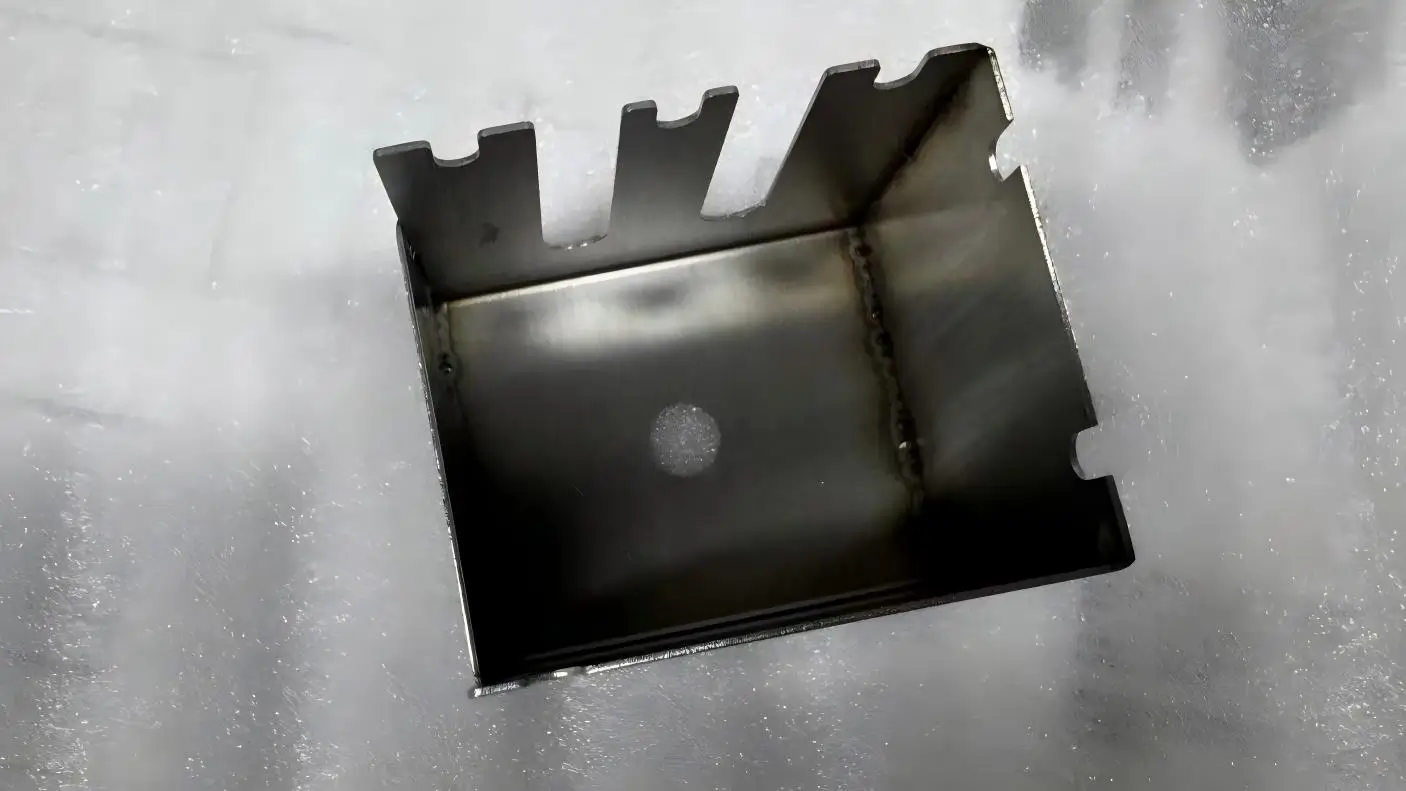
High-precision CNC machining parts for uav is essential for UAV aluminum components, ensuring structural integrity, aerodynamic symmetry, and flight reliability.
Lightweight alloys like 6061 and 7075 are commonly used, but thin-wall geometries and complex features pose challenges such as deformation, thermal distortion, and vibration-induced errors.
Achieving tight tolerances of ±0.01–0.02 mm requires advanced strategies including five-axis machining, optimized fixturing, adaptive toolpaths, and real-time process monitoring.
Surface quality, measured in Ra ≤ 1.6 μm, directly affects assembly accuracy and aerodynamic efficiency.
Systematic quality control through coordinate measuring machines, first article inspection, and statistical process control ensures repeatable precision from prototyping to low-volume production.
Certified suppliers (ISO 9001, AS9100) further guarantee traceability and long-term reliability.
Integrating material selection, process optimization, and rigorous inspection enables UAV aluminum components to meet performance, safety, and payload requirements consistently.
In the design and manufacturing of unmanned aerial vehicles (UAVs),high-precision CNC machining directly determines overall performance,reliability, and flight safety.
Aluminum components used in UAVs must maintain structural integrity and functional stability under demanding aerospace conditions.
Only through high-accuracy CNC machining can the required geometric precision and superior surface quality be consistently achieved.
Especially in lightweight UAV design, aluminum parts often involve high material removal rates and complex geometries.
If machining precision is insufficient, it will negatively impact aerodynamic efficiency, endurance, and even flight safety.
Therefore, precision CNC machining for UAV aluminum parts is not optional but a fundamental requirement.
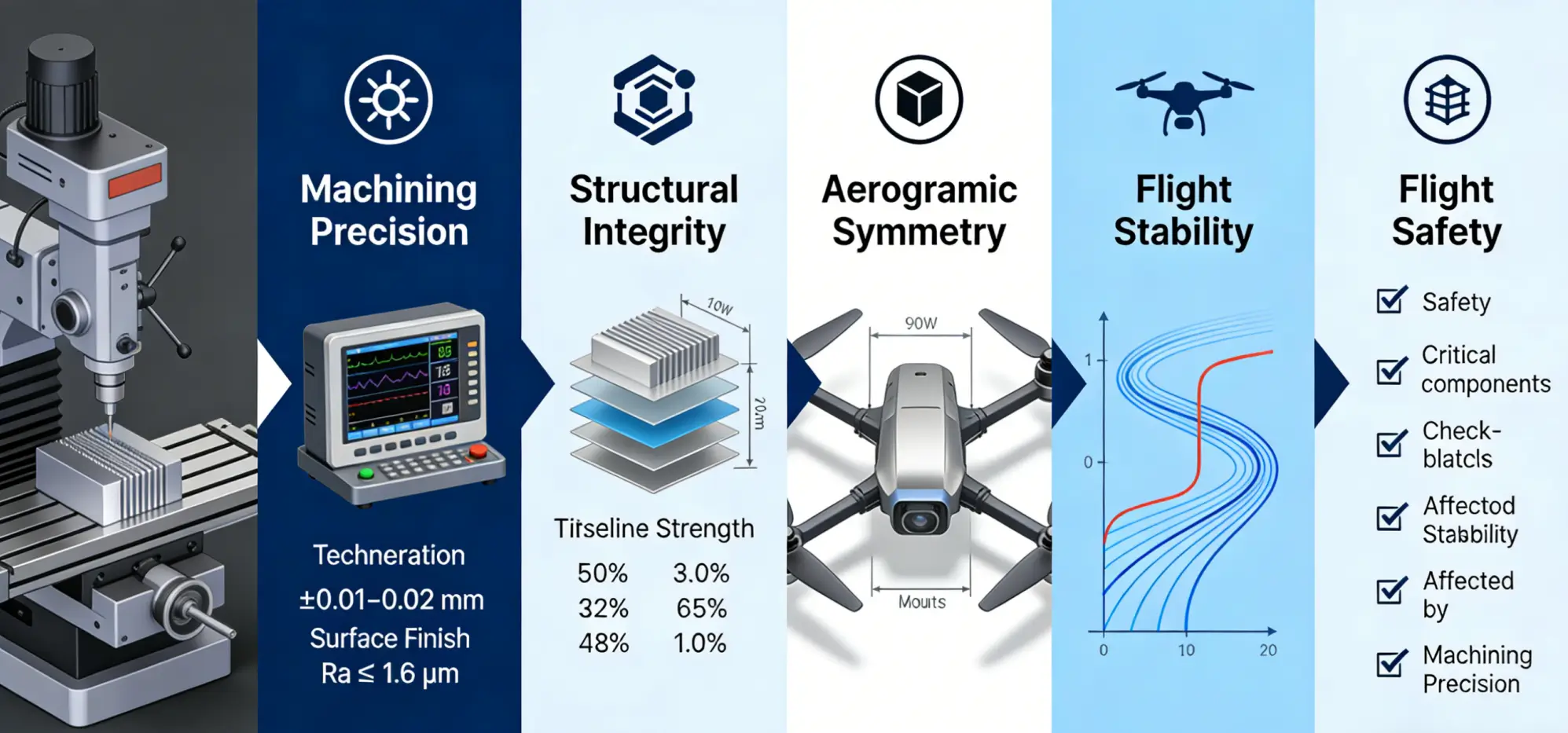
To achieve longer flight time and higher maneuverability, UAVs extensively adopt lightweight aluminum alloys.
As a result, component designs often feature thin walls and complex curved surfaces.
During machining,UAV aluminum components mainly face the following precision challenges:
To overcome these challenges, precision CNC machining for UAV aluminum parts must focus on three core strategies:
enhancing system rigidity (through optimized fixture design and appropriate machine selection),implementing intelligent toolpath optimization (such as adaptive machining and trochoidal milling),and strictly controlling thermal stability via advanced cooling solutions and real-time process monitoring.
Only by deeply integrating high-precision CNC machining with the lightweight requirements of UAV design can aluminum components achieve both reduced weight and aerospace-grade structural accuracy and reliability.
In UAV systems, the geometric accuracy achieved through high-precision CNC machining forms the foundation for superior flight stability and efficient payload capability.
For aluminum components used in UAVs—especially structural parts and power interface components—there is a direct causal relationship between machining accuracy and overall system performance.
Poor dimensional accuracy triggers a series of cascading negative effects.
Failure to achieve tight-tolerance machining leads to improper assembly clearances or stress concentration, which in turn generates abnormal vibration and energy loss during flight.
Such vibration not only shortens the service life of motors and bearings and increases noise levels, but also significantly degrades flight smoothness and control precision, ultimately reducing flight endurance.
In addition, misalignment of connecting components forces the flight control system
to perform continuous compensation and correction, further consuming valuable battery energy and lowering overall efficiency.
For core aerospace aluminum components such as UAV frames, arms, and motor mounts,even minimal deviations can be amplified under flight conditions.
For example, a deviation of as little as 0.05 mm is sufficient to cause motor shafts to become non-parallel or rotor planes to lose coplanarity, thereby disrupting aerodynamic symmetry.
This asymmetry generates uneven lift distribution and continuous unintended moments,forcing the flight control system to operate at high intensity to maintain attitude.
In severe cases, it may even induce resonance, posing a direct threat to flight safety.
Therefore, these components must be machined with extremely high geometric consistency and positional accuracy.
One of the core contributions of high-precision CNC machining lies in its ability to achieve extreme lightweighting through precise material removal while fully preserving structural strength.
For UAV aluminum components, this means material can be accurately distributed only where load-bearing capacity is required, without compromising structural integrity, thereby optimizing the weight-to-strength ratio.
A higher weight-to-strength ratio translates directly into two critical advantages.
First, it allows UAVs to carry heavier mission payloads—such as cameras, sensors,or transported goods—thereby expanding operational capability.
Second, under the same payload conditions, it enables longer flight time.This represents one of the most critical performance indicators in UAV design.
In the pursuit of lightweight structures and high performance in UAV manufacturing,high-precision CNC machining is a core production process.
However, when machining aerospace-grade aluminum components,manufacturers frequently encounter a series of industry-specific technical challenges.
If these issues are not effectively addressed, they can directly lead to lower yield rates,rising production costs, and ultimately reduced reliability of the finished UAV system.
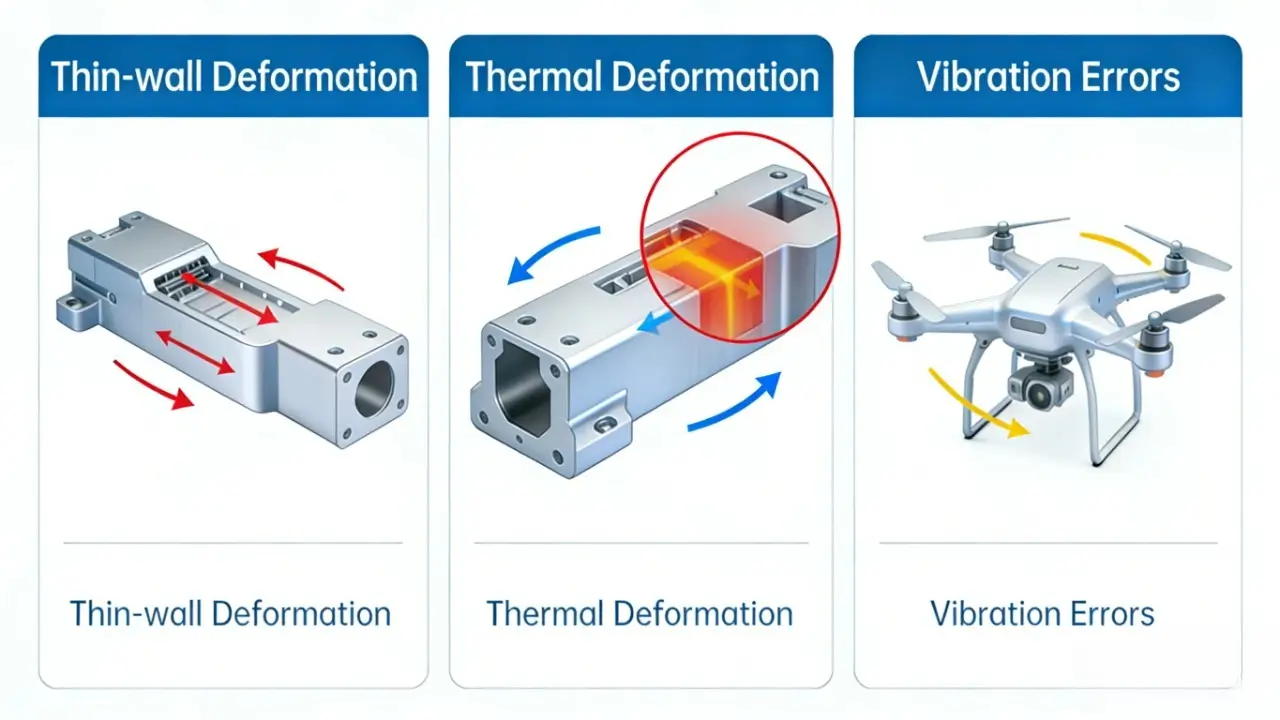
Deformation and warping represent some of the most challenging problems in the machining of UAV aluminum components, especially for thin-wall parts with complex geometries.
The root causes primarily originate from internal material stresses and stresses introduced during the machining process.
Common UAV aluminum alloys such as 6061-T6 and 7075-T6 retain locked-in residual stress after rolling and heat treatment.
During CNC machining, material removal disrupts the original stress equilibrium.
As a result, parts may undergo gradual deformation after being released from the fixture or during subsequent processes, causing dimensions to deviate from tight-tolerance machining requirements.
Improper fixturing strategies represent another major source of deformation.
Excessive clamping force can elastically deform the part, and once the fixture is released,springback leads to out-of-tolerance dimensions.
Conversely, insufficient support allows cutting forces to induce vibration and localized plastic deformation during machining.
Experience-based insight: In real-world UAV prototype machining,more than 30% of aluminum CNC part scrap can be attributed to improper fixturing.
This clearly highlights the critical importance of fixture design and clamping strategy in precision CNC machining.
To address these issues, experienced high-precision CNC machining suppliers typically adopt systematic countermeasures.
Multi-stage rough machining combined with stress-relief aging is used to gradually and symmetrically remove excess material, allowing internal stresses to be fully released before finishing.
In addition, flexible or vacuum fixturing is widely applied.By optimizing clamping point distribution and applying uniform pressure through vacuum fixtures or custom flexible tooling, parts can be securely held with minimal and evenly distributed clamping force.
This approach is especially effective for thin-wall UAV aluminum components.
For UAVs, surface quality is not merely an aesthetic concern but a functional performance parameter.
Rough surfaces disrupt airflow, increase drag, and complicate precision assembly.
Typical UAV aluminum parts require a surface roughness of Ra ≤ 1.6 μm to ensure reliable assembly fit and acceptable appearance.
For critical aerodynamic areas such as wing leading edges and propeller hubs that directly interact with airflow, requirements are even more demanding, often reaching Ra ≤ 0.8 μm or lower in order to minimize air friction and turbulence.
Surface defects are most commonly caused by tool wear and improper machining parameters.
Dull cutting tools tend to deform rather than cut the material, resulting in micro-burrs,surface tearing, and work-hardened layers.
At the same time, incorrect feed rates, spindle speeds, or depths of cut can induce chatter and built-up edge formation, leaving visible tool marks on the machined surface.
Advanced high-precision CNC machining ensures surface quality by integrating intelligent programming with real-time process control.
Smooth and optimized toolpaths are applied by using blended transitions, such as filleted corners instead of sharp directional changes, to reduce cutting shock and vibration.
During the machining of curved surfaces or corners, adaptive feed and spindle control allows the CNC system to automatically adjust feed rates in order to maintain a constant cutting load.
When combined with high-dynamic-response spindles, this approach ensures stable cutting conditions and fundamentally eliminates vibration-induced tool marks, resulting in consistent aerospace-grade surface finishes.
When facing complex machining challenges, leading manufacturers rely on a series of proven high-precision CNC machining strategies.
These solutions not only ensure the achievement of tight-tolerance requirements,but also enhance the structural integrity, reliability, and production efficiency of UAV aluminum components through process optimization at the source.
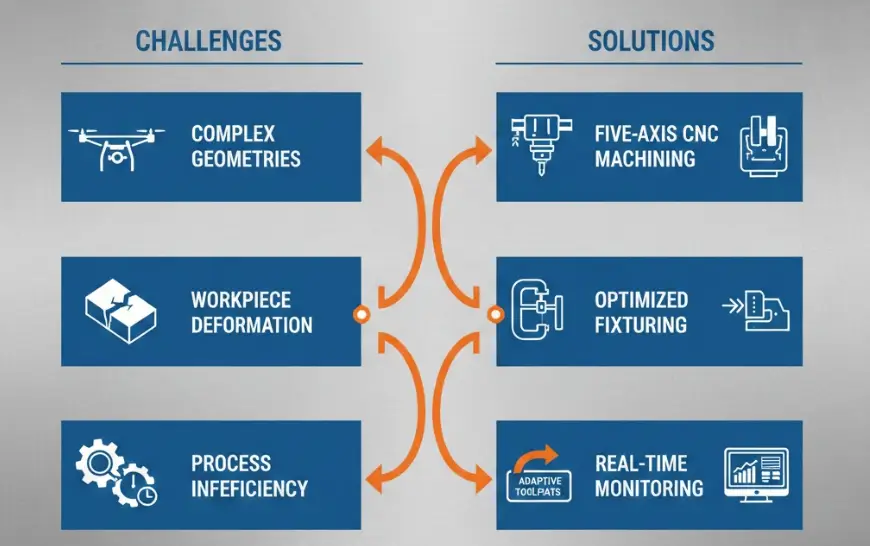
For aerospace aluminum components with complex geometries and stringent accuracy requirements, traditional three-axis machining often requires multiple setups.
This introduces repeated positioning errors and makes the machining of thin-wall features or deep cavities extremely challenging.
Five-axis CNC machining has therefore become a core solution to address these limitations.
One of the most significant advantages of five-axis CNC machining is the ability for the cutting tool to approach the workpiece from virtually any direction.
This allows most, or even all, features of a component to be completed in a single setup.
By eliminating repeated re-clamping, tolerance accumulation caused by multiple repositioning steps is fundamentally avoided.
As a result, the relative positional accuracy between complex geometric features,such as multi-angle planes, contoured surfaces, and irregular holes, can be reliably ensured.
In practical UAV manufacturing, five-axis CNC machining is particularly well suited for aluminum components such as multi-angle mounting brackets and servo arms,where all mounting faces and connection holes can be precisely machined in one setup.
It is also highly effective for streamlined housings and fairings that require accurate reproduction of complex aerodynamic surfaces.
In addition, highly integrated fuselage frames benefit from the ability to machine internal ribs, cavities, and external contours in a single coordinated process,supporting both structural optimization and lightweight design.
With high-performance five-axis machine tools, professional CAM programming,and in-process probing systems, complex aerospace components of this type can typically achieve dimensional accuracy within ±0.01 mm.
This level of precision is verified through full-dimensional inspection using coordinate measuring machines.
Such measurable and repeatable accuracy is a clear indicator of the maturity and reliability of advanced UAV aluminum machining solutions.
Material selection forms the foundation of manufacturing quality.
For UAV components with different functional requirements, scientifically selecting the appropriate aluminum alloy grade is a prerequisite for successful high-precision CNC machining.
Correct alloy selection significantly improves machining efficiency,component performance, and batch-to-batch consistency.
Aluminum alloy 6061 is widely recognized for its balanced mechanical properties,excellent corrosion resistance, and outstanding machinability.
During CNC machining, chip evacuation is stable and predictable,and tool wear remains relatively low.
This alloy is well suited for components where extreme strength is not the primary requirement, but good formability and surface appearance are essential.
Typical applications include UAV housings, equipment covers,non-load-bearing brackets, and various connection components,where high productivity and consistent surface finish quality are critical.
Aluminum alloy 7075, by contrast, is an aerospace-grade ultra-high-strength material.
Its strength approaches that of many steels, making it the preferred choice when achieving the highest possible weight-to-strength ratio is the design objective.
However, its high hardness and strength also present greater machining challenges,placing higher demands on cutting tools, parameters, and process stability.
In UAV manufacturing, 7075 aluminum is primarily used for high-load critical structural components.
These include main fuselage frames, landing gear components, motor mounting plates,and primary wing spars.
By using 7075 aluminum in these areas, maximum lightweighting can be achieved while maintaining sufficient safety margins.
Experience shows that precise alloy selection is far more than a simple material substitution.
An optimized UAV aluminum machining solution involves early collaboration at the design stage, where load conditions, operating environments, and machining cost are evaluated together.
In practice, correct alloy selection not only meets performance targets,but also enables optimized cutting parameters, reduced tool wear,and improved process stability.
This integrated approach typically shortens overall machining time by 15–20 percent and significantly improves dimensional consistency and long-term stability,delivering measurable gains in both performance and production efficiency.
In the UAV industry—especially for commercial and industrial-grade applications—product reliability is directly tied to mission success and operational safety.
As a result, for the manufacturing of UAV aluminum components, a rigorous, traceable quality control and certification system that complies with international standards is just as critical as high-precision CNC machining itself.
This system not only ensures compliance with engineering drawings, but also serves as the foundation for earning market trust and guaranteeing long-term, stable operation of UAV platforms.
For UAV aluminum parts where tolerances are often measured in hundredths of a millimeter, precision machine tools alone are not sufficient to guarantee final quality.
A closed-loop, data-driven inspection and control system is essential to ensure that both first articles and mass production consistently meet tight-tolerance machining requirements.
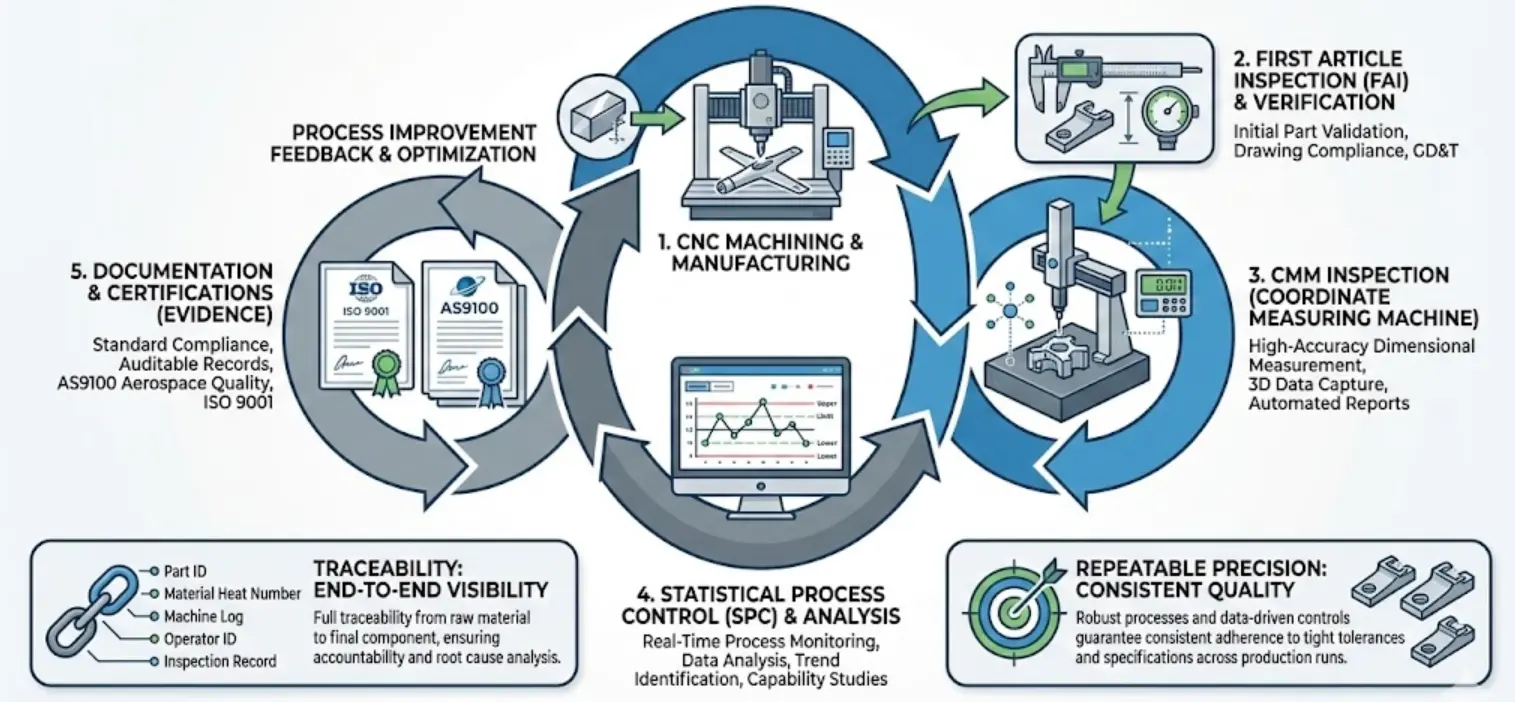
When selecting a machining supplier, certification credentials serve as an objective benchmark of the maturity of its quality management system and its level of industry specialization.
For UAV aluminum component machining, the following certifications are particularly critical.
Industry data and practical experience consistently show that certified CNC machining suppliers holding advanced certifications such as AS9100—and rigorously implementing the precision inspection and process control measures described above—exhibit significantly lower defect rates in UAV aluminum component manufacturing compared with suppliers lacking robust quality systems.
In UAV engineering, where ultimate reliability is non-negotiable, investing in certified high-precision CNC machining capability is, in essence, purchasing the most reliable form of insurance for final product success.
From proof of concept to commercial deployment, the manufacturing of UAV components must progress from a rapidly iterative prototyping phase to a stable and reliable low-volume production stage.
These two phases place different strategic demands on high-precision CNC machining.
Successful scaling requires a systematic approach that enables a seamless transition, ensuring precision machining quality while effectively controlling cost and lead time.
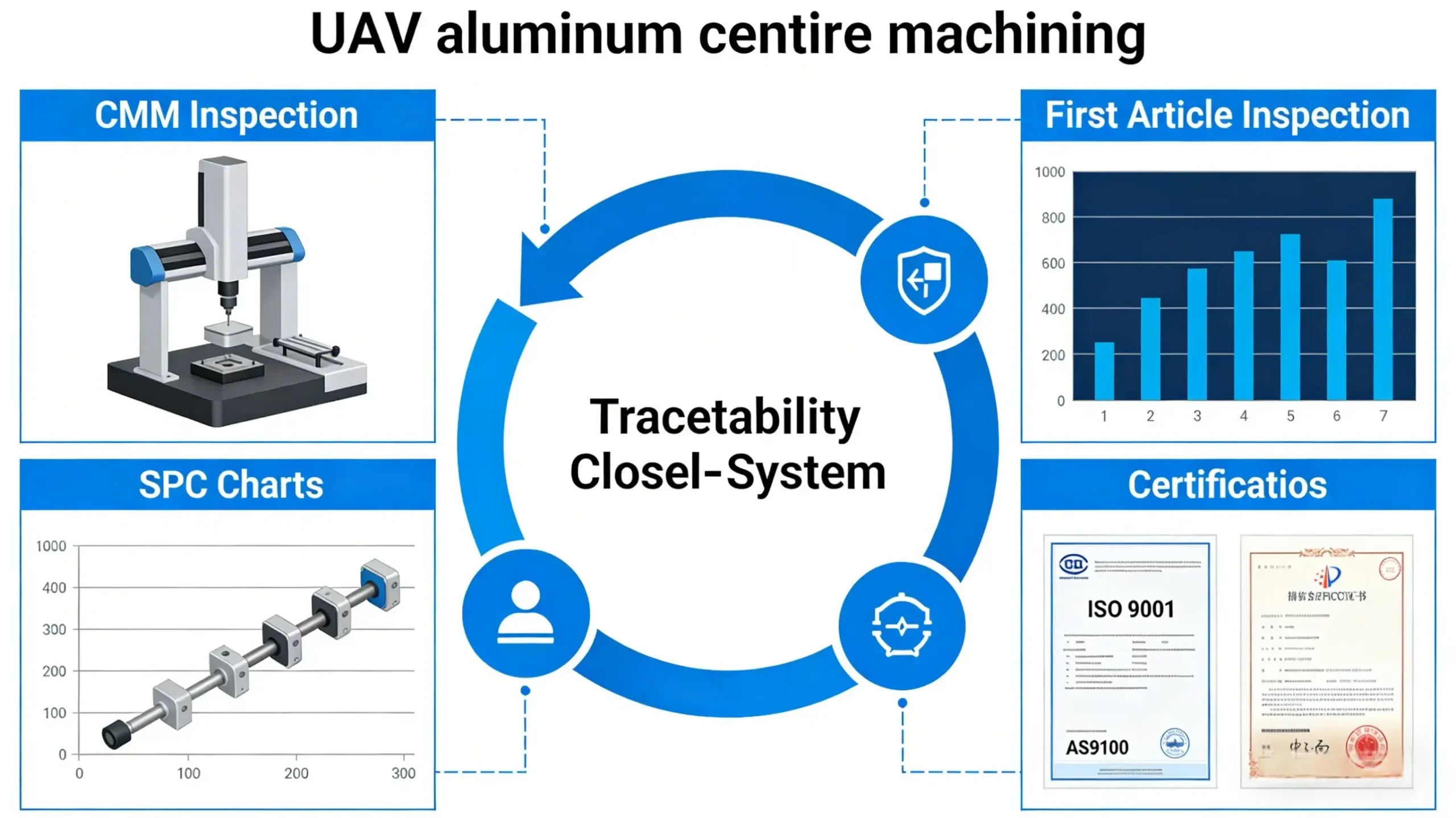
In the early stages of UAV research and development, speed, flexibility, and the reliability of design validation are critical.
CNC machining offers unmatched advantages during this phase.
Once the design is finalized and enters the low-volume production stage—typically 50 to 500 units or more—the primary objective shifts from making one quickly to making hundreds identically and consistently.
At this point, process consistency and repeatability become the top priorities.
A successful transition from prototype to production is fundamentally about transforming a proven high-precision CNC machining process into a stable and reliable manufacturing capability through systematic process locking and rigorous production control.
This transition affects not only the quality of individual UAV aluminum components, but also ensures that every UAV delivered to the market achieves the same high level of performance and reliability.
Choosing the right machining partner is a strategic decision that directly determines whether a UAV project can succeed in terms of cost control, lead time, and final performance.
A professional high-precision CNC machining supplier does more than convert drawings into physical parts; it acts as an extension of your manufacturing capability, supporting you through challenges ranging from prototyping to small-batch production.
The supplier’s technical depth and quality management system directly influence the reliability of UAV aluminum components and the overall market competitiveness of the finished product.
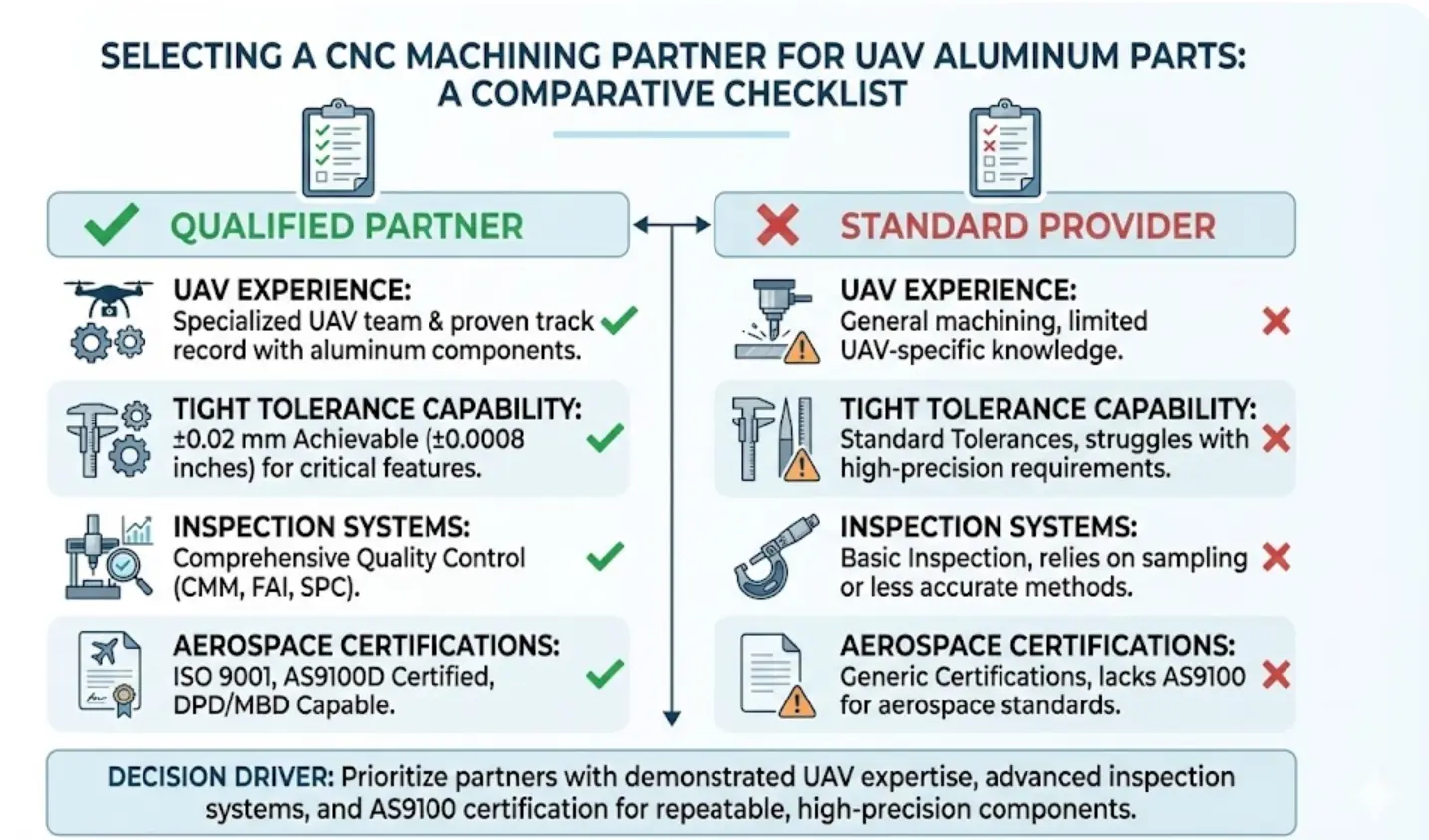
When selecting a supplier, pricing should never be the sole criterion. A systematic evaluation of technical capability and industry relevance is essential.
The following three factors form the foundation for identifying a qualified partner.
Working with a technically mature partner delivers value that extends far beyond the per-part machining cost and generates measurable returns across the entire product lifecycle.
First, design iteration cycles are reduced. Early-stage DFM feedback from experienced engineers helps eliminate manufacturability risks and performance bottlenecks before production, resulting in more robust designs and significantly fewer costly redesigns or rework loops.
Second, overall scrap rates are lowered. Through optimized machining processes, strict process locking, and proactive tool life monitoring, experienced suppliers maintain high consistency from first article to batch production. This substantially reduces part rejection, assembly issues, and downstream quality problems caused by dimensional deviation, deformation, or surface defects.
Third, time-to-market for UAV products is accelerated. Rapid prototyping shortens development timelines, while stable and repeatable small-batch production ensures a reliable supply chain. Together, these factors enable faster validation and earlier market entry.
Conversion-oriented insight: At first glance, suppliers with extensive UAV aluminum machining experience may not offer the lowest unit price.
However, when evaluated across the full project lifecycle—including design iterations, pilot-run scrap, production delays, and field failure risk—they often deliver a total project cost reduction of approximately 10 to 25 percent.
This advantage comes from a higher “right-first-time” success rate and smoother project execution.
Ultimately, partnering with a truly professional precision CNC machining supplier delivers not just components, but predictable outcomes, lower overall risk, and faster market responsiveness, making it the most sound decision for achieving comprehensive success in UAV projects.
Selecting a skilled CNC machining partner with proven UAV aluminum experience ensures design feasibility, tight tolerances, and reliable production.
Professional suppliers combine technical expertise, process locking, tool management, and certification compliance to reduce scrap, accelerate prototyping, and maintain uniformity across batches.
Proper alloy selection, intelligent fixturing, and five-axis machining allow precise material distribution, optimizing the weight-to-strength ratio and payload capacity without compromising structural integrity.
Rigorous inspection and traceable quality systems mitigate risks from dimensional deviations, warping, or surface defects.
Across the UAV lifecycle, these practices lower total project costs, shorten development timelines, and enhance operational safety.
Ultimately, a mature high-precision CNC machining partner delivers not only components but predictable, reproducible outcomes that support scalable production, long-term reliability, and consistent flight performance for commercial and industrial UAV platforms.

5-Axis CNC machining is a manufacturing process that uses computer numerical control systems to operate 5-axis CNC machines capable of moving a cutting tool or a workpiece along five distinct axes simultaneously.

China is the best country for CNC machining service considering cost, precision, logistic and other factors. Statistical data suggests that China emerges as the premier destination for CNC machining.

Selecting the right prototype manufacturing supplier in China is a critical decision that can significantly impact the success of your product development project.

Machining tolerances stand for the precision of manufacturing processes and products. The lower the values of machining tolerances are, the higher the accuracy level would be.