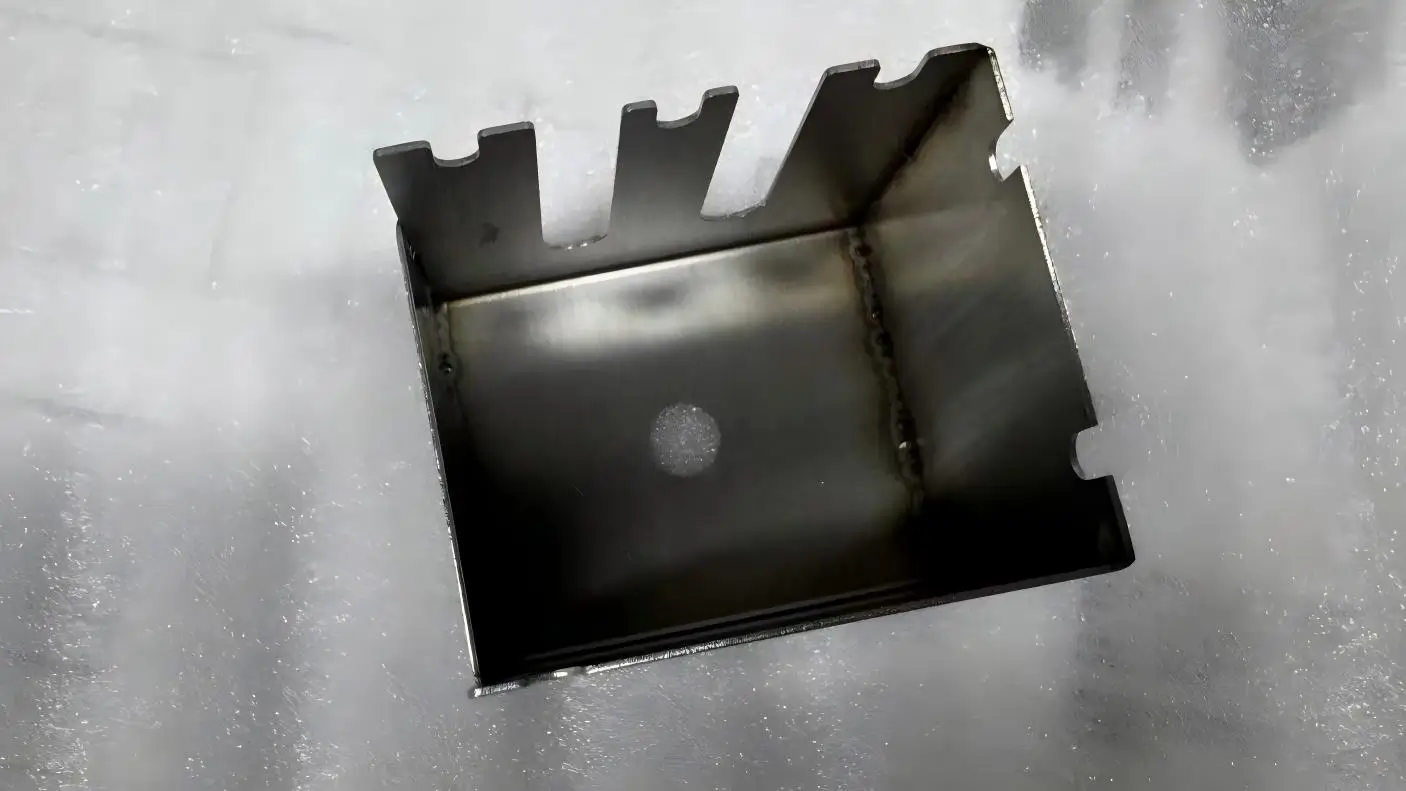
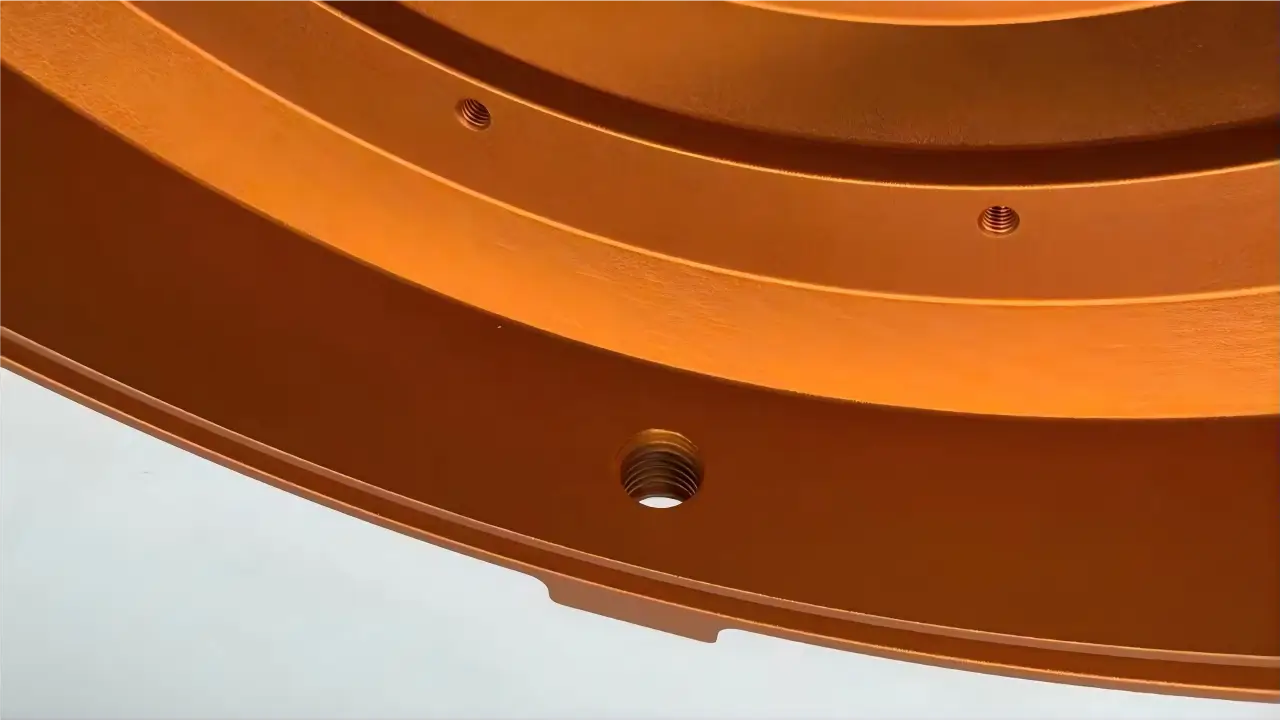
Polishing is one of the most common surface finishing methods that is used to clean, smooth, and brighten the part’s surface. For different requirements to various surfaces, there are different polishing types provided.
We have introduced various polishing methods before, such as mechanical polishing, electropolishing, magnetic polishing, vibration polishing, and abrasive flow polishing. Besides from those, ultrasonic polishing is also a kind of polishing technique.
Combined with high-frequency vibration and abrasive impact, ultrasonic polishing is particularly suitable for hard and brittle parts with complex and precision geometries. This article would provide a detailed guide of ultrasonic polishing.
Key Takeaways:
Ultrasonic polishing is a precision surface finishing technology that uses high-frequency ultrasonic vibration energy to power the polishing tool, combined with the impacting function of abrasive slurry or loose abrasive particles, to polish the parts.
It is particularly suitable for hard and brittle materials, complex cavities, and high-precision components requiring fine surface finishing.
And for various precision or high-end industries such as precise dies, medical devices, optical components, and aerospace parts, ultrasonic polishing is also commonly applied to meet their strict requirements on cleanliness, smoothness, and dimensional tolerance.
The working principle of ultrasonic polishing is as follows.
Ultrasound refers to mechanical vibrations with frequencies above 20 kHz. First of all, the ultrasonic generator converts alternating current (AC) into an electrical signal at ultrasonic frequencies, typically ranging from 20 kHz to 35 kHz.
Then the electrical signal would be converted into mechanical vibration by the transducer, whose vibration amplitude would be amplified by a horn or a booster to drive the tool head to vibrate.
The tool head will perform longitudinal vibrations within high frequency and small amplitude in the abrasive slurry or polishing paste to continuously strike the abrasive particles.
These particles, in turn, would repeatedly impact the part’s surface, and then the microscopic protrusions can be broken, sheared, and removed from the surface. Thereby the surface roughness would be reduced.
In addition, the liquid would generate cavitation under ultrasonic action. When these tiny bubbles collapse, instantaneous jets with high pressure can effectively remove surface material and carry away debris.
And the high-frequency vibration can also accelerate the circulation and movement of the abrasive particles.
Ultrasonic polishing is typically operated by three parts, including the generator, the acoustic system, and the abrasive media.
The ultrasonic generator is used to convert the standard AC power(50Hz/60Hz) into an AC signal with high frequency and voltage that drives the transducer. And a good generator can usually track the frequency automatically to adjust the output frequency in real time based on the wearing and loading situation of the tool head.
In addition, the vibration amplitude is adjusted by the power control. For fine mirror finishing, a smaller amplitude is typically better, while for removing spark marks, a higher power output is necessary.
The acoustic system is the core part for ultrasonic polishing to convert electrical energy into physical energy. It consists of three closely connected components, including the transducer, the booster, and the tool head.
The transducer of an ultrasonic polisher is typically made from piezoelectric ceramic discs. When high-frequency current passes through, high-frequency expansion and contraction movements would happen due to the piezoelectric effect.
The booster is used to amplify the vibration amplitude of the tool head. The original tiny amplitude generated by the transducer is usually insufficient for effective processing. It can amplify the amplitude from 10μm to 60μm by reducing the cross-sectional area.
And the booster of an ultrasonic polishing machine is often made of titanium alloy, stainless steel, or high-hardness steel for their extremely high fatigue strength and low acoustic loss.
The tool head of is the part directly in contact with the part or abrasive material. It can be made of bamboo sticks, ceramic-fiber files, copper, or even cork.
The types vary according to thee processing cavity. And the tool head is typically fixed to the end of the booster by threads or adhesion.
The abrasive media for ultrasonic polishing usually contains abrasive particles and suspensions. The abrasive particles often include diamond paste, boron carbide, and aluminum oxide. For processing to rougher finish, the grit sizes are usually W40 to W20(similar to 400 to 800 grit).
However, for fine mirror-like polishing, the abrasive material is typically W1 to W0.5 diamond slurry or paste, equivalent to 8000 grit or finer. Additionally, the suspensions are water-based or oil-based fluids that are used to cool, lubricate, and flush away micro-chips generated during the polishing process.
The processes of ultrasonic polishing can be mainly divided into three parts. And each part has finer steps.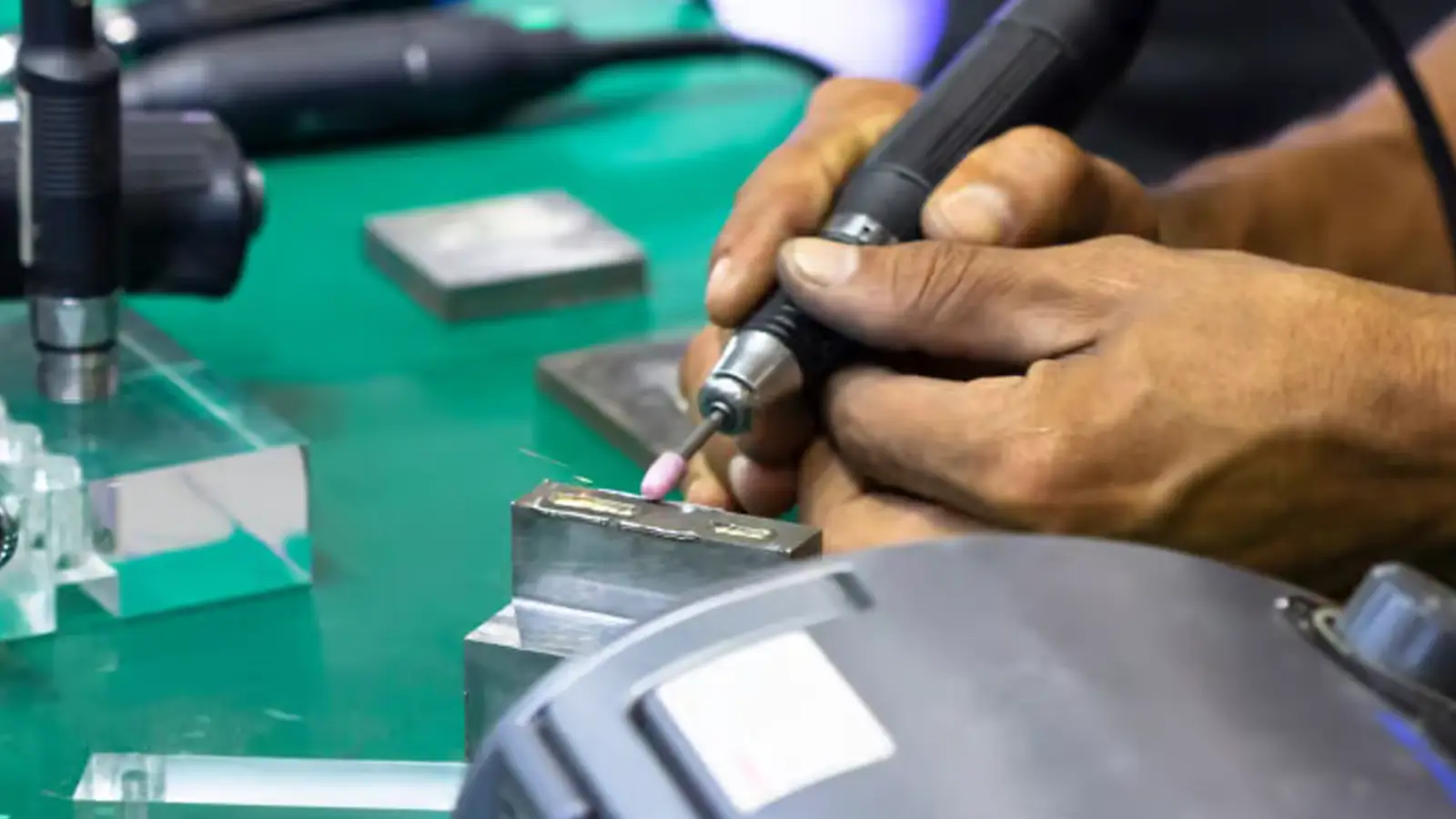
It is needed to clean the parts totally to keep any oil, dust, and residues from the surface. And then check the surface roughness.
If the surface is much rough, it is better to polish the part first by other method since ultrasonic polishing is typically used to turn the surface roughness from Ra 0.4–0.8μm to Ra 0.025μm.
Mix the abrasive particles with a carrier fluid in the proper ratio to form an abrasive slurry. Its composition directly determines both processing efficiency and surface quality.
It is supposed to select the abrasive particles and carrier fluid according to the part’s roughness, material, and surface requirement.
The water-based suspension has excellent cooling performance and cost lower, while the oil-based fluid has better lubrication and rust prevention, suitable for high-precision finishing.
It is better to select the tool that is made from materials softer that that of the parts to prevent embedding damage. And the end surface of the tool head must match the geometry of the polishing surface to ensure uniformity.
In addition, the tool head should be fastened securely to the end of the booster for flat and firm contact.
It is important to set up the proper parameters for ultrasonic polishing, including the frequency, amplitude, and static pressure. The frequency is typically set at 20 kHz ± 0.5 kHz.
Modern generators are equipped with Automatic Frequency Control (AFC), which continuously fine-tunes the frequency according to load variations, keeping the system at the transducer’s resonance point to ensure stable amplitude output.
And the amplitude is often 20 to 40μm for rough polishing and 5 to 10μm for fine polishing. The static pressure is usually set at 2 to 5 N.
Turn on the machine and start to polish the surface.
After ultrasonic polish, it is needed to place the parts in the deionized water for ultrasonic cleaning,
Use hot air or vacuum cleaning to dry the part.
Examine the surface under strong lighting for orange peel texture, scratches, or pitting. And use a surface roughness tester (Ra/Rz), profilometer, or microscope to verify compliance with technical specifications.
Collect abrasive-containing waste fluid and perform sedimentation and filtration before discharge to ensure compliance with environmental regulations.
Suitable for Various Geometries: Not limited by complex cavities, narrow grooves, slots, or blind holes. It is well suited for areas difficult to access with conventional tools and performs effectively even on hard materials such as cemented carbide.
Gentle Polishing: The cutting force of ultrasonic polishing is gentle, resulting in minimal overall stress on the part. This effectively prevents deformation, edge rounding, or collapse, making it ideal for precision molds and thin-walled components during final finishing. It is very suitable for hard and brittle materials.
High Quality: When combined with fine abrasives such as diamond or silicon carbide and ultrasonic vibration, extremely high surface finishes can be achieved.
Limited Efficiency: Compared with mechanical polishing, the material removal rate is relatively low, making it unsuitable for heavy stock removal.
High Cost: The cost for ultrasonic generators and boosters are relatively high.
Sensitivity to Parameters: Frequency, amplitude, and applied pressure must be precisely matched for optimal performance.
For Mold Industry: Ultrasonic polishing is widely applied to surface finishing of molds with complex cavities, narrow slots, small ribs, blind holes, etc. It is often used for plastic molds, die-casting molds, wire-drawing molds, and powder metallurgy molds.
For Precision Machinery: Ultrasonic polishing is usually combined with grinding wheels, belts, or honing for finishing deep small holes, micro-holes, and hard alloy components. In addition, it is also ideal for ultra-fine finishing of high-precision surfaces such as semiconductor or optical parts, often in conjunction with chemical or electrochemical polishing.
For Medical Devices: Ultrasonic polishing is often used for surgical instruments, implant, and microfluidic chips to achieve sterile surfaces.
For Jewelry: Ultrasonic polishing is also widely used for fine engraving and brightening of jade, gemstones, and precious metals.
Before Power-On: Inspect cords and plugs and ensure proper grounding. Keep the surrounding environment dry to avoid electrical hazards. And check that the machine housing, handles, and connection cables are intact, securely fastened, and free of oil or metal debris at connectors to prevent sparking or poor contacts.
Additionally, for machines with liquid tanks or polishing fluids, verify that the fluid level is appropriate and free of significant contaminants; replace the fluid if necessary.
During Operation: Monitor operating sounds, current readings, and temperature. Immediately stop the machine if you hear sharp squeals, fluctuating noises, or notice abnormal heating, to prevent damage to the transducer and power supply.
Meanwhile, it is better to avoid continuous full-power operation for extended periods and allow intermittent pauses to let the transducer and power modules cool, prolonging equipment life.
After Use: Wipe the machine and other tools to keep them dry and clean.
For Tool Head: Regularly inspect tool heads for wear, deformation, or cracks and replace immediately if issues are found to ensure consistent vibration performance and surface quality.
For Contact: Keep the threads and contact surfaces between the transducer, booster, and tool head clean, rust-free, and debris-free. You can lightly polish them with fine sandpaper if needed to ensure good fit and stable energy transfer. What’s more, they should be tightened together as specified.
For Power Section: Keep the control panel dry and avoid long-term operation in environments with strongly corrosive gases.
In addition, it is supposed to regularly check the grounding of power sockets. Never remove the ground pin from the plug. If the machine casing shows signs of being electrically live, stop operation immediately and inspect grounding and insulation.
For Transducer: Avoid impact, dropping, or striking the transducer, booster, or tool head since piezoelectric ceramics are fragile and prone to cracking under shock.
And regularly inspect the vibrator and vibration plates for discoloration, burn marks, perforation, or other anomalies. Repair or replace any faulty components promptly to prevent short circuits or further damage.
During Extended Inactivity: Turn off the power and unplug the machine. Coil the power cord neatly to prevent tripping, crushing, or damage. Store the equipment in a dry, well-ventilated location, avoiding high humidity or corrosive gas environments.
Apply a thin layer of anti-rust treatment to exposed metal parts if necessary. Separate the handle and tool heads. Clean and dry the tool heads thoroughly to prevent polishing paste from hardening and rust formation.
Before Reuse: Inspect if there is any rust, unusual odors, insect infestation, or mold. If not, follow the routine checks before power-on to restart the machine safely.
All in all, ultrasonic polishing is a kind of fine finishing technique that can perform gentle but effective polishing function on parts, especially the parts with complex geometries or made of hard and brittle materials. It is widely applied to mold industry, precision machinery, medical devices, jewelry and so on.
However, ultrasonic polishing is disadvantaged in polishing frequency for huge areas and cost for machine and tools. And it is important to maintain the ultrasonic polisher well.
Q1: Can ultrasonic polishing replace manual polishing?
A1: For fine precision and complex geometries, yes; but for high-volume rough stock removal, manual or mechanical polishing may be faster.
Q2: Is ultrasonic polishing suitable for aluminum or soft metals?
A2: Yes, but process parameters must be adjusted to prevent embedding of abrasives.

5-Axis CNC machining is a manufacturing process that uses computer numerical control systems to operate 5-axis CNC machines capable of moving a cutting tool or a workpiece along five distinct axes simultaneously.

China is the best country for CNC machining service considering cost, precision, logistic and other factors. Statistical data suggests that China emerges as the premier destination for CNC machining.

Selecting the right prototype manufacturing supplier in China is a critical decision that can significantly impact the success of your product development project.

Machining tolerances stand for the precision of manufacturing processes and products. The lower the values of machining tolerances are, the higher the accuracy level would be.