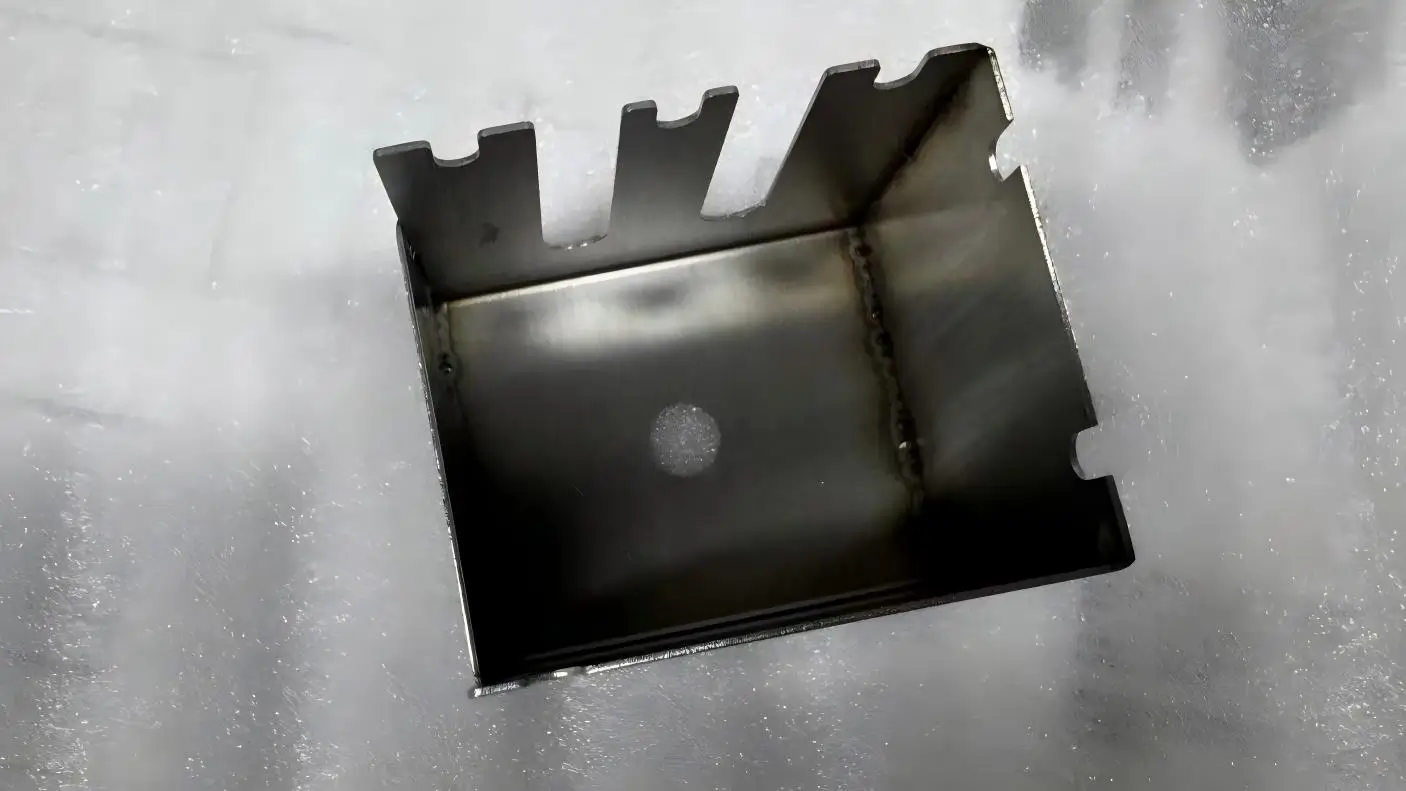
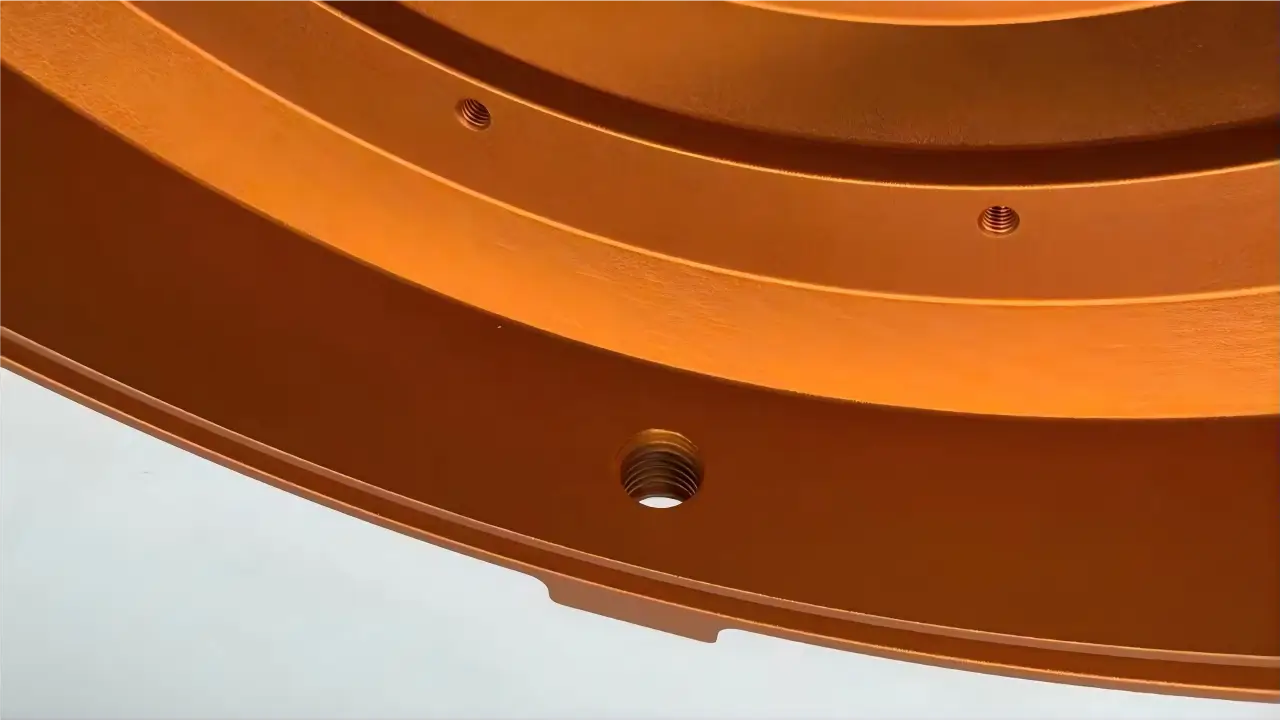
As we all know, there are various CNC parts with complex geometries in industries. And many of these parts should be polished cleanly and brightly.
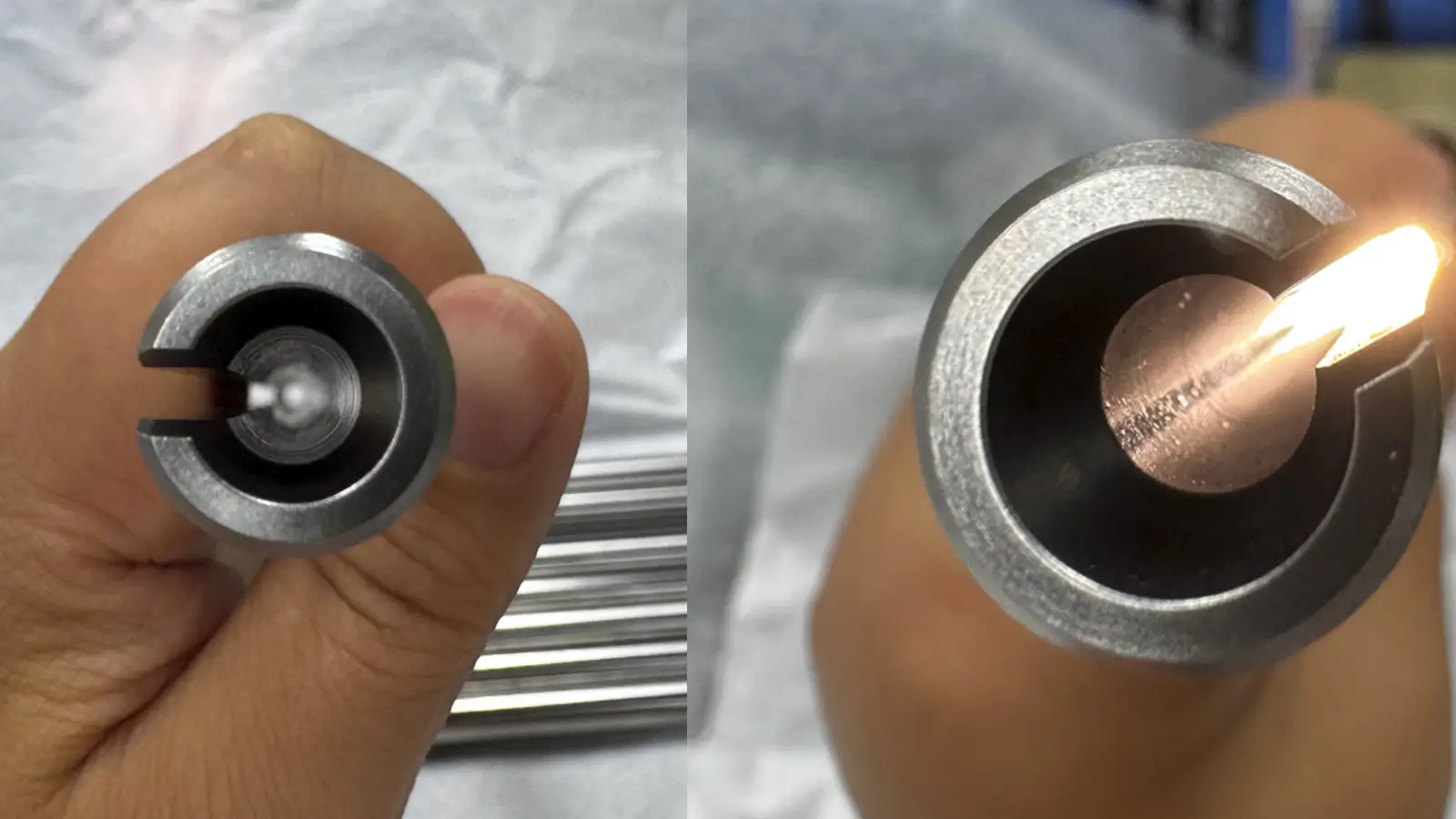
However, it is hard to polish the complex geometries such as deep holes, extrusion dies, welding nozzle, and spring collects.
Abrasive flow polishing is one the most suitable machining methods to finish those CNC parts with complex internal surfaces.
Key Takeaways
Abrasive flow polishing, also called abrasive flow machining or abrasive flow finishing, is a precise surface-finishing technique used for deburring, edge rounding, polishing, and surface modification of complex geometries, internal cavities, micro-holes, and intersecting passages that are difficult to process with conventional mechanical methods.
Developed in the 1960’s, abrasive flow polishing is a non-conventional micro and nano finishing process that involves flowing an abrasive-laden viscoelastic medium through a part to remove burrs and smooth surfaces by pressure or hydraulics.
It can be seen as a form of liquid sandpaper for complex internal cavities that are inaccessible to manual operations or conventional tools.
The abrasive medium of abrasive flow polishing is a putty-like consistency mixed with a polymer carrier with unique rheological properties and abrasive medium.
During the abrasive flow polishing process, the parts would be fixed between two opposing extrusion cylinders, and the abrasive medium would flow from one cylinder to the other.
As they pass through restricted passages, intersecting holes, or surface features, the abrasive particles would finely polish them.
Meanwhile, at those regions where the abrasive flow is restricted, the localized pressure and speed would increase, leading to aggressive finishing.
In conclusion, abrasive flow polishing is a finely precise surface finishing method that can provide flexible polishing service to various parts, especially to parts with difficult-to-access regions.
Abrasive flow polishing is mainly composited with three elements, including an AFF(Abrasive Flow Finishing) machine, fixtures, and abrasive medium.
An Abrasive Flow Polishing Machine consists of hydraulic cylinder, medium cylinder, piston, fixtures, and housing.
The hydraulic cylinder for the AFF machine is an actuation device that would produce linear motion and force to abrasive medium by pressurized hydraulic fluid.
The medium cylinder is used to continuously supply abrasive medium. And the abrasive medium would be guided by it to pass through the passage of parts by the action of medium cylinder piston.
What’s more, there are usually two medium chambers within a AFF machine, which are opposite and hydraulically or manually clamped together.
The piston is commonly made from aluminum alloy due to its lightness and strength. Its head is usually mounted with a Teflon piston ring.
And the hydraulic cylinder rod is connected with the medium cylinder piston by a connecting rod.
Most modern abrasive flow polishing machines allow for containing various abrasive media and adjusting the pressure to extrude the medium through the passages of parts.
And the machine can be manually operated or automated by CNC for more precise control of polishing performance.
More importantly, for high production volumes, some crucial accessories would be provided for desired polishing quality and efficiency, such as unloading and reloading stations, part-cleaning stations, media heat exchangers and media re-feed devices.
Fixtures for abrasive flow polishing are applied to fix the parts in position and at the meantime direct and constrict the abrasive medium flow during the polishing processes.
They can control the flow across the surfaces to be polished with desired uniform speed due to the restriction passage they provide, provided that any leakage of abrasive medium is avoided thanks to properly strict fixturing.
And the regions not to be finished can also be protected. Additionally, any number of parallel restrictions can be uniformly machined.
And for lasting service life, the fixtures are commonly made of nylon, Teflon, or hardened steel.
The abrasive media applied to abrasive flow polishing process is composited with base polymers, abrasive particles and additives.
The base polymer acts as the carrier medium within the abrasive flow polishing process, which determines the stiffness of the whole abrasive flow polishing media. And the stiffness of the whole abrasive medium determines the polishing quality.
The abrasive flow polishing media can be seen as a deformable grinding stone. If the stiffness is high enough, uniform polishing performance can be achieved.
While if the stiffness is low, large radius at the passage opening would be produced. Made up of organic polymer and hydrocarbon gels, the base polymer is typically viscoelastic to reach into those complex internal surfaces.
The common materials used as the base polymer include Silicon Rubber (P-Silicone), Silicon Rubber with Additives (A-Silicone), Natural Rubber, Butyl Rubber, Ethylene Propylene Diene Monomer, and Styrene Butadiene Rubber.
And the most common types are made of polyborosiloxane and silicone rubber.
Reinforcing the base polymer, the abrasive particles serve as the cutting tools to remove micro quantity of material from the parts and then smooth the surfaces.
They typically consist of silicon carbide, aluminum oxide, boron carbide, cubic boron nitride and polycrystalline diamond powders, with common grit size from 8 to 1000 mesh size.
And the common additives used in abrasive flow polishing include hardeners, plasticizers, and lubricants.
They can improve the interfacial bonding between the abrasive particles and the base polymer. They can also regulate viscosity and lubricity to prevent the medium from overheating and degrading.
There are three basic types of abrasive flow polishing, including one-way AFP(Abrasive Flow Polishing), two-way AFP and orbital AFP.
The one-way abrasive flow polishing refers to the abrasive flow machining where the medium flows only in one direction in a cycle.
The abrasive medium is extruded from the upper cylinder, passes through the parts, and then enters a collection chamber at the bottom, or is discharged directly for reloading.
This means that the abrasive medium used during the process of the one-way abrasive flow polishing would not be reused and it takes more time to reload the medium.
The one-way abrasive flow polishing is suitable for specific tapers or one-directional edge rounding since the pressure is highest as the medium enters the parts and would decrease as it exits.
And its fixturing design is commonly simple. Its common applications include large parts, fuel nozzles, and hydraulic valve blocks with unidirectional flow requirements.
The two-way abrasive flow polishing is the most widely used type of AFP. The machine is equipped with two opposing upper and lower extrusion cylinders.
The abrasive medium would reciprocate back and forth between the two pistons each within a cylinder directly opposed to one another and either side of the passage or tooling.
They can be set up either vertically or horizontally. During the two-way abrasive flow polishing processes, the abrasive media filled in one cylinder would flow toward the opposing cylinder by the properly set piston stroke at high pressure.
And then the process repeats from the other side. The two strokes consist a complete cycle.
The abrasive particles fixed in the whole abrasive medium then shears off and levels the surface roughness to smooth and bright the surface.
Since the polishing process is fully symmetrical, it can ensure consistent deburring and edge rounding at both ends of the passages.
In addition, the process is controllable. The quantity of cycles can be fixed or flexibly changed due to the desired finishing requirements.
Orbital abrasive flow polishing is an advanced polishing variant that combines mechanical vibration with two-way abrasive fluid flow.
During the media flow process, high frequency but low amplitude vibrations would be applied to the fixtures or the parts directly to assist the finishing process.
And the vibration is applied in the direction normal to the movement of the abrasive medium flow. Such a composite motion would alter the contact trajectory between the abrasive particles and the surface.
Therefore, the orbital abrasive flow polishing is suitable for blind holes or shallow cavities, as mechanical vibration can compensate for cutting action even in areas where media flow is restricted.
Step 1-Select Suitable Abrasive Particles: Select the proper size and type of abrasive grain depending on the part’s material and the desired finishing quality.
Step 2-Prepare the Abrasive Fluid: Mix the abrasive particles with the carrier in a proper proportion for suitable viscosity and fluidity.
Step 3-Clean the Parts: Clean the parts completely.
Step 4-Set up the Equipment: Set the pressure, flow rate and other parameters properly based on the size and geometry of the parts to be polished.
Step 5-Fix the Parts: Fix the parts in position steadily.
Step 6-Inject Abrasive Medium: Inject the abrasive medium into the polishing regions of the parts.
Step 7-Start Polishing: Start the machine to drive the media flowing back and forth through the inner and outer surfaces of the parts for grinding and polishing by the hydraulic system.
Step 8-Monitor and Adjust the Process: Monitor the whole abrasive flow polishing process and adjust the parameters if required to ensure desired polishing quality.
Step 9-Clean the Parts: Clean all abrasive residues off from the parts totally.
Step 10-Check the Finish: Check the polish quality of the parts.
It is crucial to ensure uniform media flow through all passages to be polished. Therefore, it is not recommended to use a single fixture for multiple different holes at the same time.
Smaller-diameter holes have higher flow resistance that would lead to lower flow velocity, thus causing uneven polishing.
Additionally, the medium tends to form vortices at sharp turns or step transitions. Installing flow-guiding mandrels or smooth transition sleeves helps direct the medium tightly along the machined surfaces.
More importantly, any leakage would cause local pressure loss and insufficient polishing force. High-quality O-rings or polyurethane seals must be used.
The selection of abrasive media must be determined by the part’s surface and size. If the initial surface is very rough, it is recommended to first use coarse abrasives for rapid material removal, then switch to fine abrasives to enhance surface gloss.
And the viscosity must match the aperture. For micro holes, base polymer with low viscosity is suggested to ensure the medium can be forced into the passages. While for large channels, carrier with high viscosity is suggested to ensure enough shear force.
What’s more, abrasive particles would gradually fracture and become dull during processing, and then the carrier would degrade under shear. When significantly longer processing times are required to achieve the same results, the medium must be replaced.
Pressure directly affects cutting depth. When processing precision mating parts, it is better to stop the process after a fixed volume of medium has passed through the parts, to precisely control dimensions.
The temperature is also important. Reciprocating friction of the medium would generate heat and cut the viscosity down. It is supposed to keep the medium temperature between 20 °C and 35 °C.
Additionally, before formal processing, it is suggested to run the medium through several empty cycles to reach a stable operating temperature first and then load the parts. This ensures consistency between the first and last parts.
Abrasive flow polishing is preferred to remove micro burrs. If a part has large machining flash or heavy burrs, it is better to remove them first by other polishing method. Otherwise, large metal fragments can enter the medium and scratch the surfaces of subsequent parts.
Suitable for Complex Parts: Abrasive flow polishing can efficiently polish the parts with internal regions or complex geometries that are difficult to reach by conventional polishing method.
Enhance Surface Smoothness: The abrasive flow polishing is precise and fine. It can significantly enhance the surface smoothness with few dimensional changes.
Improve Part Performance: The hydrodynamic performance of the parts can be improved since the surfaces are much smoother. And abrasive flow polishing does not leave residual stress.
Provide Uniform Finish: Abrasive flow polishing can ensure uniform and consistent polishing quality for the parts, especially for those where symmetry and consistency are crucial.
High Cost on Equipment: The initial investment on the equipment is high, and it also needs high cost to maintain the machine.
Abrasive Replacement: The abrasive medium is more expensive and complex than that of other polishing methods. And the service life of them is limited. It needs to replace the abrasive medium on time. In addition, the useless medium should be disposed of properly.
Limited Polishing Size: It is not suitable for parts with large flat surfaces or extensive external surface.
All in all, the abrasive flow polishing is a type of precise finishing method that can process parts with difficult-to-access areas or much complex fine geometries, which are hard to be polished by other conventional polishing technique.

Lucas is a technical writer at ECOREPRAP. He has eight years of CNC programming and operating experience, including five-axis programming. He’s a lifelong learner who loves sharing his expertise.

5-Axis CNC machining is a manufacturing process that uses computer numerical control systems to operate 5-axis CNC machines capable of moving a cutting tool or a workpiece along five distinct axes simultaneously.

China is the best country for CNC machining service considering cost, precision, logistic and other factors. Statistical data suggests that China emerges as the premier destination for CNC machining.

Selecting the right prototype manufacturing supplier in China is a critical decision that can significantly impact the success of your product development project.

Machining tolerances stand for the precision of manufacturing processes and products. The lower the values of machining tolerances are, the higher the accuracy level would be.