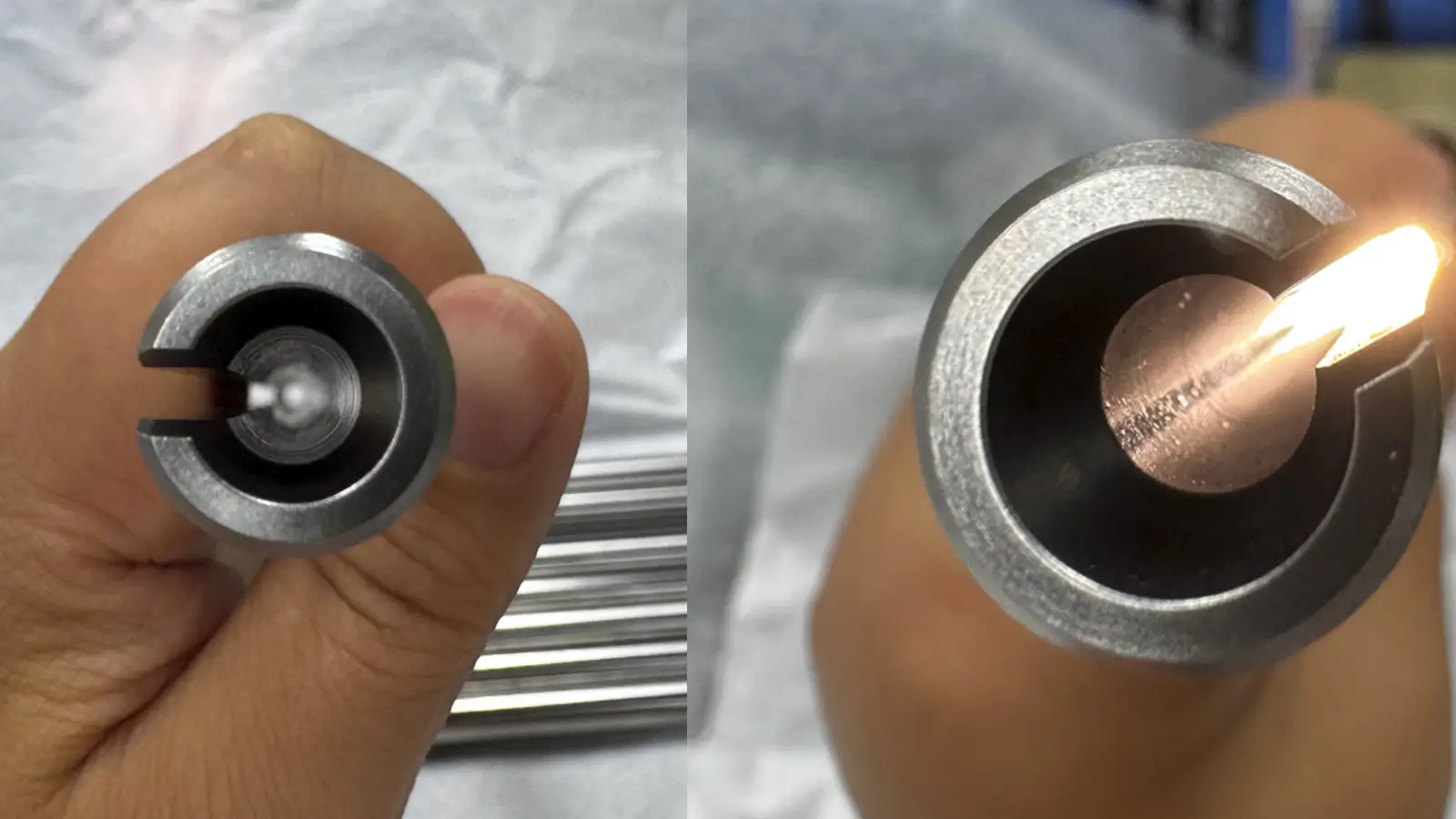
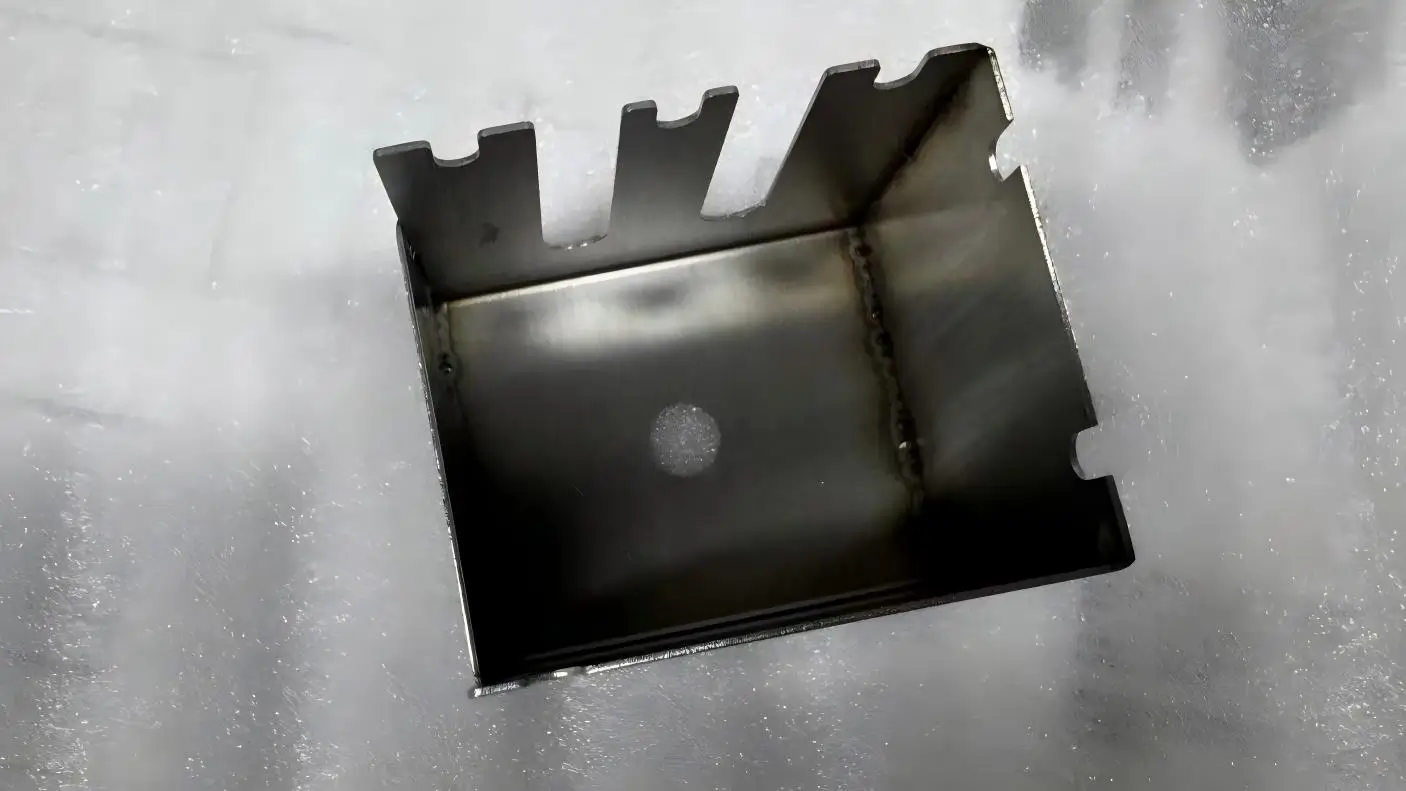
We recently worked on a CNC machining project for a customer in Norway—an offshore oil and gas application with components going into subsea environments. Their material requirement was clear: 316L stainless steel only. 316 is not allowed.
That got us thinking—and maybe you’ve wondered the same thing: Both 316 and 316L are common austenitic stainless steels widely used in CNC machining, so why is 316L the only choice in some critical applications? And how do they compare when it comes to 316 vs 316L stainless steel machinability?
It turns out the difference isn’t just a small tweak in carbon content. It directly impacts corrosion resistance, weldability, and long-term reliability—especially in harsh environments like the ocean.
In this guide, we’ll explain the similarities and differences between 316 vs 316L stainless steel from a machining, material, and real-world application perspective—so you can feel confident making the right choice for your next project.
316 stainless steel is an austenitic grade under the ASTM standard. Its Chinese equivalent is 06Cr17Ni12Mo2 (formerly 0Cr17Ni12Mo2).
The chemical composition of 316 stainless steel is listed below.
| Element | Content Range | Role |
|---|---|---|
| Chromium (Cr) | 16.0% – 18.0% | Forms a passive layer, provides basic corrosion resistance |
| Nickel (Ni) | 10.0% – 14.0% | Stabilizes the austenitic structure, improves toughness and machinability |
| Molybdenum (Mo) | 2.0% – 3.0% | Key element – significantly boosts resistance to chlorides |
| Carbon (C) | ≤ 0.08% | Provides solid-solution strengthening, improves high-temperature strength |
316 offers much better resistance to chlorides (Cl⁻) than 304 stainless steel because of the molybdenum content.
When comparing 304 vs 316 stainless steel machinability, 304 is slightly easier to machine, but 316 wins on corrosion resistance. 316 is a great fit for marine environments, salty atmospheres, and industrial settings. It also holds up well against reducing acids like sulfuric, phosphoric, and acetic acid.
At room temperature, yield strength of 304 stainless steel is ≥205 MPa, and tensile strength is ≥515 MPa.
316 is considered a mid-to-high temperature stainless steel—it’s typically recommended for long-term use in the 400°C–600°C range, can handle up to about 800°C, and is suitable for short-term exposure up to 870°C.
For even higher temperatures, specialized grades like 316H are a better fit.
316 welds well, but when exposed to the sensitization temperature range (450°C–850°C) during welding, the heat-affected zone can experience intergranular corrosion—basically, the weld area becomes brittle and prone to rust due to chromium carbide precipitation.
To restore corrosion resistance, post-weld solution annealing is typically required for 316 parts.
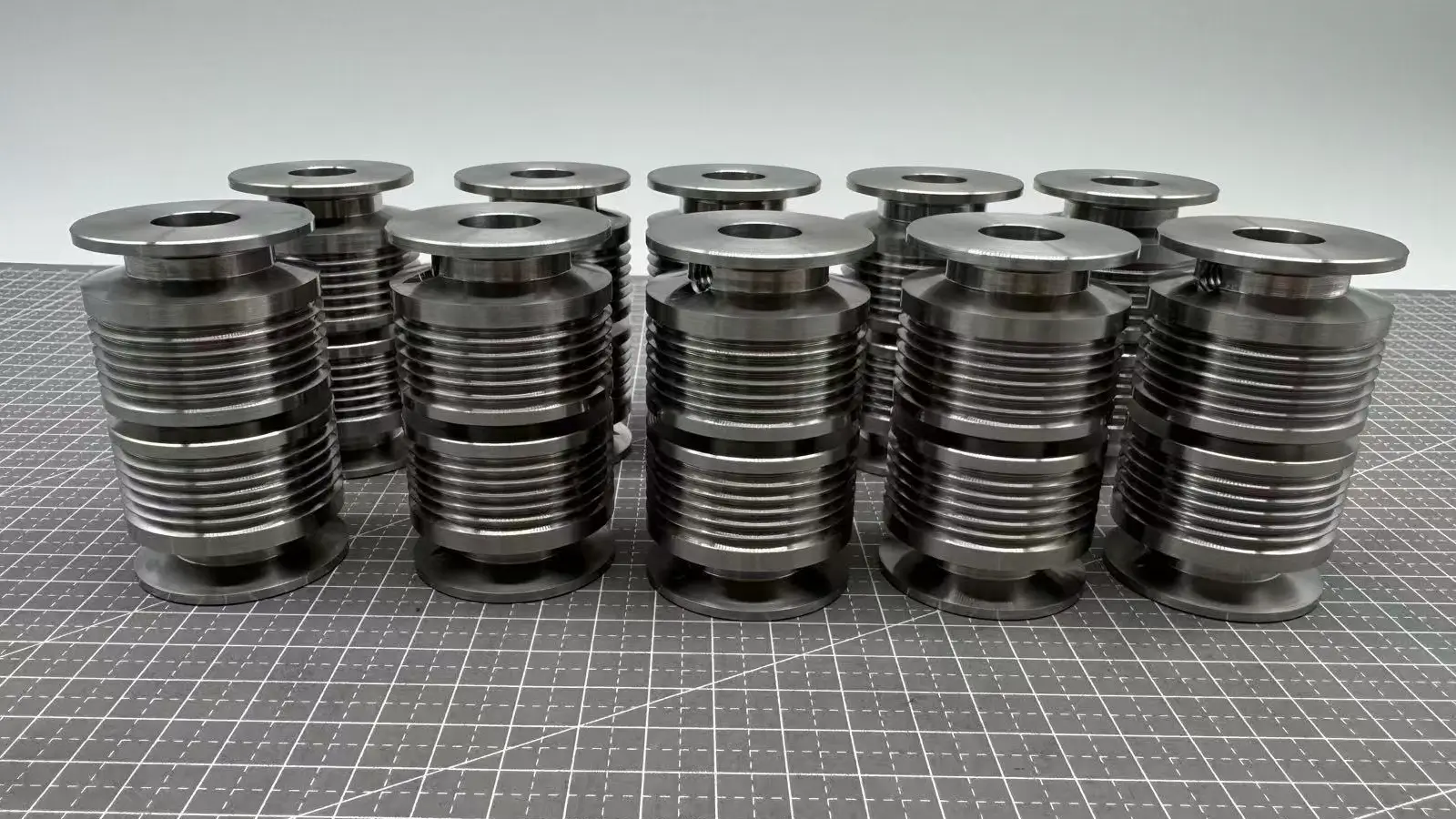 When you’re looking for 316 stainless steel machined parts or stainless steel 316 machined parts, these are the typical applications where 316 shines—especially when welding isn’t required.
316L is the low-carbon version of 316 stainless steel. The “L” stands for Low Carbon. Its Chinese equivalent is 022Cr17Ni12Mo2 (formerly 00Cr17Ni12Mo2).
| Element | 316L | Comparison to 316 |
|---|---|---|
| Carbon (C) | ≤ 0.03% | About 1/3 of 316’s maximum carbon content |
| Chromium, Nickel, Molybdenum, etc. | Same range as 316 | — |
Due to its ultra-low carbon content, stainless steel 316L doesn’t readily form chromium carbides during welding—so it avoids intergranular corrosion altogether.
That means no post-weld annealing is needed to maintain corrosion resistance, making it the go-to choice for projects with a lot of welding.
In most non-high-temperature environments, 316L performs just as well as 316—and even better in as-welded conditions. However, above 450°C, its corrosion resistance and strength start to decline.
At room temperature, 316L has slightly lower strength than 316 (yield strength ≥170 MPa, tensile strength ≥485 MPa), but it offers better low-temperature toughness, making it a solid choice for cryogenic applications.
Because of its lower carbon content, 316L is a bit softer and easier to cold-form. But when it comes to 316L stainless steel machinability, the softer nature also means it’s more prone to built-up edge and tool adhesion—so sharp tools and good cooling are essential.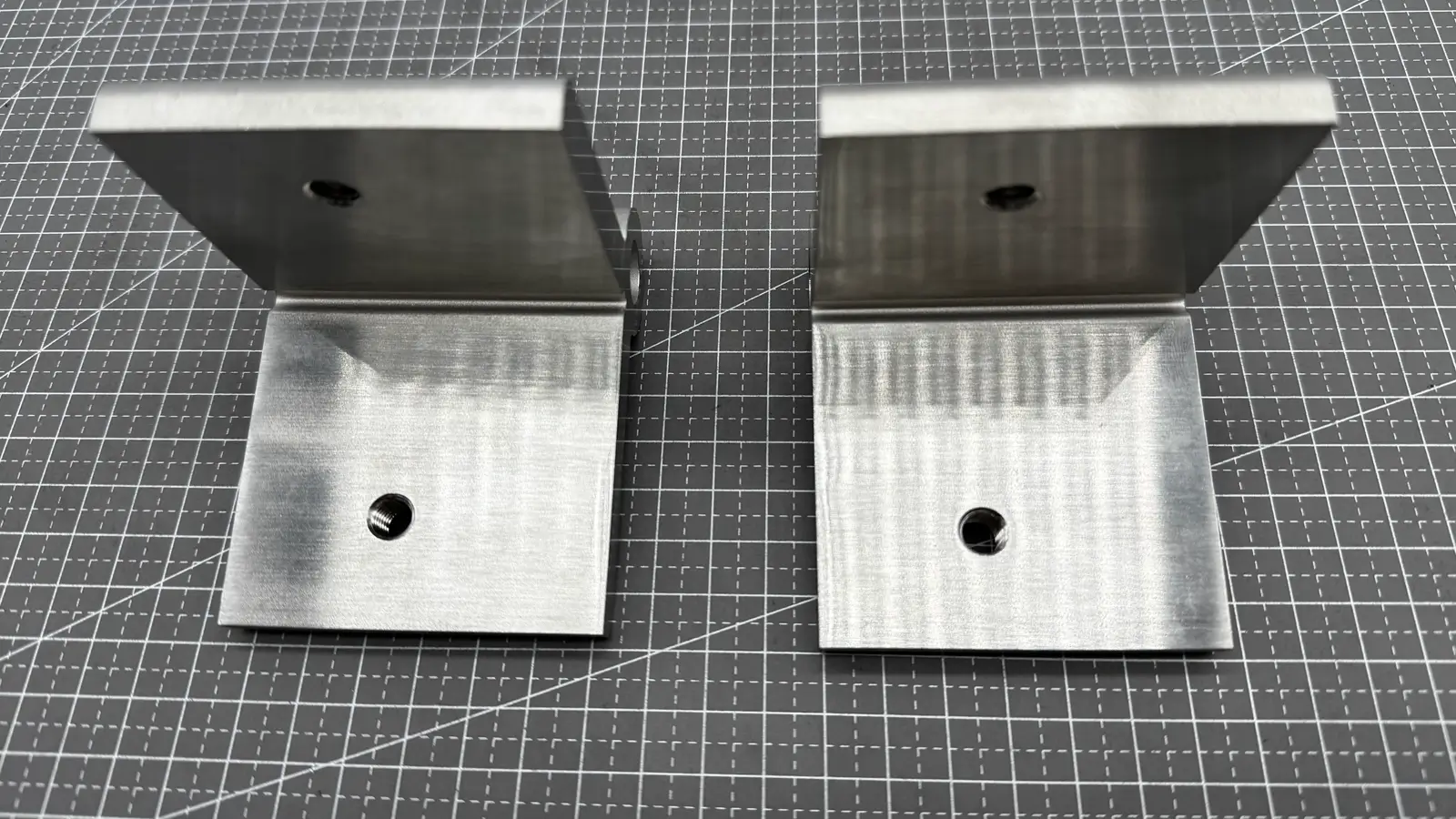
Surgical implants and instruments (thanks to its biocompatibility and resistance to bodily fluids)
Sterile piping, reactors, storage tanks (welded interiors need to stay smooth and rust-free)
Building facades, seawater desalination equipment, ship components
Watch cases, jewelry, precision instruments (polishes beautifully and has low allergenicity)
If you’re sourcing stainless steel alloy 316 machined parts for these applications, 316L is often the right one—especially when welding is involved.
Understanding the similarities between 316 vs 316L stainless steel helps clarify why they’re often confused—and when it actually matters which one you use.
Comparison Table of 316 VS 316L Composition
| Element | 316 | 316L |
|---|---|---|
| Chromium (Cr) | 16.0% – 18.0% | 16.0% – 18.0% |
| Nickel (Ni) | 10.0% – 14.0% | 10.0% – 14.0% |
| Molybdenum (Mo) | 2.0% – 3.0% | 2.0% – 3.0% |
| Carbon (C) | ≤ 0.08% | ≤ 0.03% |
Both contain molybdenum (Mo)—which is what sets them apart from 304 stainless steel. That molybdenum gives both grades far better resistance to chlorides than 304.
When no welding is involved—or when welding is followed by proper solution annealing—316 and 316L offer nearly identical corrosion resistance in most environments.
Both materials respond similarly to cold working, hot working, and welding processes. You can use the same equipment and generally similar parameter ranges.
| Aspect | Details |
|---|---|
| Core Composition | Same Cr, Ni, Mo content—both contain molybdenum |
| Base Corrosion Resistance | Comparable in non-welded conditions |
| Metallurgical Structure | Both austenitic, non-magnetic (annealed) |
| Machinability | Similar cold/hot working and welding characteristics |
| Standards | Same international and national standards apply |
| Applications | Heavy overlap in marine, chemical, and food industries |
Now let’s see the differences between 316 vs 316L stainless steel. While they look identical and share most of their alloying elements, the carbon content gap creates meaningful distinctions that affect welding, high-temperature performance, and—yes—316 vs 316L stainless steel machinability.
| Element | 316 | 316L |
|---|---|---|
| Carbon (C) | ≤ 0.08% | ≤ 0.03% |
| Chromium (Cr) | 16.0% – 18.0% | 16.0% – 18.0% |
| Nickel (Ni) | 10.0% – 14.0% | 10.0% – 14.0% |
| Molybdenum (Mo) | 2.0% – 3.0% | 2.0% – 3.0% |
The core difference between 316 and 316L is that: 316L’s maximum carbon content is about one-third that of 316. That 0.05% difference is what drives most of the performance differences between the two.
| Aspect | 316 | 316L |
|---|---|---|
| Post-Weld Intergranular Corrosion Resistance | Lower | Excellent |
| Post-Weld Heat Treatment Needed? | Yes (solution annealing) | No |
During welding, the higher carbon content in 316 can combine with chromium to form chromium carbides in the heat-affected zone. That creates chromium-depleted areas, which leads to intergranular corrosion—basically, the weld area becomes brittle and prone to rust.
316L, with its ultra-low carbon, doesn’t have this issue. That’s why 316L is the only choice for projects with extensive welding, like large tanks, piping systems, and offshore structures.
| Property | 316 | 316L |
|---|---|---|
| Yield Strength | ≥ 205 MPa | ≥ 170 MPa |
| Tensile Strength | ≥ 515 MPa | ≥ 485 MPa |
| Hardness | Slightly higher | Slightly lower |
| Low-Temperature Toughness | Good | Better (great for -196°C cryogenic applications) |
316 offers slightly higher strength at room temperature, while 316L is a bit softer and more ductile.
| Aspect | 316 | 316L |
|---|---|---|
| Long-Term Service Temperature | 400°C – 600°C (short-term up to 800°C) | Not recommended above 450°C |
| High-Temperature Strength | Higher | Lower |
Carbon provides solid-solution strengthening at high temperatures, so 316—with its higher carbon content—holds up better when things get hot.
| Application | Recommendation | Why |
|---|---|---|
| Marine Engineering, Coastal Construction | 316L | Lots of welding required, no post-weld heat treatment possible |
| Medical Devices, Implants | 316L | Biocompatibility requirements |
| Food/Pharmaceutical Equipment | 316L | Welded interiors need to stay smooth and corrosion-free |
| High-Temperature Furnaces, Heat Exchangers | 316 | Needs high-temperature strength and creep resistance |
| Non-Welded Structural Components | 316 | Slightly higher strength, lower cost |
| Cryogenic Equipment | 316L | Better toughness at low temperatures |
316L typically costs 5% – 10% more than 316. That’s because controlling carbon content to such a low level requires stricter processes during smelting.
| Standard | 316 | 316L |
|---|---|---|
| China GB | 06Cr17Ni12Mo2 | 022Cr17Ni12Mo2 |
| US ASTM | 316 | 316L |
| Japan JIS | SUS 316 | SUS 316L |
| EU EN | 1.4401 | 1.4404 |
When it comes to machining 316 stainless steel vs 316L, the differences are subtle but important. Both are austenitic grades with a strong tendency to work-harden, but their machinability ratings and behavior under the cutting tool vary.
The machinability of 316 stainless steel is generally rated around 50-60% compared to free-machining steels like 12L14. 316L stainless steel machinability is similar, but with a few key differences:
| Characteristic | 316 | 316L |
|---|---|---|
| Cutting Force | Slightly higher | Slightly lower |
| Tool Wear Mode | More abrasive wear | More prone to built-up edge (BUE) and adhesion |
| Chip Control | Relatively brittle, chips break easier | More gummy, tends to produce long stringy chips |
| Surface Quality | Easier to control | Demands sharper tools |
In our actual experience with machining 316L stainless steel, we’ve found that sharper cutting tools and better cooling are essential to avoid material smearing and surface quality issues.
Machinability Rating Note: Both grades have similar machinability ratings, but 316L’s tendency to form built-up edge means you may need to adjust your approach—especially when comparing machinability 316 stainless steel versus 316L in high-volume production.
| Parameter | 316 | 316L |
|---|---|---|
| Cutting Speed (Vc) | 80 – 150 m/min | 90 – 160 m/min |
| Feed per Tooth (fz) | 0.05 – 0.12 mm/tooth | 0.06 – 0.14 mm/tooth |
| Tool Material | Carbide (AlTiN/TiAlN coated) | Carbide (AlTiN/TiAlN coated) |
| Cooling | High-pressure through-coolant, emulsion | High-pressure through-coolant, emulsion |
For 316 stainless steel machining, look for geometries with sharp edges and polished rake faces to reduce built-up edge. AlTiN-coated tools work well for both grades.
Both 316 and 316L have a strong tendency to work-harden.
If you take too light of a cut (or “rub” the surface), you’ll harden the material, making the next pass much harder.
This is especially critical when machining 316 stainless steel in automated production runs—consistent depth of cut is your friend.
Both grades perform best with AlTiN or TiAlN-coated carbide tools.
Tool life can vary by 10% – 15% between the two in production runs—but the failure modes are different: 316 stainless steel machining tends to cause more abrasive wear, while 316L stainless steel machining is more prone to adhesive wear and built-up edge.
Material Cost: 316L typically costs about 5% – 10% more than 316, because tighter carbon control requires more complex smelting processes.
Machining Cost: 316L also tends to cost a bit more to machine. It’s softer and more gummy, which means it’s more likely to stick to cutting tools and cause built-up edge. That leads to faster tool wear and slightly longer cycle times.
All things considered, 316L usually ends up costing 5% – 15% more than 316, depending on part complexity, batch size, and how well the machining process is optimized.
When welding is involved, 316L is the better choice. Here’s why:
During welding, 316’s higher carbon content can react with chromium to form chromium carbides in the heat-affected zone, creating chromium-depleted areas that lose corrosion resistance—a phenomenon called intergranular corrosion. While post-weld solution annealing can restore 316’s corrosion resistance, it adds extra steps, time, and cost.
316L, with its ultra-low carbon content (≤0.03%), doesn’t form chromium carbides during welding, so it maintains excellent corrosion resistance without any post-weld heat treatment. That makes it the go-to material for welded structures like large tanks, piping systems, and offshore platforms.
Whether you’re working with 316 or 316L, passivation is highly recommended after CNC machining.
This chemical process removes free iron from the surface and restores the chromium oxide passive layer that gives stainless steel its corrosion resistance. It’s especially important for parts used in marine environments, humid conditions, or chloride-exposed applications.
For demanding industries like medical, food processing, or offshore engineering, passivation is typically a standard step.
Both 316 and 316L polish beautifully—you can achieve a mirror finish with mechanical or electropolishing.
That said, 316L’s lower carbon content sometimes makes it a bit easier to get a consistently smooth, uniform surface, which is why it’s often the preferred choice for medical instruments and high-end cosmetic parts.
During CNC machining, avoid leaving iron residues or contaminants on the surface. Clean and passivate parts as soon as possible after machining to prevent localized corrosion.
And when post-processing, pay attention to process parameters (like acid concentration and dwell time) to avoid affecting dimensional accuracy or surface quality.
Related blog: Electropolishing vs Passivation:Definition,Difference and How to Choose
Whether you need 316 stainless steel precision-machined parts or 316L stainless steel precision machined parts, here’s a quick guide:
| Scenario | Recommendation | Why |
|---|---|---|
| Parts that will be welded | 316L | Avoids intergranular corrosion, no post-weld heat treatment needed |
| High-temperature service (>450°C) | 316 | Maintains strength and creep resistance |
| Cryogenic environments (liquid nitrogen, liquid oxygen) | 316L | Better toughness at low temperatures |
| Medical devices, food contact applications | 316L | Better biocompatibility and corrosion resistance |
| Non-welded, room-temperature, cost-sensitive projects | 316 | Lower cost, slightly higher strength |
If you’re looking for stainless steel precision machining with tight tolerances, both grades can deliver—but 316L may require more attention to tool sharpness and cooling.
Identifying 316 vs 316L CNC machined parts comes down to carbon content—316 has ≤0.08% carbon, while 316L has ≤0.03%. Since they look identical, you’ll need professional testing.
The principle is based on LIBS (laser-induced breakdown spectroscopy), which can directly measure carbon content, unlike standard XRF that cannot detect carbon. The method involves grinding off the surface oxide layer and performing a test that typically takes 10–30 seconds.
This method offers higher accuracy, with a carbon content error of ≤ ±0.003%, and can provide official test reports.
The machinability of 316 and 316L stainless steel is very similar, typically around 50–60% of free-machining steel.
However, in actual machining, 316L is slightly differently.
Because it has lower carbon content, it is softer and more ductile, which makes it more prone to built-up edge and tool adhesion.
As a result, even though the machinability ratings are close, 316 is generally more stable during cutting, while 316L requires more careful control of tooling and cutting parameters.
A: Not really. Although 316L requires slightly lower cutting forces, it is more “gummy,” which can lead to chip sticking and faster tool wear.
In practical CNC machining, this means 316L often needs sharper tools, proper chip control, and strong coolant application.
Overall, both 316 and 316L materials have similar machining difficulty, just in different ways.
316 and 316L stainless steel share nearly identical chemical compositions in terms of chromium, nickel, and molybdenum, which gives them very similar corrosion resistance in non-welded conditions. B
oth are austenitic stainless steels, non-magnetic in the annealed state, and have comparable forming and machining characteristics.
In many applications, they can perform almost the same unless welding is involved.
The main difference lies in carbon content. 316 contains up to 0.08% carbon, while 316L is limited to 0.03%.
This lower carbon content in 316L significantly improves its weldability and resistance to intergranular corrosion.
As a trade-off, 316 offers slightly better high-temperature strength, while 316L provides better performance in welded and corrosive environments.
Yes, 31603 is the UNS designation for 316L stainless steel.
Specifically, UNS S31603 refers to low-carbon 316L, while UNS S31600 refers to standard 316.
The “03” indicates the reduced carbon content, which is the defining feature of 316L.
In some cases they can, but it is not generally recommended without evaluation. If the application involves welding or exposure to corrosive environments such as marine, medical, or food processing, 316L is the better choice.
On the other hand, if the component operates at elevated temperatures above 450°C, 316 may be more suitable. Choosing the wrong material can affect performance and long-term reliability.
Yes, 316L is typically slightly more expensive. The raw material cost is usually about 5% to 10% higher, and machining costs can also be slightly increased due to tool wear and cutting behavior.
Overall, the total cost difference is generally in the range of 5% to 15%, depending on the part and production conditions.
It is not possible to distinguish 316 from 316L by visual inspection or magnetism.
The most reliable way is to measure carbon content using a LIBS handheld spectrometer for quick on-site testing, or optical emission spectroscopy (OES) in a laboratory for higher accuracy.
A molybdenum spot test can confirm whether the material is 316/316L versus 304, but it cannot differentiate between 316 and 316L.
In their annealed condition, both 316 and 316L are non-magnetic.
However, during CNC machining processes such as milling or turning, slight magnetism may develop due to cold working. This is normal and does not indicate that the wrong material has been used.
The “L” stands for low carbon. In 316L stainless steel, the carbon content is limited to 0.03% or less, compared to up to 0.08% in standard 316.
This lower carbon level helps prevent chromium carbide formation during welding, which improves resistance to intergranular corrosion and eliminates the need for post-weld heat treatment in most cases.
In non-welded conditions, 316 and 316L have very similar corrosion resistance.
However, in welded structures, 316L performs better because its low carbon content prevents intergranular corrosion in the heat-affected zone.
For most real-world applications, especially in marine, chemical, food, and medical environments, 316L is considered the safer and more reliable option.
Yes, both materials are suitable for CNC rapid prototyping.
316 is typically chosen when higher strength or better high-temperature performance is required, while 316L is preferred for parts that involve welding, require good corrosion resistance, or demand a higher surface finish.
In practice, 316L is more commonly used because it offers a more balanced and reliable performance across different conditions.
Choosing between 316 and 316L is related to your specific needs.
If you’re welding, working in marine or medical environments, or need excellent corrosion resistance after fabrication, 316L is worth the extra cost.
If you’re making non-welded parts that will see high temperatures or you’re watching the budget, 316 is a perfectly capable choice.
Need help with 316 stainless steel machining or 316L stainless steel machining for your next project? We’ve got experience with both—and we’re happy to help you pick the right material and process for your specific application. Feel free to reach out!

5-Axis CNC machining is a manufacturing process that uses computer numerical control systems to operate 5-axis CNC machines capable of moving a cutting tool or a workpiece along five distinct axes simultaneously.

China is the best country for CNC machining service considering cost, precision, logistic and other factors. Statistical data suggests that China emerges as the premier destination for CNC machining.

Selecting the right prototype manufacturing supplier in China is a critical decision that can significantly impact the success of your product development project.

Machining tolerances stand for the precision of manufacturing processes and products. The lower the values of machining tolerances are, the higher the accuracy level would be.