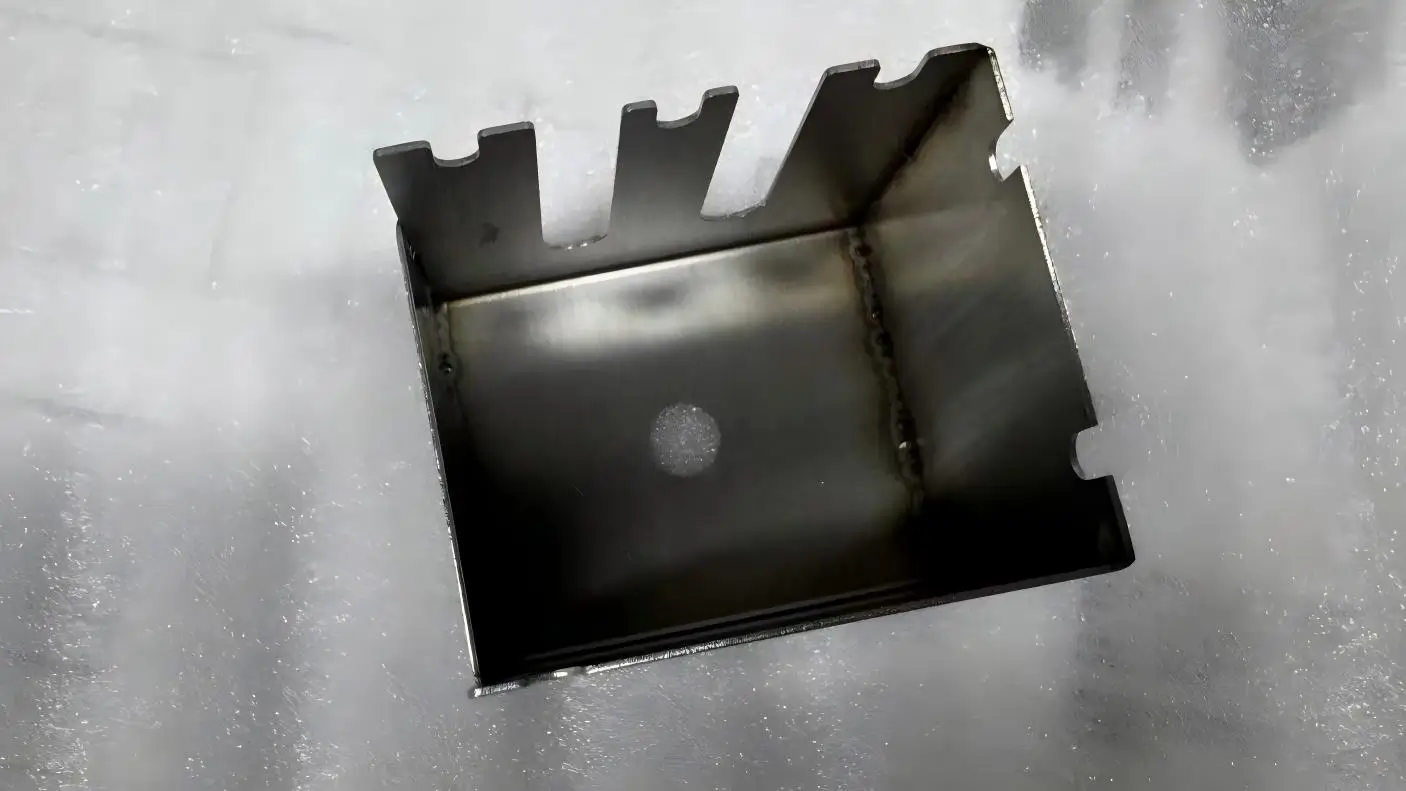
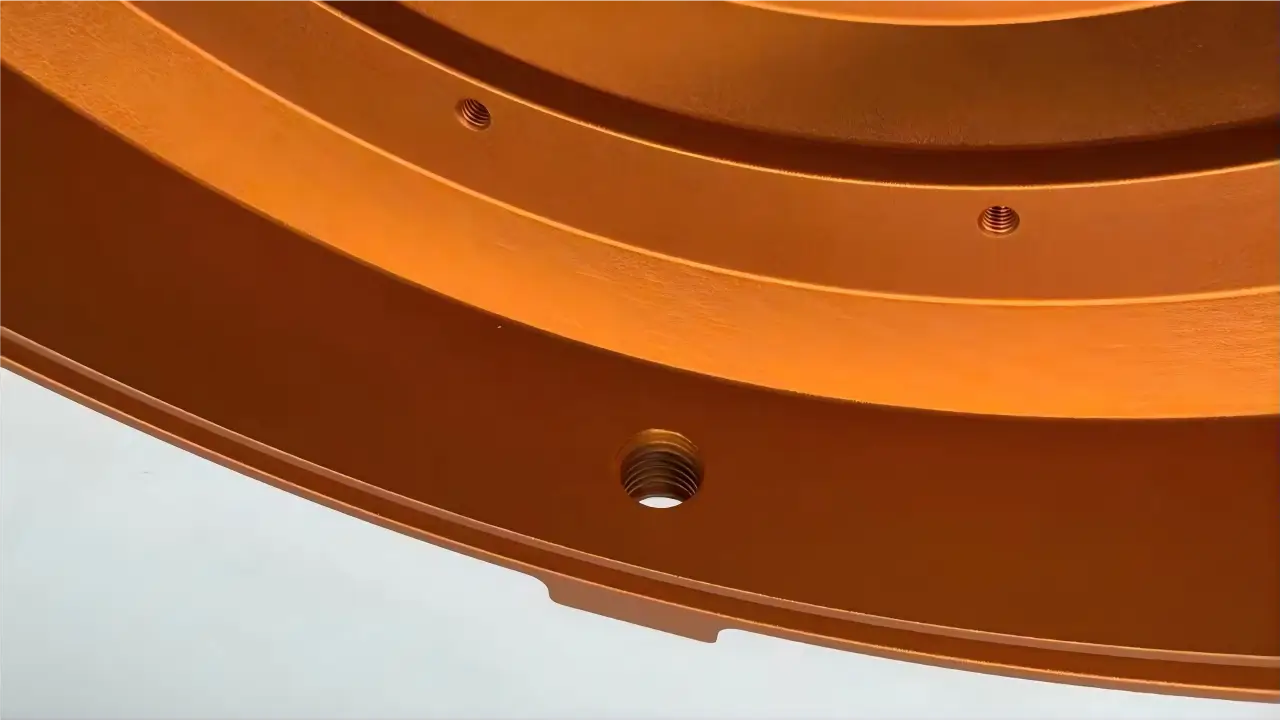
Spray painting is one surface finishing process for CNC-machined components. It does more than just improve appearance—it provides essential protection against corrosion, wear, and environmental damage while maintaining the precision that makes CNC parts valuable.
This guide covers everything you need to know about spray painting for CNC parts, including common spraying methods, step-by-step processes, material compatibility, and practical tips to achieve a high-quality finish.
Spray painting is a coating technique that uses compressed air, high-pressure fluid, or electrostatic force to atomize paint into fine particles, creating a smooth finish on the surface of CNC machined part.
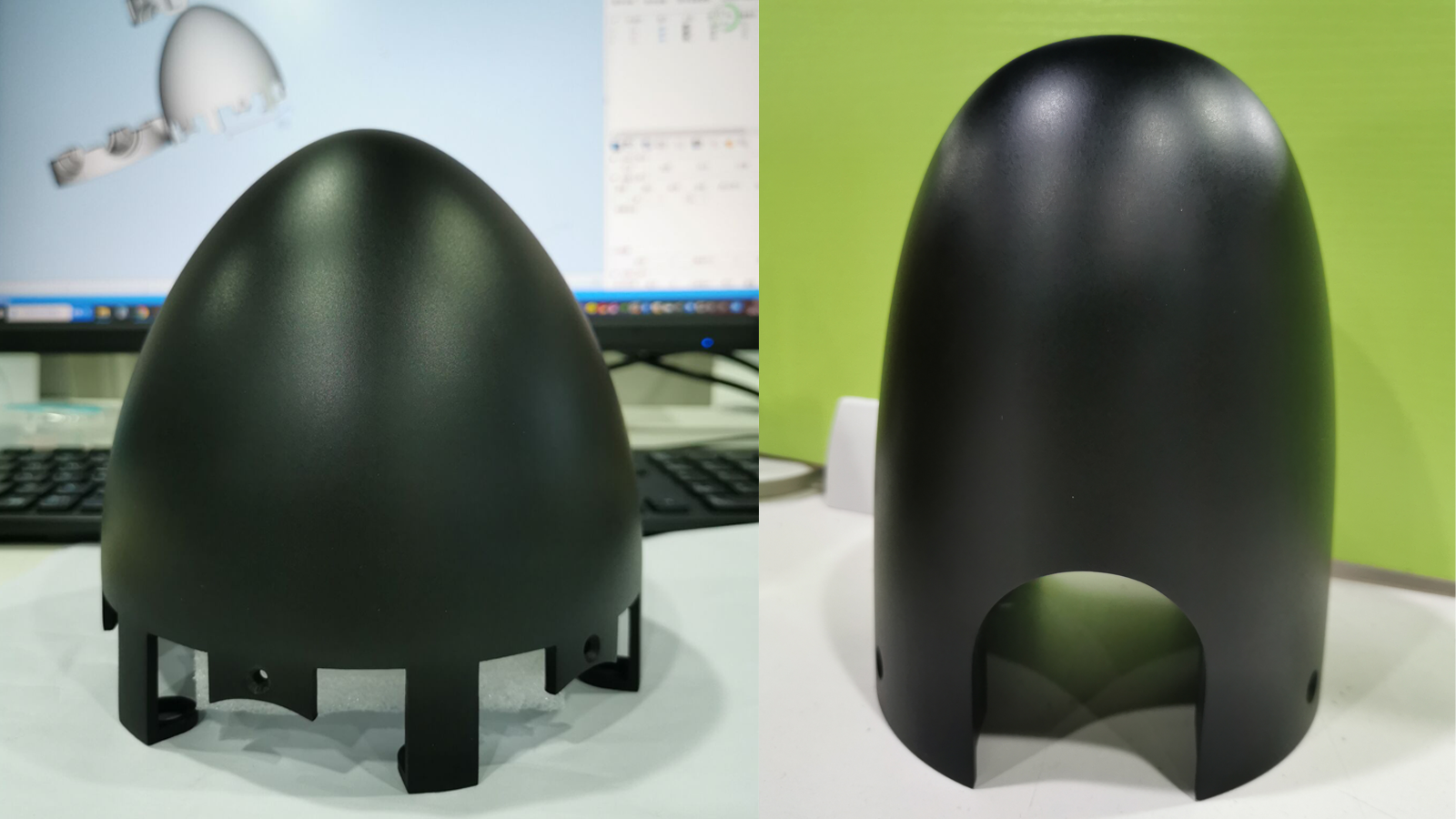
For CNC-machined components, spray painting is not only about improving appearance—it is a critical process for enhancing corrosion resistance, wear resistance, and overall product value. Machined surfaces often have microscopic tool marks or stress concentrations, and proper coating can effectively improve the performance of these areas.
Spray painting of CNC components is typically performed after machining. Since CNC parts generally have tight dimensional tolerances, it is essential to verify that the coating thickness falls within the allowable tolerance range. If necessary, a “coating allowance” should be reserved during the design phase.
There are three common spray painting types: air spraying, airless spraying, and electrostatic spraying.
Air spraying operates primarily based on the Bernoulli principle. High-velocity compressed air exits the spray gun, creating a low-pressure zone at the nozzle.
Paint is delivered to the nozzle and sheared into fine droplets by the high-speed airflow, depositing onto the surface in a fan-shaped or circular pattern.
Air Spraying Features:
Fine atomization for a smooth, mirror-like finish
Easy color changes, ideal for small-batch, high-mix CNC parts
Low equipment cost
Significant overspray, with paint transfer efficiency around 30%–60%
For small-batch CNC orders, air spraying is typically the most practical and flexible option.
However, overspray can easily contaminate critical functional features—especially threaded holes, dowel pin holes, and sealing surfaces—which may lead to assembly issues or tolerance deviations.
Based on our experience, precision masking is essential. We strongly recommend using silicone plugs, high-temperature masking tape, or custom protective caps to isolate these areas before spraying, ensuring that all critical dimensions and fits remain within specification after coating.
Airless spraying uses a high-pressure pump to pressurize paint up to 10–35 MPa and forces it through a specialized nozzle. Atomization occurs due to the sudden pressure drop.
Airless Spraying Features:
High efficiency, suitable for large surfaces or high-volume parts
Strong adhesion, paint penetrates surface micro-pores
Transfer efficiency of 60%–80%
Handles high-viscosity coatings; achieves thick films in one pass
Airless spraying is suitable for large CNC structural parts or high-volume orders.
It is not recommended for small precision parts, as the high output can easily clog small holes or cause sags.
For complex CNC parts with deep holes and grooves, airless spraying offers excellent penetration.
Electrostatic spraying uses a high-voltage electrostatic field to charge paint particles, which are then attracted to the grounded workpiece.
Electrostatic Spraying Features:
Transfer efficiency of 80%–95%
Excellent uniformity with “wrap-around” effect
Environmentally friendly with minimal overspray
Requires paint with specific conductivity (5×10⁶ to 5×10⁷ Ω·cm)
Requires regular cleaning of hangers to maintain grounding
Electrostatic spraying is ideal for CNC parts with complex geometries (such as heat sink fins or irregular surfaces), as the wrap-around effect ensures even coating in recessed areas.
However, plastic CNC parts (e.g., ABS, nylon) are non-conductive and require a conductive primer or a specialized process.
A standard spray painting process for CNC components typically includes the following steps:
Degrease, remove rust, and sandblast or chemically treat the machined surface to make it clean, dry, and slightly roughened for better adhesion.
CNC parts often have residual cutting fluids, rust preventatives, or metal chips on the surface. These must be thoroughly removed.
Ultrasonic cleaning or specialized degreasers are recommended.
Failure to do so will result in fisheyes or poor adhesion.
Use tape, silicone plugs, or specialized caps to mask areas that should not be coated.
Masking is critical for CNC parts. The following areas require precision masking:
Threaded holes: Use silicone or thread protection plugs
Dowel pin holes / bearing bores: Use high-temperature tape or specialized caps
Precision mating surfaces: Mask with accuracy within 0.5 mm
Electrical contact surfaces: Must be completely masked
Improper masking leads to assembly difficulties or functional failure, and rework costs are extremely high.
Properly mix the base, hardener, and thinner, and strain the paint to remove impurities.
Adjust air pressure, paint flow, and spray pattern on a test panel.
Apply the paint with the spray gun perpendicular to the surface at a distance of 6–10 inches (15–25 cm). Move at a consistent speed with approximately 50% overlap. Apply thin coats with multiple passes.
Allow the paint to dry naturally or use a curing oven.
For CNC-machined engineering plastic parts (e.g., nylon, POM), strictly control the curing temperature to avoid exceeding the material’s heat deflection temperature.
Low-temperature cure coatings or two-component room-temperature cure systems are recommended for such materials.
Inspect the coating for defects. Perform post-processing such as thread tapping or finishing of mating surfaces as necessary.
After curing, clean all masked areas. Minor paint residue in threaded holes should be chased with a tap.
Coating on precision mating surfaces may require secondary machining.
It is advisable to define the “post-coating machining” sequence during the process design phase.
Spray painting provides a high-quality finish for CNC components, significantly enhancing surface appearance while effectively hiding machining marks such as tool paths or minor surface imperfections.
For production efficiency, it offers high throughput, making it especially suitable for medium to high-volume CNC parts, where consistent coating quality and speed are required.
Another key benefit is its strong coverage capability, allowing paint to reach and uniformly coat complex geometries, including deep holes, recesses, and irregular shapes that are difficult to handle with traditional finishing methods.
Additionally, spray painting enables precise thickness control. By adjusting process parameters, manufacturers can achieve consistent coating thickness that meets assembly and tolerance requirements, which is critical for precision CNC parts.
One of the primary drawbacks is paint waste, particularly in conventional air spraying processes. For small-batch CNC production, it is recommended to use electrostatic spraying or HVLP systems to improve transfer efficiency and reduce material loss.
Another concern is the impact on dimensional tolerances. Coating thickness—typically ranging from 0.0008 to 0.008 inches (20–200 μm)—can affect final part dimensions. Therefore, it is necessary to reserve a coating allowance during the design stage to ensure proper fit and function after finishing.
Functional area contamination is also a common issue. Critical features such as threaded holes, sealing surfaces, and mating interfaces must be protected using precise masking techniques to prevent coating buildup that could interfere with assembly.
In terms of material compatibility, different CNC materials (such as aluminum, steel, or plastics) require specific surface pretreatment methods and coating systems, which adds complexity to process planning.
Finally, for small-batch or high-mix production, color change costs can be significant. Frequent changes require additional cleaning time, solvent use, and setup adjustments, which can reduce overall efficiency and increase production costs.
The core challenge of spray painting CNC components is balancing precision and functionality. The coating provides protection and aesthetics but must not interfere with assembly or function. Clearly indicate “spray area” and “mask area” on CNC drawings and confirm with the customer whether dimensional tolerances account for coating thickness.
There are 4 most common materials in CNC machining that are best suited for spray painting.
Aluminum alloys are among the most frequently spray-painted materials in CNC machining, with typical grades including 6061, 7075, and 5052.
Aluminum offers excellent paint adhesion. After sandblasting and pretreatment such as chromate conversion or phosphating, the coating adhesion is outstanding.
It is widely used for applications requiring high surface quality and corrosion resistance, such as automotive wheels, cell phone housings, and drone components.
Before spraying, it is essential to thoroughly degrease the surface to remove any cutting fluid residue; otherwise, defects like fisheyes or poor adhesion may occur.
Carbon steel and alloy steels (such as 45# steel, Q235, and 4140) are highly susceptible to rust, making spray painting a standard requirement for surface protection.
After sandblasting, applying an anti-corrosion primer followed by a topcoat provides excellent corrosion resistance.
These materials are commonly used for mechanical structural parts, hydraulic components, and industrial fixtures.
A key consideration is that the parts must be coated within 4 hours after cleaning; otherwise, the surface will quickly oxidize and rust.
Stainless steel (such as 304, 316, and 17-4PH) offers inherent corrosion resistance, but spray painting is often applied in medical devices, food processing equipment, and marine applications to further enhance chemical resistance and improve aesthetics.
Stainless steel has a dense surface, so proper surface preparation—such as sandblasting with white aluminum oxide or surface activation—is critical to ensure adhesion. A high-adhesion primer is also recommended; otherwise, coating peeling may occur.
Engineering plastics, particularly ABS and polycarbonate (PC) can also have spray painting after machining.
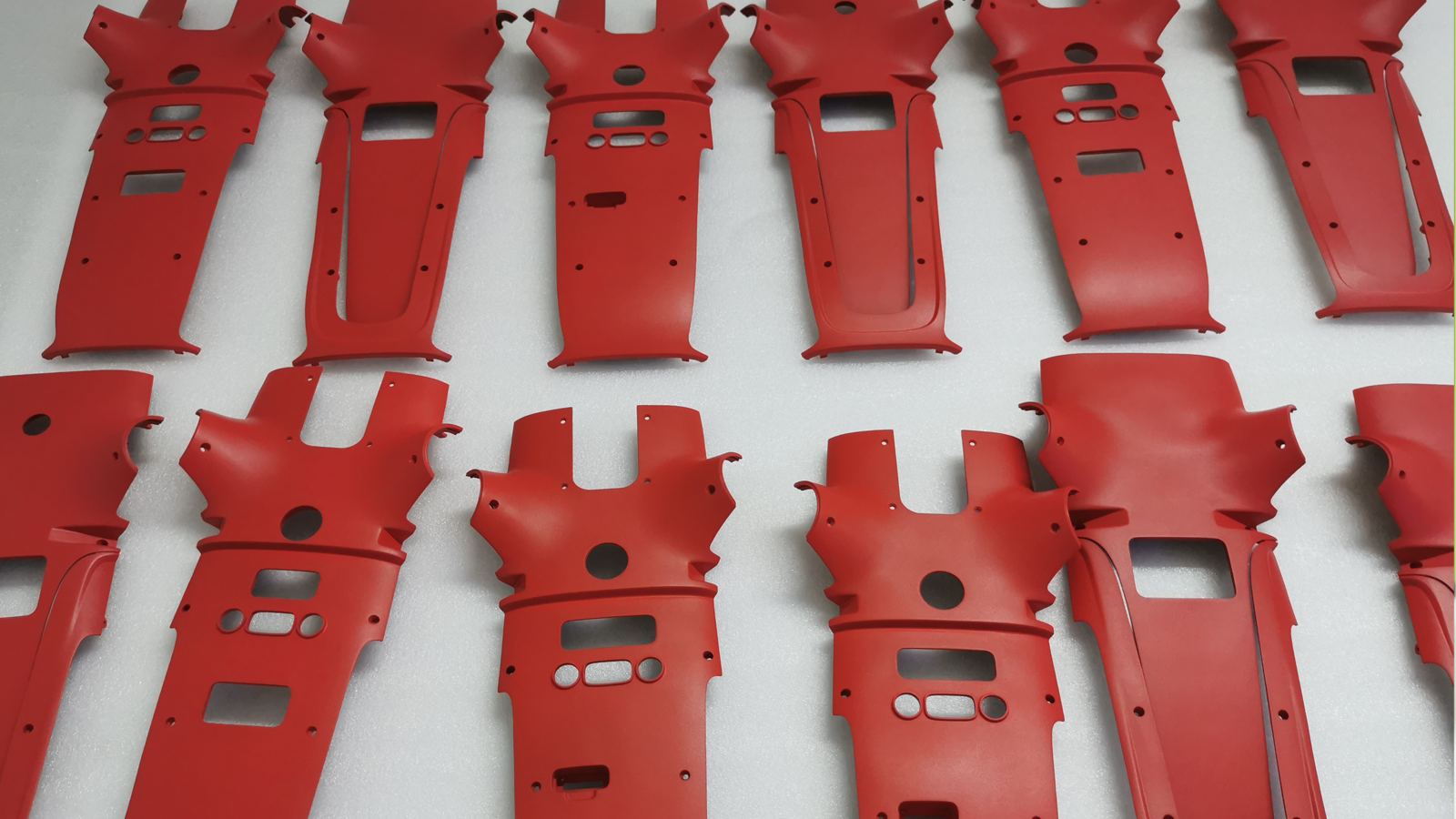
ABS offers good adhesion and typically requires only degreasing before painting, making it widely used for automotive interior parts and electronic device housings.
PC requires a specialized primer to prevent solvent-induced cracking and is commonly used for transparent parts and light covers.
When painting plastic parts, it is essential to use low-temperature cure coatings (typically below 80°C) to prevent heat-related deformation.
Low-surface-energy plastics such as POM (acetal), PE, and PP have poor adhesion and are generally not recommended for conventional spray painting.
Color selection for CNC components should balance aesthetics, functionality, standardization, and cost to achieve both visual appeal and practical performance.
For parts used outdoors, choose lightfast colors such as gray, beige, brown, or dark green, and avoid bright colors that may fade quickly.
High-temperature components benefit from black or silver heat-resistant coatings.
Parts that are frequently exposed to dirt should use medium gray or dark blue, which hide grime better than white or black, which tend to show dirt immediately.
Standardized color systems help ensure clear communication between suppliers and customers.
RAL is commonly used for machinery and industrial equipment, PANTONE is preferred in electronics and design applications, and Munsell is often chosen for power systems and military applications.
Using these standards reduces misunderstandings and ensures consistency across batches.
Dark colors such as gray and black generally provide strong coverage and often require only two coats. Bright colors like yellow, red, or orange may need a white primer underneath, increasing both material usage and labor costs.
For CNC components, confirm the acceptable color difference tolerance (e.g., ΔE < 1.0) with the customer and keep reference panels for quality control.
For small-batch, high-mix orders, using common colors can help minimize frequent color changes and reduce cleaning costs.
| Defect | Cause | Solution (CNC Perspective) |
|---|---|---|
| Sags / Runs | Excessive coating per pass, low viscosity, distance too short, low temperature | Apply thin coats with multiple passes; allow sufficient flash-off time; control environment temperature |
| Orange Peel | Fast solvent evaporation, high viscosity, poor atomization | Use slower thinner; increase pressure appropriately |
| Pinholes / Bubbles | Contaminated substrate, moisture/oil in compressed air, insufficient flash-off | CNC parts must be thoroughly dried; drain air compressor regularly |
| Fisheyes | Oil or silicone contamination | CNC parts must be thoroughly degreased; check for cutting fluid residue |
| Blushing | High humidity, condensation from solvent evaporation | Control humidity below 60%; use moisture-tolerant additives |
| Poor Adhesion | Surface contamination, improper pretreatment, insufficient cure | CNC focus: Verify degreasing effectiveness; confirm sanding grit and primer compatibility |
| Threaded Hole Clogging | Improper masking | CNC-specific: Use silicone plugs or thread protectors; chase threads after cure |
| Out of Tolerance | Excessive coating thickness, no reserve coating allowance | CNC-specific:reserve 0.002–0.008 inches (0.05–0.2 mm) coating allowance; monitor film thickness |
Thorough surface preparation is essential for high-quality spray painting on CNC parts. Start with a meticulous cleaning process using degreasers to remove cutting fluids, rust preventatives, and fingerprints. Any residue can interfere with paint adhesion and compromise the final finish.
Next, perform abrasion using appropriate grit sandpaper, progressing from coarse to fine, to eliminate tool marks and surface oxidation. This step helps create a uniform texture and enhances coating adhesion. Applying a primer afterward not only improves paint bonding but also reveals minor surface imperfections that may require additional attention.
CNC parts often retain microscopic tool marks that are invisible to the naked eye. Light sandblasting or chemical etching can increase surface roughness, significantly improving coating adhesion.
However, sandblasting can affect critical dimensions, so it is best performed after rough machining rather than after final finishing.
Before spraying actual parts, perform a test spray on cardboard to verify the paint viscosity, spray pressure, and pattern. Excessive pressure can create overspray, while insufficient pressure leads to poor atomization. Adjust the nozzle to a long, vertical oval fan pattern for the most even coverage across CNC surfaces.
Maintain a distance of 6–10 inches (15–25 cm) with the spray gun perpendicular to the surface. Move your arm parallel to the part to avoid arcing, and ensure each pass overlaps the previous by roughly 50% for uniform coating. Trigger the gun while moving and release it only after passing the edge to prevent drips.
For small holes, recesses, and edges commonly found on CNC parts, applying a “spot coat” or “pre-coat” before full spraying can ensure adequate coverage without causing sags or pooling in recessed areas.
Spray painting is a surface finishing method that provides CNC components with a smooth, uniform, and corrosion-resistant coating. With proper process selection, precision masking, and rigorous process control, spray painting can significantly enhance the value and customer satisfaction of CNC-machined parts.
This guide provides comprehensive information on spray painting for CNC components. If you have further technical questions or require a specific coating solution for a particular part, please feel free to contact us.
Coating thickness typically ranges from 20 to 200 microns. For parts with tight tolerances, it is recommended to reserve a coating allowance during the design phase (usually 0.05 to 0.12 mm) or perform secondary machining on mating surfaces after painting.
No. ABS and PC are suitable for painting, but low-surface-energy plastics such as POM, PP, and PE have very poor adhesion and are not recommended for conventional spray painting. Plastic parts require low-temperature cure coatings (below 80°C), and solvent compatibility must be considered to prevent cracking.
Use silicone plugs or thread protectors to plug threaded holes. Use high-temperature tape or specialized caps to cover dowel pin holes and mating surfaces. After curing, inspect and chase threaded holes with a tap if necessary.
Air spraying offers flexible color changes and low equipment cost, making it ideal for small-batch, high-mix production. Electrostatic spraying achieves transfer efficiency of 80–95% with excellent wrap-around coverage, making it ideal for high-volume production. The choice depends on your batch size.
Powder coating uses 100% solid powder paint containing no solvents. It is applied through electrostatic attraction and then cured at high temperatures, resulting in a relatively thick coating (typically 50–300 μm).
It offers excellent wear resistance and corrosion protection, with zero VOC emissions, making it highly environmentally friendly.
However, color changes are difficult, making it best suited for high-volume production of metal parts.
Spray coaing ,also named liquid paint, on the other hand, uses solvent-based coatings that are atomized with compressed air and dried naturally or with heat.
The coating is thinner (typically 10–50 μm) and provides a wider range of surface finishes, including high-gloss and metallic effects.
It allows for flexible color changes, making it ideal for small-batch, high-mix production and precision parts.
For CNC components, liquid paint has less impact on dimensional accuracy, while powder coating requires researvation a coating allowance or precision masking of threaded holes and mating surfaces.

5-Axis CNC machining is a manufacturing process that uses computer numerical control systems to operate 5-axis CNC machines capable of moving a cutting tool or a workpiece along five distinct axes simultaneously.

China is the best country for CNC machining service considering cost, precision, logistic and other factors. Statistical data suggests that China emerges as the premier destination for CNC machining.

Selecting the right prototype manufacturing supplier in China is a critical decision that can significantly impact the success of your product development project.

Machining tolerances stand for the precision of manufacturing processes and products. The lower the values of machining tolerances are, the higher the accuracy level would be.