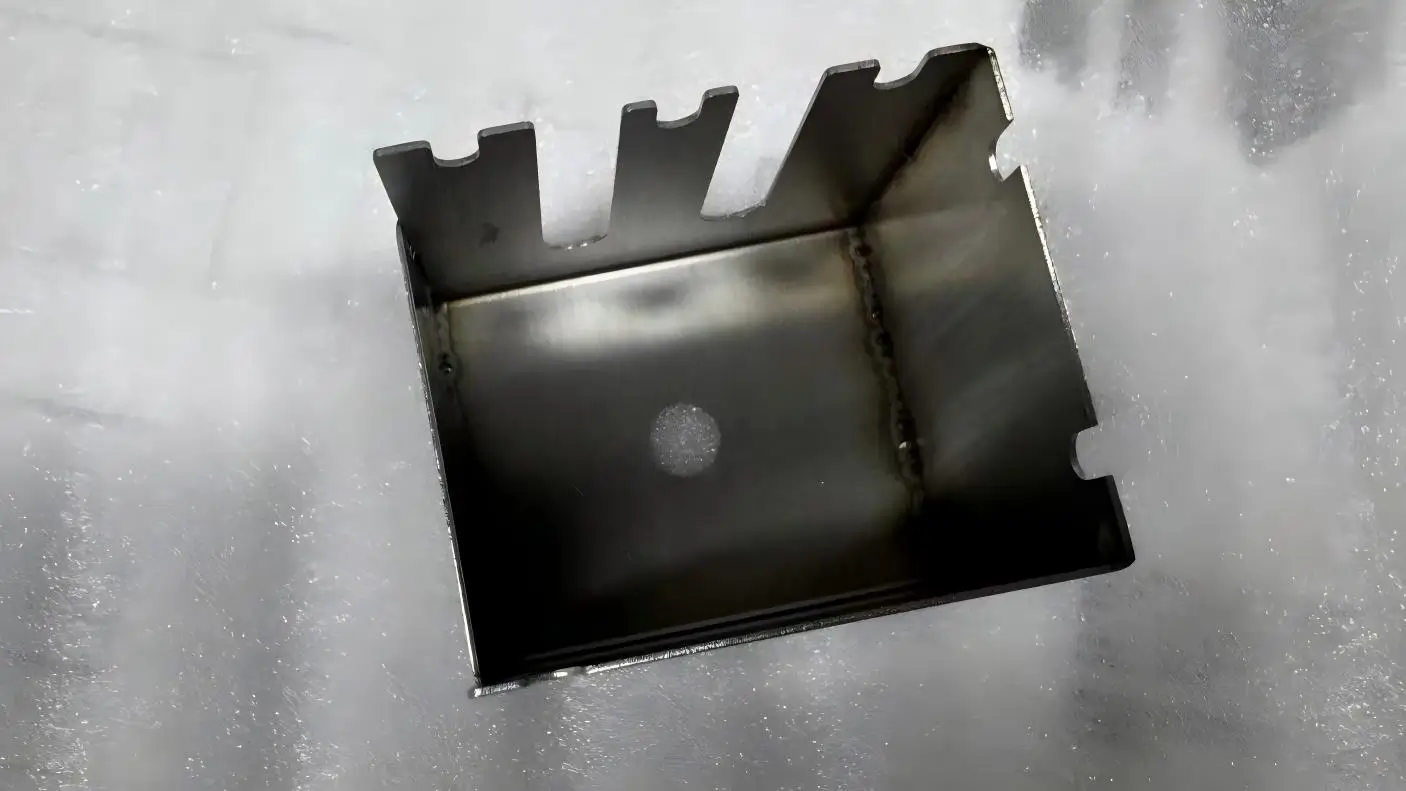
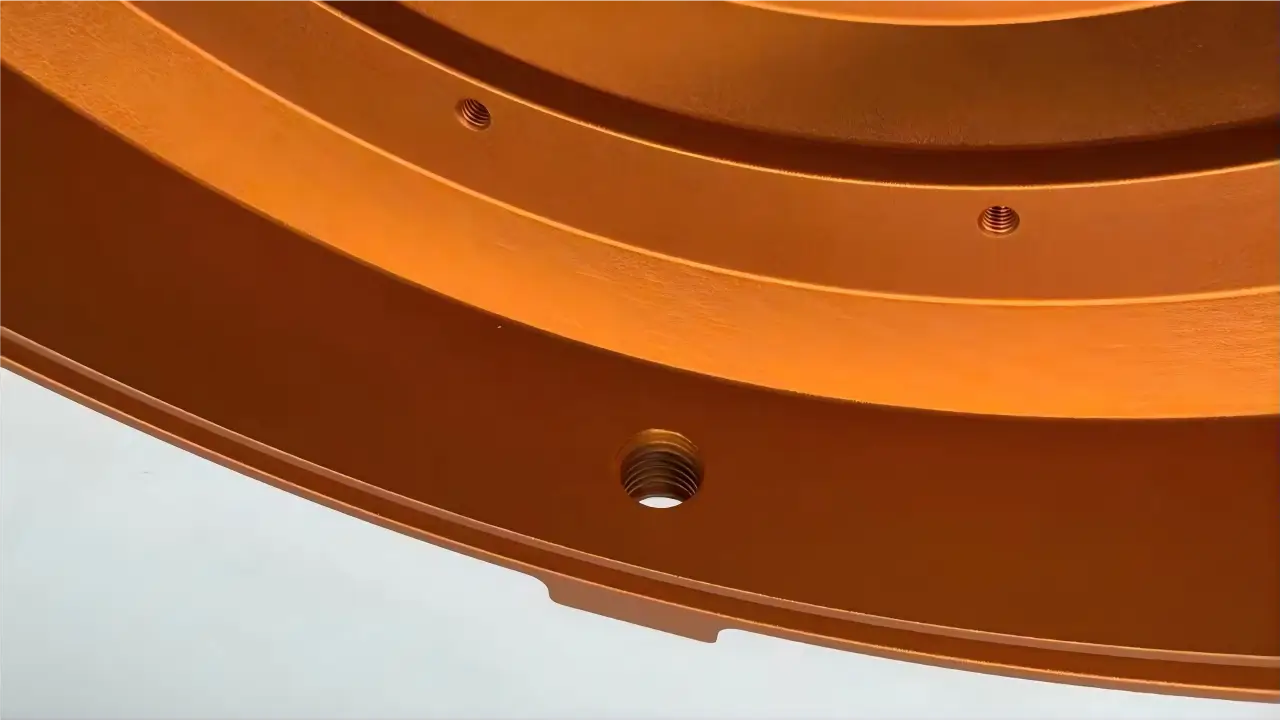
17-4PH stainless steel (also known as UNS S17400 or AISI 630) is a high-strength, precipitation-hardening stainless steel widely used in CNC machining and precision engineering.
17-4PH combines excellent strength, good corrosion resistance, and heat-treatable properties, making it ideal for demanding industries such as aerospace, oil & gas, medical, and industrial manufacturing.
Compared to standard stainless steels, 17-4PH can achieve significantly higher hardness and strength after heat treatment while still maintaining good toughness and dimensional stability.
In this guide, we will cover the key aspects of 17-4PH stainless steel, including its composition, properties, heat treatment, machinability, and applications, helping engineers and buyers better understand how to use this material effectively.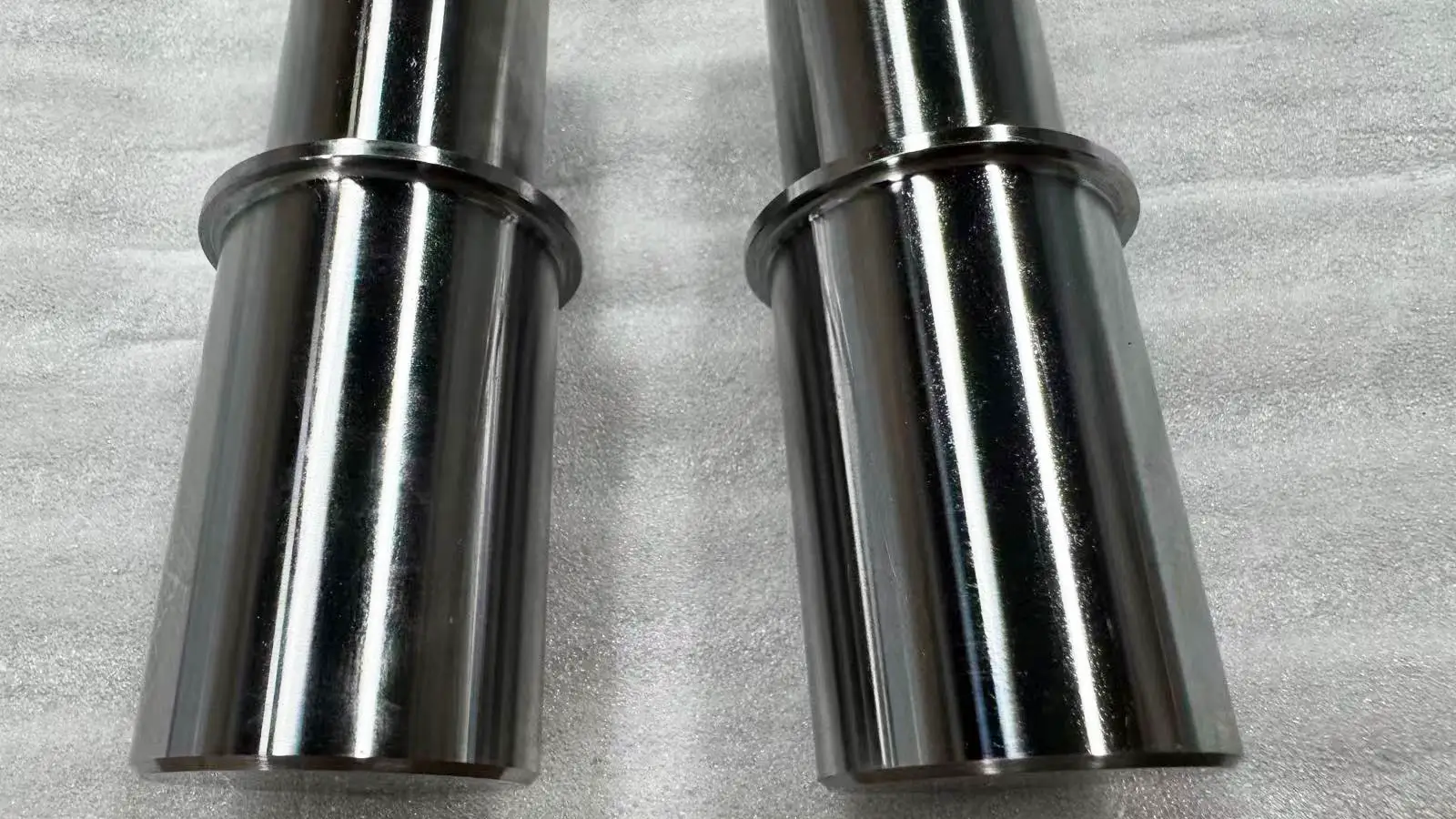
Key Takeaways:
17-4 PH stainless steel is a martensitic, precipitation-hardening stainless steel. The “PH” stands for precipitation hardening, a heat treatment process that increases strength by forming fine particles within the material’s microstructure. This material is known for its high strength, good corrosion resistance, and excellent heat treatment response. It’s widely used in aerospace, petrochemical, food processing, and mold manufacturing.
Here is the typical chemical composition of 17-4PH stainless steel.
| Element | Content (%) |
|---|---|
| Chromium (Cr) | 15.0 – 17.5 |
| Nickel (Ni) | 3.0 – 5.0 |
| Copper (Cu) | 3.0 – 5.0 |
| Carbon (C) | ≤ 0.07 |
| Manganese (Mn) | ≤ 1.00 |
| Silicon (Si) | ≤ 1.00 |
| Phosphorus (P) | ≤ 0.040 |
| Sulfur (S) | ≤ 0.030 |
| Niobium (Nb) + Tantalum (Ta) | 0.15 – 0.45 |
| Iron (Fe) | Balance (remainder) |
Chromium is one of the most important alloying elements in 17-4PH. Its main job is to improve corrosion resistance. When chromium reaches a certain level, it forms a dense, stable oxide film (passive layer) on the surface. This protective layer blocks oxygen, moisture, and other corrosive media from attacking the base material, significantly improving corrosion resistance in harsh environments.
Nickel improves overall toughness and corrosion resistance while also stabilizing the microstructure. In 17-4PH, nickel enhances performance at low temperatures or under impact loading, reduces brittleness, and provides better ductility and fracture resistance without sacrificing strength. Nickel also helps optimize the metallurgical structure, making it more stable during heat treatment.
Copper is the critical element that enables precipitation hardening in 17-4PH. It’s what sets this material apart from standard stainless steels. During heat treatment, copper forms fine precipitate particles inside the material, dramatically increasing strength and hardness. This precipitation strengthening mechanism gives 17-4PH mechanical properties far superior to conventional austenitic stainless steels while maintaining good corrosion resistance. In short, copper is the heart of this material’s high-strength capability.
Niobium primarily refines grain size and stabilizes the material’s structure. During heat treatment, niobium prevents excessive grain growth, which improves overall mechanical properties. It also enhances strength and dimensional stability after heat treatment, so parts maintain good performance even after high-temperature processing or long-term service. This is especially important for high-precision machined parts and CNC components.
In summary, 17-4PH stainless steel is an iron-based, precipitation-hardening stainless steel containing approximately 15–17.5% chromium, 3–5% nickel, and 3–5% copper. Copper is what gives this material its high strength after heat treatment.
The density of 17-4PH stainless steel is typically 7.75 – 7.80 g/cm³.
17-4PH is a precipitation-hardening stainless steel used worldwide. Different countries and standards have their own designations. Here’s a complete cross-reference.
| Country/Region | Standard/Specification | Equivalent Designation |
|---|---|---|
| USA | UNS | S17400 |
| USA | AISI/ASTM | 630 (or 17-4PH) |
| USA | AMS | AMS 5643, AMS 5622 |
| China | GB (New) | 05Cr17Ni4Cu4Nb |
| China | GB (Old) | 0Cr17Ni4Cu4Nb |
| Japan | JIS | SUS630 |
| Germany | DIN | X5CrNiCu17-04 |
| Germany | W-Nr./SEW | 1.4542 |
| European Union | EN | X5CrNiCuNb16-4 |
| France | RCCM | Z6CNU17-04 (approximate) |
| International | ISO | Corresponds to 1.4542 / X5CrNiCuNb16-4 |
17-4PH offers excellent mechanical properties, especially after precipitation hardening heat treatment (H900, H1025, etc.), which significantly increases strength.
In the H900 condition, tensile strength reaches 1310 MPa or higher, yield strength is approximately 1170 MPa, and hardness exceeds 40 HRC.
While maintaining high strength, the material still retains decent toughness and fatigue resistance, making it ideal for critical structural components under high loads and stresses.
Plus, by choosing different heat treatment conditions, you can strike the right balance between strength and toughness for your application.
| Property | Value | Notes |
|---|---|---|
| Modulus of Elasticity | 196.5 – 204.2 GPa | Largely independent of heat treatment |
| Shear Modulus | 77 – 88 GPa | — |
| Impact Toughness | >25 J | Higher aging temperature = better toughness |
| Solution-Treated Hardness | ≤363 HB / ≤38 HRC | Annealed condition, easy to machine |
| Reduction of Area | 40-50% | Increases with aging temperature |
17-4PH has stable physical properties. Density is about 7.75–7.80 g/cm³, similar to other common stainless steels. The material is dense and offers good dimensional stability, which makes it well-suited for precision machining and high-accuracy assembly.
Also, 17-4PH has low magnetic permeability and shows slight magnetism in some conditions. Keep this in mind if you’re using it in electronic or precision equipment.
| Property | Value | Unit | Notes |
|---|---|---|---|
| Density | 7.75 – 7.82 | g/cm³ | Common design value: 7.80 g/cm³ |
| Melting Point | 1400 – 1450 | °C | |
| Specific Heat Capacity | 438 – 460 | J/(kg·K) | |
| Modulus of Elasticity (Room Temp) | 200 – 205 | GPa | ~200 GPa in H900 condition |
| Magnetic Properties | Magnetic | — | Martensitic structure, ferromagnetic |
| Property | Value | Unit | Temperature Condition |
|---|---|---|---|
| Thermal Conductivity | 14.9 – 17.8 | W/(m·K) | Room temperature (23°C) |
| Thermal Conductivity | ~22.4 | W/(m·K) | 400°F (~204°C) |
| Specific Heat Capacity | 438 – 460 | J/(kg·K) | Room temperature |
| Coefficient of Thermal Expansion | 10.8 – 11.9 | ×10⁻⁶ /K | 21-93°C range |
| Coefficient of Thermal Expansion | ~10.8 | ×10⁻⁶ /°F | 400°F |
| Maximum Service Temperature | ~300 | °C | Above this, over-aging occurs, strength drops |
From the table above, you can see that 17-4PH offers good thermal stability and moderate thermal conductivity. Its coefficient of thermal expansion is about 10.8–11.5 ×10⁻⁶ /K (in the 20–100°C range), which is slightly lower than austenitic stainless steels. That means better dimensional stability in environments with temperature changes.
The material maintains good mechanical properties at moderately high temperatures, but for long-term service, I recommend keeping it below 300°C.
Extended exposure above that temperature will coarsen the copper-rich strengthening phase (over-aging), and strength will drop significantly.
| Property | Value | Unit | Notes |
|---|---|---|---|
| Electrical Resistivity | 0.77 – 1.00 | μΩ·m (or ×10⁻⁶ Ω·m) | |
| Electrical Resistivity | 70 – 80 | μΩ·cm | Alternative unit |
| Temperature Coefficient | — | K⁻¹ | Data not available, but typically increases with temperature |
17-4PH has relatively high electrical resistivity, around 0.75–0.80 μΩ·m. That’s significantly higher than copper or aluminum, so its electrical conductivity is poor.
This material isn’t typically used for conductive applications, but its resistivity can be an advantage in structural components where some resistance is needed. Resistivity may vary slightly depending on heat treatment condition, but overall changes are minor.
Because 17-4PH’s resistivity is in the moderate range, it’s suitable for EDM process (electrical discharge machining). Its conductivity is sufficient to maintain a stable discharge, giving you good machining efficiency.
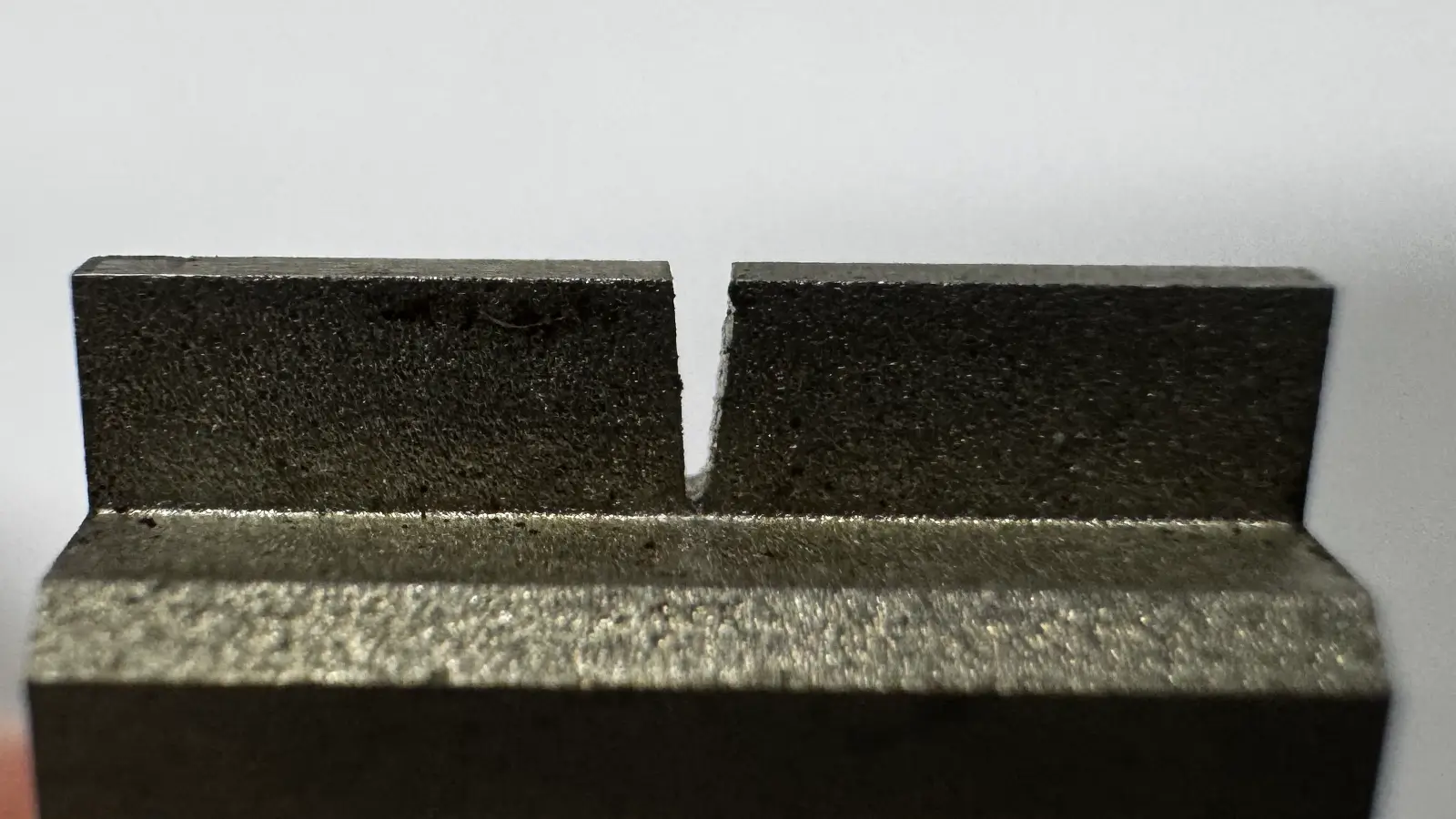
17-4PH is a martensitic precipitation-hardening stainless steel. Its big advantage is that you can adjust its mechanical properties over a wide range through heat treatment.
Unlike ordinary steels, 17-4PH heat treatment typically involves two main steps: Solution Treatment and Aging (Precipitation Hardening).
Sometimes, you might also add a Conditioning Treatment in between to optimize overall performance.
The first step is to dissolve all the strengthening alloying elements (copper, niobium, etc.) into the matrix, forming a uniform martensitic structure and preparing the material for precipitation hardening.
| Parameter | Specification |
|---|---|
| Heating Temperature | 1020 – 1060°C (typically 1040°C) |
| Holding Time | Based on cross-section thickness: typically 1 hour per 25mm of thickness, 30 minutes minimum |
| Cooling Method | Oil quench or air cool. Must cool rapidly to below 32°C to fully transform to martensite |
| Resulting Condition | Condition A (solution-treated), hardness ≤363 HB / ≤38 HRC |
After solution treatment, don’t put the material into service in stress corrosion environments. Do your rough machining in the solution-treated condition – the material is relatively soft and easy to cut.
This is an optional but valuable intermediate step between solution treatment and aging. It adjusts the microstructure and improves overall mechanical properties, especially the balance between strength and ductility.
| Parameter | Specification |
|---|---|
| Heating Temperature | 780°C |
| Purpose | Improve microstructural uniformity, enhance overall mechanical properties |
| Effect | Research shows that the process: 1050°C solution + 780°C conditioning + 480°C aging gives 17-4PH its best strength-toughness combination |
This is the core step for achieving high strength. The solution-treated material is metastable.
By heating it to a specific temperature and holding, you cause nano-scale copper-rich phases (ε-Cu) and carbides to precipitate throughout the matrix. They act like “nano-sized nails” pinning dislocations, dramatically increasing strength and hardness.
| Aging Code | Aging Temp (°C / °F) | Typical Hardness (HRC) | Tensile Strength (MPa) | Elongation (%) | Typical Applications |
|---|---|---|---|---|---|
| H900 | 470–490°C (880–910°F), typically 480°C (900°F) | 40–47 | ≥1310 | ≥10 | Maximum strength, wear parts, high-stress components |
| H925 | 496°C (925°F) | 38–45 | ~1170 | ~10 | Slightly better toughness than H900 |
| H1025 | 540–560°C (1000–1040°F), typically 550°C (1025°F) | 35–42 | ≥1060 | ≥12 | Good balance of strength and toughness |
| H1075 | 570–590°C (1060–1095°F) | 31–39 | ≥1000 | ≥13 | Higher toughness, good corrosion resistance |
| H1100 | 593°C (1100°F) | 32–38 | ~965 | ~14 | — |
| H1150 | 610–630°C (1130–1165°F) | 28–37 | ≥930 | ≥16 | Maximum toughness, stress corrosion resistance, weldments |
Note: The “900” in H900 stands for 900°F (approx. 482°C). These codes are based on the aging temperature in Fahrenheit.
Here’s the key relationship for 17-4PH aging: The lower the aging temperature, the higher the strength and hardness you’ll get, but the lower the ductility and toughness. Conversely, the higher the aging temperature, the lower the strength and hardness, but the better the ductility and toughness.
17-4PH stainless steel is a precipitation-hardening martensitic stainless steel, and its weldability is generally medium to difficult. Compared to austenitic stainless steels like 304 or 316, 17-4PH requires tighter control over heat input and process parameters. If you’re not careful, you can run into cracking, property degradation, and distortion. For high-precision CNC parts, you really need to pay attention here.
During welding, the biggest challenge with 17-4PH is its high crack sensitivity, especially if you’re welding in a high-strength aged condition (H900, H1025). It’s more prone to hot cracking. Also, the material is sensitive to hydrogen. If your welding consumables or the environment have moisture, you can get hydrogen-induced cracking. Use low-hydrogen welding consumables and keep everything dry.
On top of that, welding softens the heat-affected zone (HAZ), which affects local strength and overall performance. Heat input and residual stresses can also cause distortion, which is a big deal for parts with tight dimensional tolerances. Plan your welding sequence carefully and use fixtures to control distortion.
For the process itself, TIG, MIG, or laser welding are typical. TIG is better for precision parts. For filler metal, ER630 is common to match strength. In some cases, ER308L or ER309L can be used to improve toughness. Keep heat input low, use intermittent welding, and control interpass temperature.
Post-weld heat treatment (PWHT) is critical for restoring properties. You’ll typically need to do an aging treatment (H900 or H1025) to recover mechanical properties. In some cases, you might need to solution treat and then age. Skip the PWHT, and the weld region won’t meet design requirements.
For CNC manufacturing, I recommend this sequence: Rough machine → Weld → Heat treat → Finish machine. In the design phase, avoid placing welds in highly stressed areas, and leave machining stock to compensate for distortion from welding and heat treatment. With good process control, 17-4PH is still an excellent, high-strength material.
In most environments, 17-4PH’s corrosion resistance is comparable to 304 stainless steel and generally better than the 400 series martensitic stainless steels. That’s why it’s a great choice for applications that need a combination of moderate corrosion resistance and ultra-high strength.
However, 17-4PH is sensitive to pitting and crevice corrosion. Compared to 304 and 316, it’s less resistant in chloride-containing environments. In marine or high-salt spray environments, you’ll see pitting and crevice corrosion more readily.
17-4PH is not suitable for long-term exposure to strong acids, strong alkalis, or high-chloride environments. Those conditions will accelerate corrosion damage. Also, under high stress combined with a corrosive medium, you can get stress corrosion cracking (SCC). For high-precision or high-load structures, this is a major concern.
Corrosion Resistance Comparison with Other Stainless Steels
| Material | Pitting/Crevice Corrosion Resistance | SCC Resistance | General Corrosion Resistance | Strength |
|---|---|---|---|---|
| 17-4PH (H1150) | Medium | Good | Good | High |
| 17-4PH (H900) | Medium | Poor | Good | Highest |
| 304/304L | Medium | Medium | Excellent | Low |
| 316/316L | Good | Medium | Excellent | Low |
| 410 (Martensitic) | Poor | Poor | Fair | Medium |
In the solution-treated condition, 17-4PH is easy to machine. But once it’s aged, it becomes a classic “difficult-to-machine” material.
Overall, I’d rate 17-4PH’s CNC machinability as medium to difficult. That said, compared to high-strength alloys or some tool steels, it still has decent overall machinability. With the right process, you can achieve high accuracy and good surface finish.
17-4PH has a significant work-hardening tendency.
During cutting, the surface hardens rapidly. If your parameters aren’t right (e.g., feed rate too low, dull tool), you’ll get: rapidly increasing cutting forces, accelerated tool wear, and poor surface finish.
Aged 17-4PH (H900 condition) has a hardness of 40-47 HRC. That’s tough on tools – both abrasive and adhesive wear are significant. Data shows that optimized tool designs can reduce cutting temperature by 26%, surface roughness by 28%, and flank wear by 21% compared to conventional tools.
After removing a lot of material, the original stress balance in the part is disrupted. Residual stresses redistribute, causing distortion. This is especially problematic for thin-wall parts and long shafts.
Take an aerospace flange we did: 97mm max OD, only 1.4mm at the thinnest section, with a flatness requirement of 0.003mm. Residual stress relief was the main cause of dimensional problems.
17-4PH’s thermal conductivity is about 15 W/(m·K), roughly 1/3 that of carbon steel. That means heat builds up in the cutting zone, leading to: softening of the cutting edge, higher cutting temperatures, and compromised accuracy and surface integrity.
| Machining Stage | Recommended Tool | Coating | Notes |
|---|---|---|---|
| Roughing (Solution-Treated) | Carbide | TiAlN / AlTiN | Good value, good wear resistance |
| Finishing (Solution-Treated) | Carbide | TiAlN / AlTiN | Sharp cutting edge |
| Aged Condition (H900/H1025) | High-performance carbide / CBN | AlTiN / TiSiN | High wear resistance, high hot hardness |
| Ultra-Precision | CBN / Ceramic | — | For high-hardness conditions |
Turning 17-4PH Parameters (Solution-Treated, ~35 HRC):
| Parameter | Recommended Range | Notes |
|---|---|---|
| Cutting Speed (Vc) | 80-150 m/min | Keep speed lower to avoid overheating |
| Feed Rate (f) | 0.1-0.25 mm/rev | Avoid low feeds to prevent work hardening |
| Depth of Cut (ap) | 0.5-2.5 mm | Use higher values for roughing |
| Coolant | Flood, high pressure | Mandatory |
Milling 17-4PH Parameters (Aged, H900, ~45 HRC):
| Parameter | Recommended Range | Notes |
|---|---|---|
| Cutting Speed (Vc) | 40-80 m/min | Significantly reduced |
| Feed per Tooth (fz) | 0.03-0.10 mm/tooth | Keep feed positive |
| Depth of Cut (ap) | 0.2-1.0 mm | Use lower values for finishing |
Note: These cutting parameters are based on our actual machining experience. Your shop’s equipment and experience may differ, so adjust accordingly.
Adequate coolant is mandatory when machining 17-4PH.
When designing parts from 17-4PH stainless steel, you need to consider its high strength, heat treatment sensitivity, and welding characteristics.
The unique thing about 17-4PH is that its properties change dramatically with heat treatment. 17-4PH CNC machining must follow the typical process: Rough Machining-Heat Treatment-Fine Machining.
| Machining Stage | Material Condition | Hardness | Design Focus |
|---|---|---|---|
| Stage 1: Roughing | Solution-Treated (Condition A) | ~30-35 HRC | Efficient material removal, reasonable tool life |
| Stage 2: Finishing | Aged (H900/H1150) | 35-47 HRC | Difficult machining, light cuts, demands quality tools and machines |
For any high-precision mating surface (tolerances ≤0.01mm) or high-finish surface, you must leave 0.2-0.5mm of finishing stock. This stock is left while the material is in the easy-to-machine solution-treated condition. After aging hardens the part, you remove this stock via hard turning, hard milling, or grinding to hit final dimensions.
Design all critical high-precision features (holes, shoulders, surfaces) so they can be machined in the same orientation or same setup. During both roughing (solution-treated) and finishing (aged), minimize re-fixturing. In the aged, high-hardness condition, any error from a second setup is hard to correct, and the clamping itself can damage finished surfaces.
During the solution-treated roughing stage, the goal is high material removal rates. Here’s what helps.
| Feature | Recommended | Avoid | Impact on CNC Machining |
|---|---|---|---|
| Deep Holes | Step drills, or specify gun drilling | Straight smooth holes with L/D > 10 | Chip evacuation is tough, coolant doesn’t reach the cut, high risk of work hardening and tool breakage |
| Cavities/Pockets | Generous corner radii (R ≥ 3mm or 15% of cutter diameter) | Sharp inside corners (R=0) | Sharp corners cause high tool loads, vibration, chipping, and difficulty cleaning out |
| Thin Walls | Wall thickness > 1.5mm, add ribs | Large-area thin walls (≤1mm) | Chatter, poor surface finish, dimensional problems, distortion |
| Threads | Standard threads that can be tapped; for high-strength aged condition, use thread inserts or ground threads | Threads in deep blind holes; non-standard coarse-pitch threads in aged condition | Tapping in aged condition is risky (tool breakage); coarse-pitch threads require thread milling or single-point threading |
| Floor and Side Wall | Floor perpendicular to side wall | Side wall angle < 90° | Sharp angles require small-diameter, long-reach tools – poor rigidity, low efficiency |
17-4PH is weakly magnetic in the solution-treated condition and more strongly magnetic when aged. Use this to your advantage.
| Strategy | Recommended Practice | Benefit for CNC Machining |
|---|---|---|
| Provide a Flat Pickup Surface | Design a large, flat surface on the part for vacuum or magnetic chuck pickup | Eliminates vises and clamps. Stress-free workholding. Critical for thin-wall or distortion-prone parts. |
| Provide Tooling Tabs / Fixture Bosses | Add removable tooling tabs or fixture bosses on non-functional areas for clamping | Allows you to put high clamping forces on sacrificial features. The main part sees no stress. |
| Design Datum Features | Clearly specify one flat surface and two holes as machining datums (3-2-1 locating) | Gives your programmer and setup person a repeatable, unambiguous reference. Reduces human error. |
Based on the design features above, here’s how your CAM programming should adjust.
| Strategy | Solution-Treated (Roughing) | Aged (Finishing) |
|---|---|---|
| Toolpath | Trochoidal milling or dynamic milling. Control radial engagement, keep tool load constant. | Contouring or helical strategies. Avoid sudden engagement or disengagement. |
| Cutting Parameters | High speed (80-150 m/min), heavy depth of cut (1-2D), moderate feed | Low speed (40-80 m/min), light depth of cut (0.1-0.3mm), high feed (to make up for lost MRR) |
| Coolant | Flood coolant | High-pressure through-spindle coolant (≥70 bar). Needed to break hard, brittle chips. |
| Deburring | Design in 45° chamfers or radii to reduce burr formation | For cross-holes and edges, use ceramic fiber brushes or electrochemical deburring. Avoid manual deburring – it damages precision. |
Here’s our internal checklist for 17-4PH parts:
Workholding/Datums: Is there a flat, continuous surface for vacuum or magnetic chuck pickup?
Stock Allowance: Are high-precision features (bearing fits, seal surfaces) clearly noted as “rough machine, finish after heat treat”?
Radii and Transitions: Do all internal vertical corners have adequate radii (R ≥ cutter radius)?
Deep Holes: For holes deeper than 10x diameter, are they specified as step drills or gun drilling?
Thin Walls: Is wall thickness > 1.5mm? If thinner, are ribs added or supports specified?
Threads: Does the drawing specify whether threads are machined “before aging” or “after aging”? For small threads after aging, are thread inserts recommended?
Tooling Aids: Are removable tooling tabs or fixture bosses allowed for clamping?
Tolerance Clusters: Are tight-tolerance features grouped so they can be machined in a single setup?
Here are typical applications for 17-4PH across different industries.
This is one of the most important application areas for 17-4PH. Typical parts: landing gear components, turbine engine blades, structural fasteners, helicopter deck tie-down grids. The material maintains excellent strength up to 316°C (600°F) and meets strict aerospace specs like AMS 5643. It’s a go-to material for critical moving parts on aircraft.
Downhole and offshore platforms face high pressure, hydrogen sulfide (H₂S), and seawater corrosion. Typical 17-4PH parts: pump shafts, valve stems and discs, downhole tool joints, flanges, and fasteners.
Typical parts: drive screws for reactor control rod mechanisms, internal structural components for dry spent fuel storage containers, valves for safety-related piping.
This is an emerging application area for 17-4PH. Typical parts: temporary fracture fixation devices (locking screws, fixation pins), surgical instruments, dental tools.
When you need both corrosion resistance and mechanical strength, 17-4PH is a good choice. Examples: fractionators in pulp and paper, pump bodies and mixing blades in food processing, high-pressure reactor fasteners in chemical plants.
Its corrosion resistance is comparable to 304 stainless steel, and after aging, surface hardness can reach 40 HRC or higher. That makes it effective against abrasive wear from media containing solid particles.
17-4PH stainless steel is a mid-to-high-end material in CNC machining. It’s not the most common everyday material, but it’s very common in applications that need high strength, good corrosion resistance, and stable properties.
In this blog, we’ve expored 17-4PH material properties – especially heat treatment – and gone into detail on the challenges and design considerations for CNC machining this alloy.
If you need 17-4PH machining services, we are ready to help.
Yes. 17-4PH is widely used in CNC machining. It offers high strength and good corrosion resistance. However, it’s more difficult to machine than aluminum or free-machining stainless steel due to its hardness and work-hardening tendency.
Yes. The material is usually machined in the solution-treated condition, then heat treated (aged) to achieve final mechanical properties. This process can cause slight dimensional changes, so final precision machining is often required after heat treatment.
Yes. It provides good corrosion resistance in general environments, including atmospheric and mild industrial conditions. However, it’s less corrosion resistant than 304 or 316 stainless steel, especially in high-chloride or marine environments.
Yes. Unlike austenitic stainless steels, 17-4PH is magnetic due to its martensitic structure. Its magnetic properties may vary depending on the heat treatment condition.
Yes, they’re essentially the same. “17-4” is a common shorthand for 17-4PH stainless steel. Both terms refer to the same material, but “17-4PH” is the formal designation, especially when specifying heat treatment conditions.
Heat treatment usually involves two stages: solution treatment and aging. The material is heated to a high temperature to dissolve alloying elements, then rapidly cooled, followed by aging at a lower temperature (H900, H1150, etc.) to achieve the desired strength and hardness.
Condition A refers to the solution-treated state of 17-4PH. In this condition, the material is relatively soft and ductile, making it suitable for machining before final aging heat treatment.
H900 is a heat-treated condition where the material is aged at approximately 480°C (900°F). It provides very high strength and hardness, but lower toughness compared to higher-temperature aging conditions.
Hardness varies by condition:
Condition A: relatively soft (~20–30 HRC)
H900: very hard (~40–45 HRC)
H1150: lower hardness (~28–33 HRC) but better toughness
H1150 is a higher-temperature aging condition (~620°C). It results in lower strength but higher toughness and better corrosion resistance, making it suitable for applications requiring impact resistance.
H900 provides maximum strength and hardness,but lower toughness and corrosion resistance.
H1150 provides better toughness and corrosion resistance, but lower strength.
Yes. CNC machining services typically support both prototype development and mass production. Prototypes are used for testing and validation, while mass production focuses on consistency, efficiency, and cost control.

5-Axis CNC machining is a manufacturing process that uses computer numerical control systems to operate 5-axis CNC machines capable of moving a cutting tool or a workpiece along five distinct axes simultaneously.

China is the best country for CNC machining service considering cost, precision, logistic and other factors. Statistical data suggests that China emerges as the premier destination for CNC machining.

Selecting the right prototype manufacturing supplier in China is a critical decision that can significantly impact the success of your product development project.

Machining tolerances stand for the precision of manufacturing processes and products. The lower the values of machining tolerances are, the higher the accuracy level would be.