In our previous article on deep hole drilling, we briefly introduced abrasive flow machining (AFM) as a finishing process for improving internal surface quality.
In this article, we will take a closer look at how AFM works, where it is used, and when it is the right finishing solution for CNC parts.
Also known as abrasive flow polishing, fluid polishing, or extrusion honing, AFM uses a specially formulated abrasive media that is forced through or across a workpiece under controlled pressure.
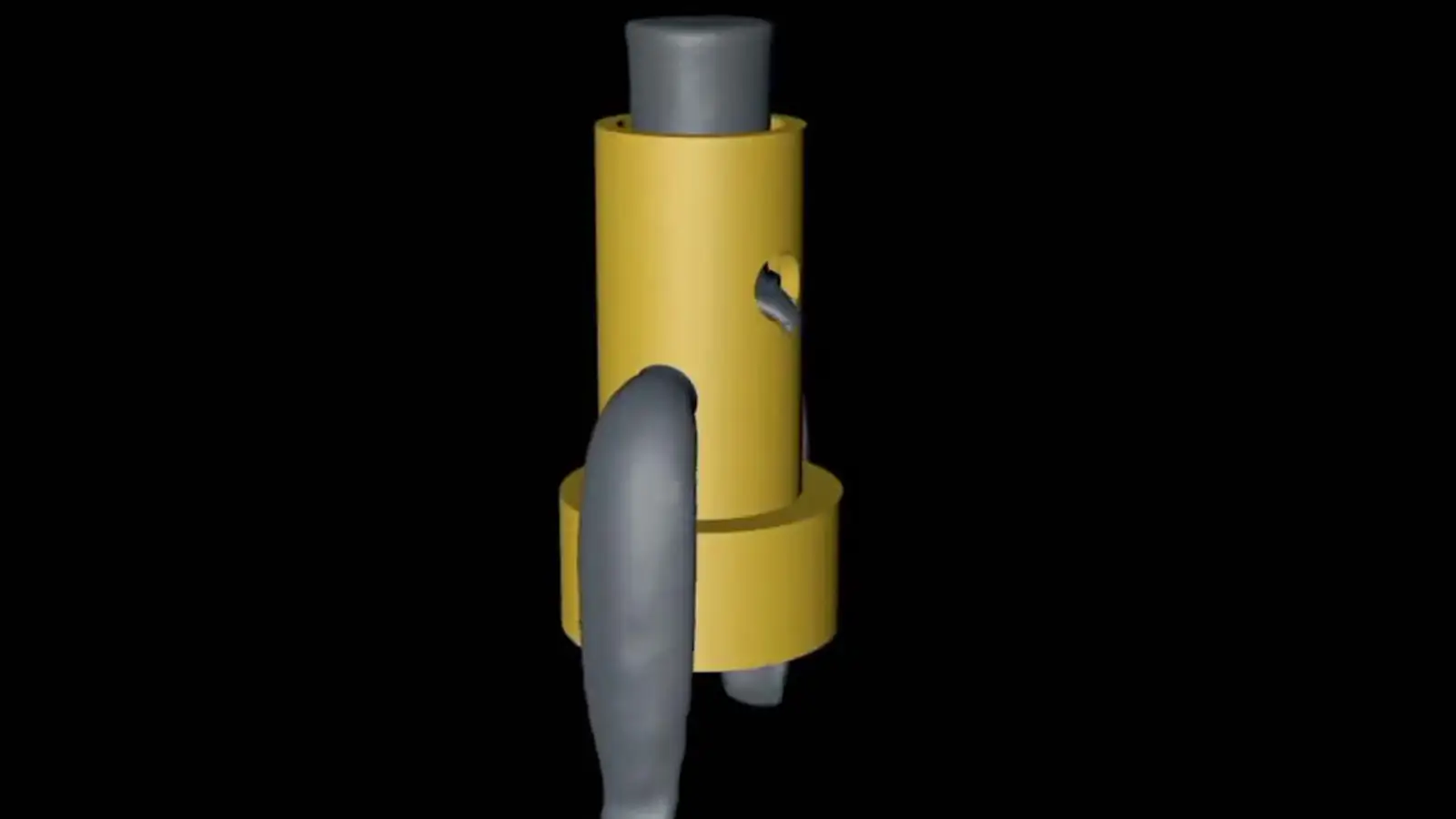
The abrasive media typically consists of:
Common abrasive materials include silicon carbide and aluminum oxide, while other abrasive types can be selected depending on the workpiece material and required finishing performance.
During machining, hydraulic pressure pushes the abrasive media through the workpiece. As the media passes through the internal passage, abrasive particles contact the surface asperities and perform microscopic cutting and plowing.
Unlike a conventional rigid cutting tool, the abrasive media deforms to follow the geometry of the passage.
This makes AFM particularly useful for finishing areas that are difficult or impossible to reach with conventional polishing tools. Research and industrial applications have demonstrated its use for deburring, edge radiusing, polishing, and removing recast layers from complex components.
The basic AFM process is relatively simple. The typical system consists of:
The workpiece is mounted inside a specially designed fixture. Abrasive media is then pushed through the target passage under controlled pressure.
Below are typical steps of AFM.
The fixture controls where the abrasive media flows.
Fixture design is especially important for complex parts because the media must be directed through the surfaces that require finishing.
For a previous deep-hole CNC project, we developed and optimized the AFM fixture through two iterations to achieve the required media flow and finishing performance.
The selected media contains abrasive particles suspended in a flexible polymer-based carrier.
The abrasive type, grain size, concentration, and media properties can be adjusted according to the application.
Hydraulic cylinders push the media through the workpiece.
In many AFM systems, the media moves back and forth through the part for multiple cycles.
As the abrasive particles move across the internal surface, they remove microscopic peaks and irregularities.
The primary mechanisms include micro-cutting and micro-plowing.
After the required number of cycles, the workpiece is removed, cleaned, and inspected.
The biggest advantage of AFM is accessibility.
In traditional polishing, the tool can easily access and contact the surface. However, for deep holes or complex internal geometries, this becomes challenging.
AFM solves this problem by using the abrasive media itself as the finishing tool.
Because the media is flexible, it can flow through complicated passages and conform to the internal geometry.
This makes AFM particularly attractive for:
AFM can perform several different finishing functions depending on the application.
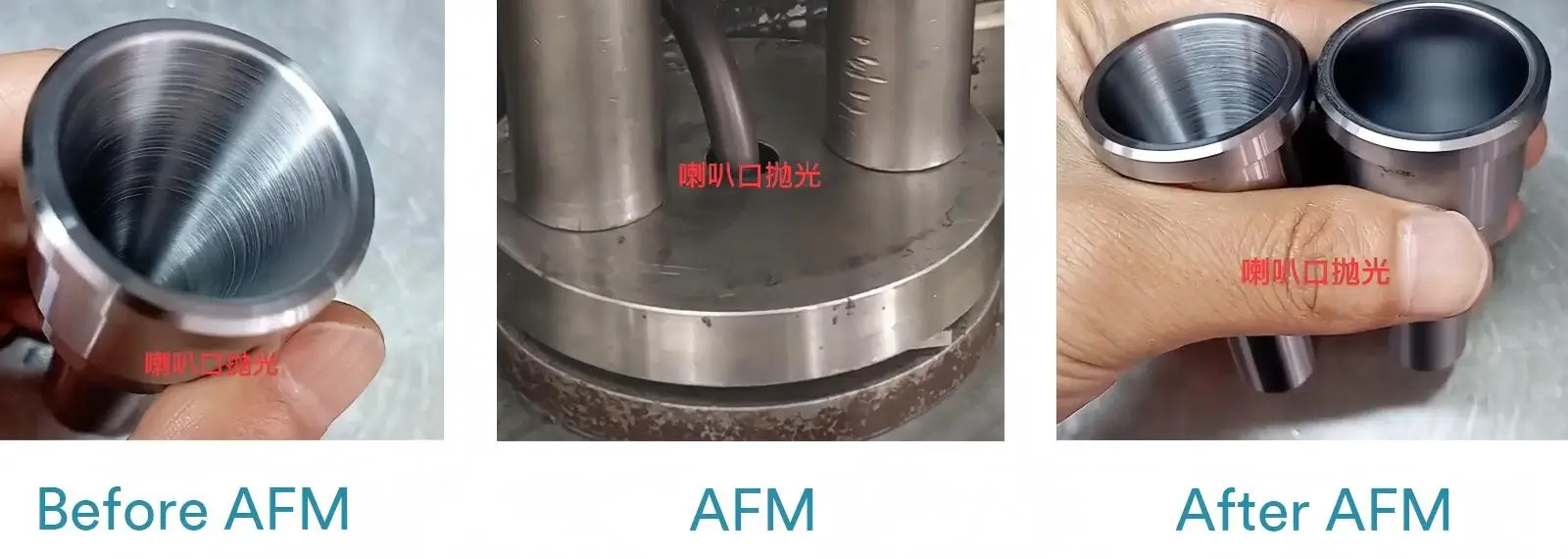
AFM removes microscopic surface peaks and machining marks, reducing surface roughness.
For applications involving fluid or gas flow, a smoother internal surface can also help reduce surface-related flow disturbances.
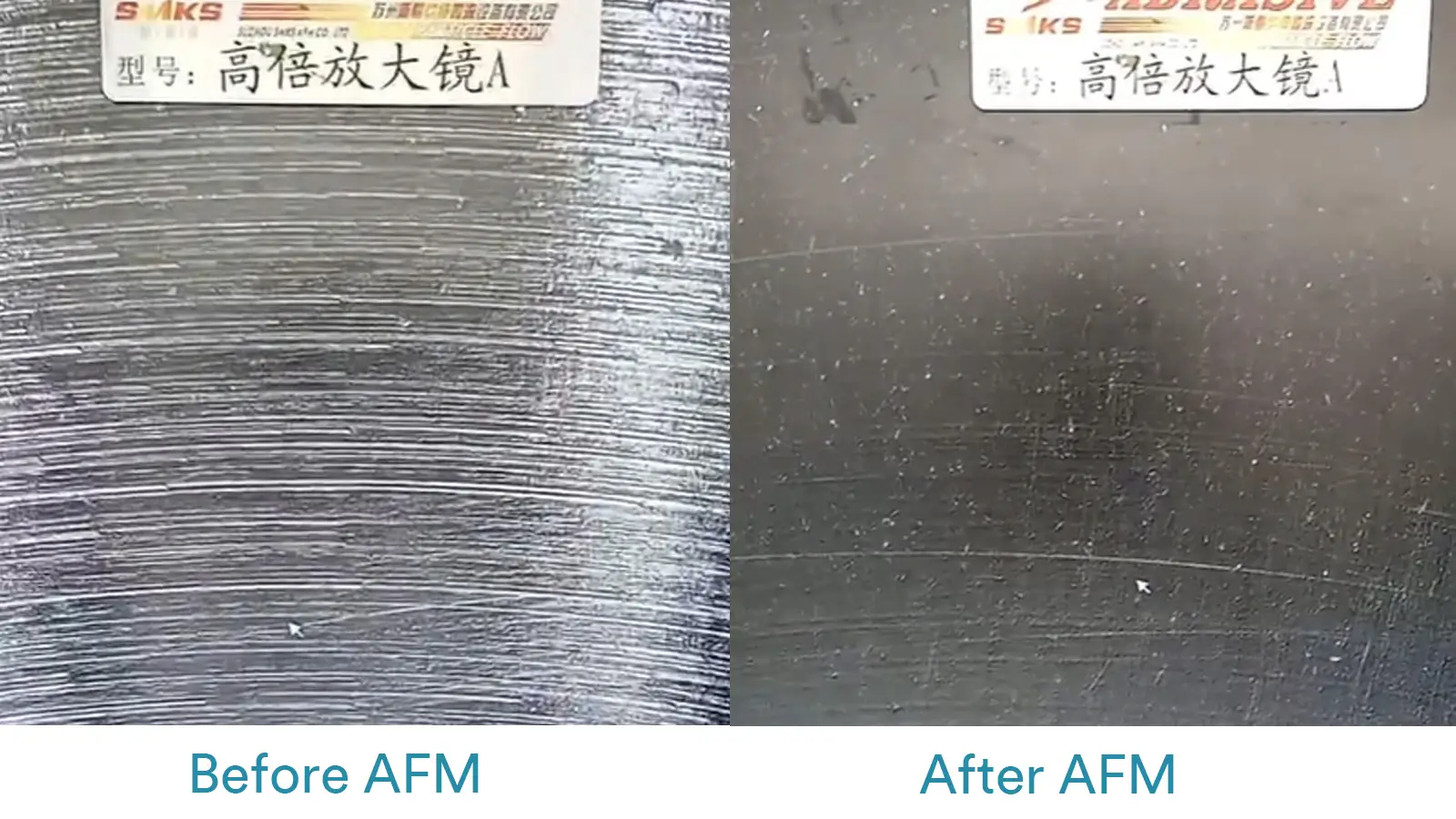
The achievable finish depends heavily on the starting surface condition, abrasive media, abrasive concentration, grain size, pressure, flow conditions, and number of cycles.
Therefore, it is important not to specify a universal AFM surface finish for every material and geometry.
AFM can remove burrs from difficult-to-access internal features.
This is particularly useful for:
For complex components, AFM can reach several internal features simultaneously, something that may be difficult with manual deburring.
AFM can also create a controlled radius on sharp internal edges.
This can be important when sharp edges may:
The amount of edge radiusing depends on the geometry and process parameters and must be validated for critical applications.
AFM can also be used after processes such as EDM.
Electrical discharge machining can create a recast layer and heat-affected surface condition. AFM has been studied as a method for improving such surfaces, including complex internal channels.
AFM can be applied to a wide range of engineering materials, which are listed below.
The appropriate abrasive media and process parameters are different for each material.
AFM is not simply a matter of pushing abrasive media through a part.
The finishing result depends on several interacting parameters.
Different abrasive materials provide different cutting characteristics.
Common options include:
The abrasive must be selected according to the workpiece material and required finishing performance.
Abrasive concentration has a major influence on material removal and surface finishing performance.
Higher concentration does not automatically mean better results. The correct concentration depends on the workpiece, media formulation, and finishing target.
Experimental research has identified abrasive concentration as one of the important parameters affecting AFM performance.
Coarser abrasive particles generally provide more aggressive material removal, while finer abrasive particles are typically used for finer finishing.
Pressure determines how the abrasive media moves through the restricted passage and influences the interaction between the abrasive particles and the workpiece surface.
The media may be passed through the workpiece repeatedly.
Increasing the number of cycles can improve the surface condition, but excessive processing may result in unwanted material removal or geometry changes.
Recent experimental research continues to investigate how abrasive passes affect surface roughness under controlled AFM conditions.
The viscosity and rheological behavior of the abrasive media are critical.
The media needs to be fluid enough to move through the passage while remaining capable of carrying the abrasive particles against the workpiece surface.
For complex passages, media behavior can have a significant influence on where and how much material is removed.
AFM is not always the best finishing process.
The right choice depends on the geometry, material, dimensional requirements, and surface-finish target.
| Process | Best Suited For | Complex Internal Passages | Burr Removal | Dimensional Control |
|---|---|---|---|---|
| Manual Polishing | Accessible surfaces | Limited | Limited | Limited |
| Grinding | Accessible precision surfaces | Limited | Limited | Excellent |
| Honing | Straight internal bores | Moderate | Limited | Excellent |
| Electropolishing | Conductive metal surfaces | Excellent | Good | Limited |
| AFM | Complex internal passages | Excellent | Excellent | Moderate |
Honing is highly effective for straight cylindrical bores where excellent dimensional accuracy and surface finish are required.
However, honing tools are generally less suitable for highly complex internal passages.
AFM has an advantage when the internal geometry includes cross holes, curved passages, or inaccessible areas.
Electropolishing is an electrochemical process rather than a mechanical abrasive process.
It can provide excellent surface finishing for suitable electrically conductive materials and complex internal surfaces.
However, AFM provides a different set of capabilities, particularly where mechanical deburring, controlled edge radiusing, or localized material removal is required.
AFM becomes particularly interesting when combined with deep-hole machining.
A deep hole may be successfully produced by Gun Drilling, but producing the hole is only one part of the manufacturing process.
The drilling operation may leave:
For applications requiring a smoother internal surface, a secondary finishing operation may be necessary.
For one 12 mm × 350 mm precision deep-bore component, our process was: Deep Hole Drilling → CNC Machining → Grinding → AFM.
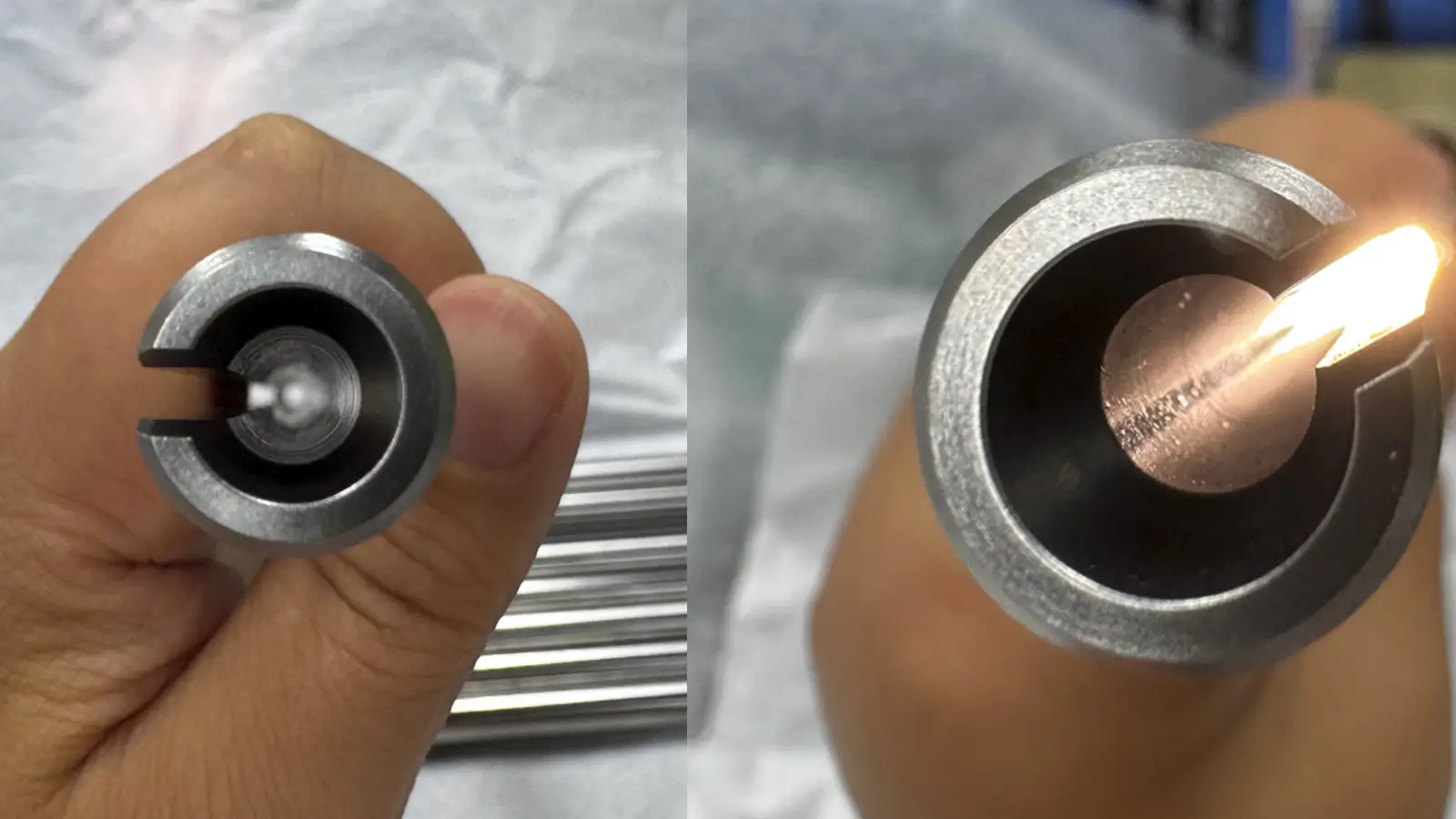
AFM is not necessarily about achieving the lowest possible Ra value. It is about finding a practical way to improve surfaces that are difficult to finish by conventional methods.
Despite its advantages, Abrasive Flow Machining (AFM) is not suitable for every application.
As a secondary finishing process, it removes only small amounts of material and cannot replace bulk machining when significant stock removal is needed. Material removal uniformity can be affected by part geometry, making proper fixture and process design critical.
Since AFM physically removes material, its impact on tight dimensional tolerances must be evaluated before production. Success also depends on optimizing abrasive media, grain size, pressure, flow path, fixture design, and cycle count.
Finally, for low-volume or complex parts, the upfront costs of fixture development and process validation can be significant, so AFM is most viable when the finishing requirements justify the investment.
AFM is worth considering when your part has one or more of the following characteristics:
A simple decision guide is:
Straight precision bore → Honing or grinding
Accessible external surface → Conventional polishing or grinding
Conductive material with electrochemical finishing requirements → Electropolishing
Complex internal passage → AFM
Deep hole with difficult internal finishing → Deep-hole drilling + AFM
Complex 3D printed internal channel → CNC/AM + AFM
Abrasive Flow Machining (AFM) is a specialized finishing process for improving internal surfaces that are difficult to reach with conventional polishing or grinding tools.
Its key advantage is accessibility. Abrasive media can flow through deep, narrow, curved, and interconnected passages to remove burrs, smooth machining marks, and radius internal edges.
Have a part that requires deep hole drilling or AFM finishing? ECOREPRAP can provide DFM feedback and a fast quotation.
Fluid polishing is commonly used to describe Abrasive Flow Machining (AFM), although terminology can vary by industry and application.
Yes. AFM is well suited for deep holes and narrow internal passages because the abrasive media can flow through areas that are difficult to reach with conventional polishing tools. The effectiveness depends on the hole diameter, depth, geometry, and process parameters.
Yes. AFM can effectively remove burrs from internal holes, cross-hole intersections, slots, and other difficult-to-access areas. It can also help create a smoother radius on sharp internal edges.
Yes, but typically only by a small amount. AFM removes material from the surface, so it can slightly increase an internal diameter or alter edge geometry. For tight-tolerance parts, the dimensional change should be evaluated and controlled through process testing.
AFM can significantly improve surface finish, but there is no single Ra value that applies to every application. The final result depends on the material, starting surface condition, abrasive media, pressure, grain size, and number of cycles.
Neither is universally better—the right process depends on the application. AFM is particularly effective for mechanical deburring, edge radiusing, and finishing complex internal passages. Electropolishing is often preferred when a smooth, chemically polished surface is required on suitable conductive metals. For some applications, the two processes can even be complementary.

5-Axis CNC machining is a manufacturing process that uses computer numerical control systems to operate 5-axis CNC machines capable of moving a cutting tool or a workpiece along five distinct axes simultaneously.

China is the best country for CNC machining service considering cost, precision, logistic and other factors. Statistical data suggests that China emerges as the premier destination for CNC machining.

Selecting the right prototype manufacturing supplier in China is a critical decision that can significantly impact the success of your product development project.

Machining tolerances stand for the precision of manufacturing processes and products. The lower the values of machining tolerances are, the higher the accuracy level would be.