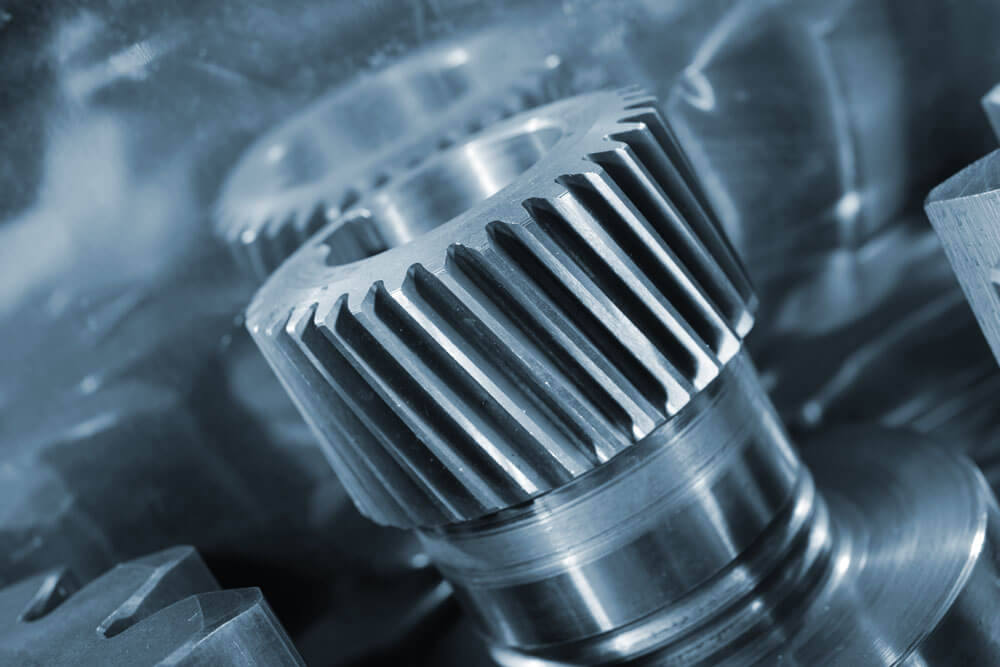
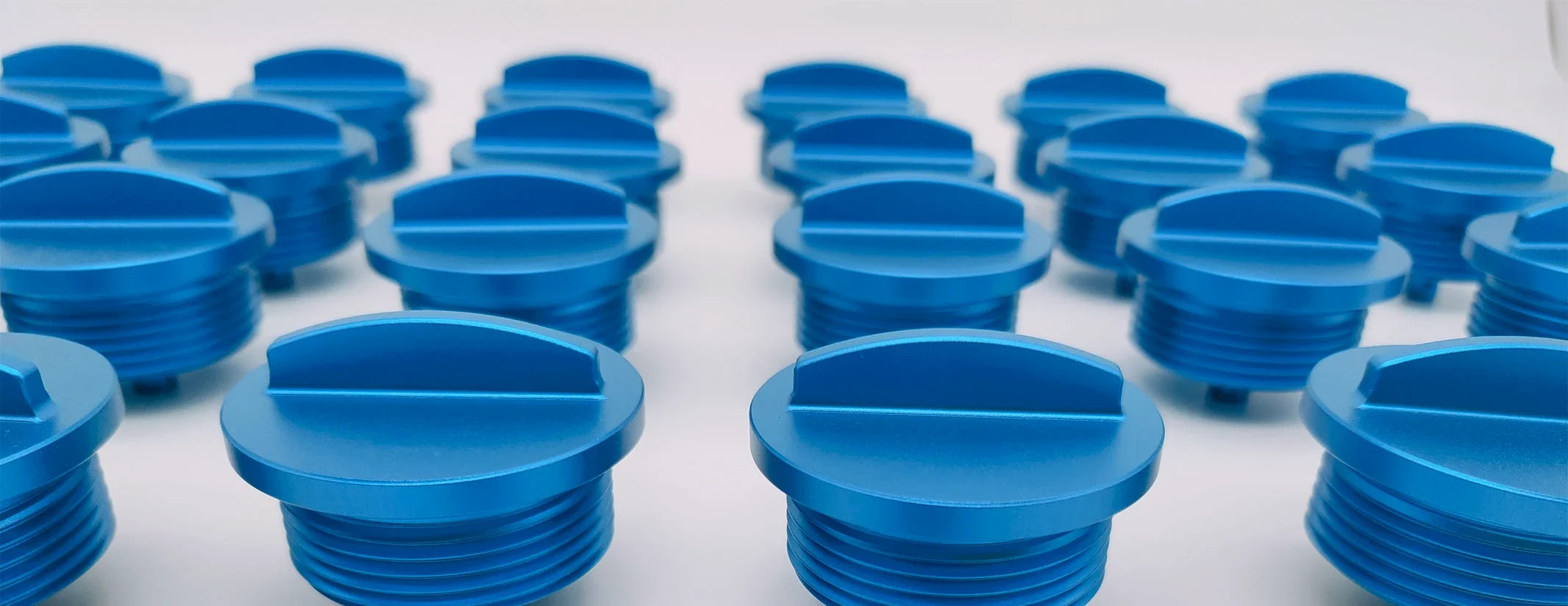
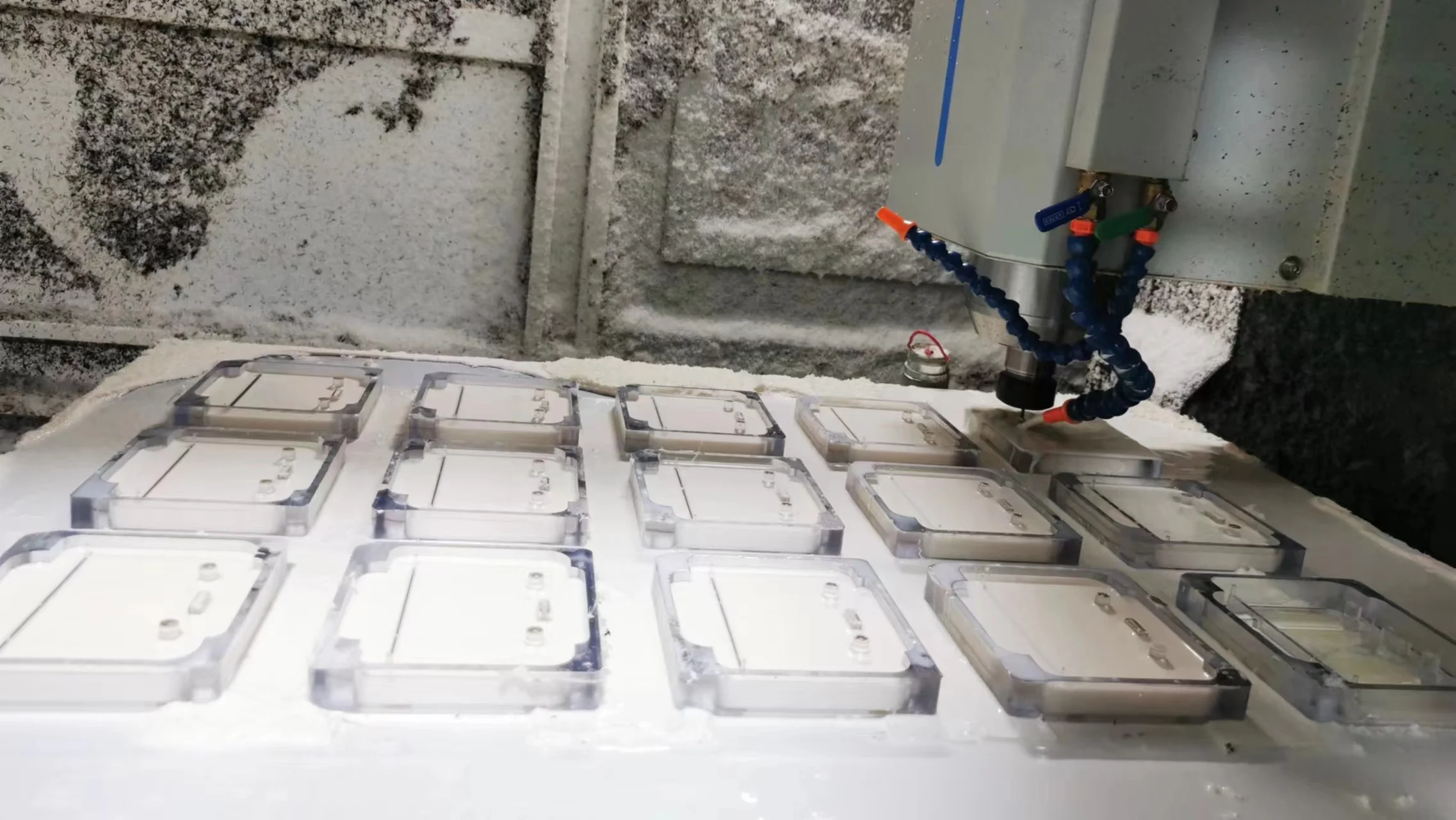
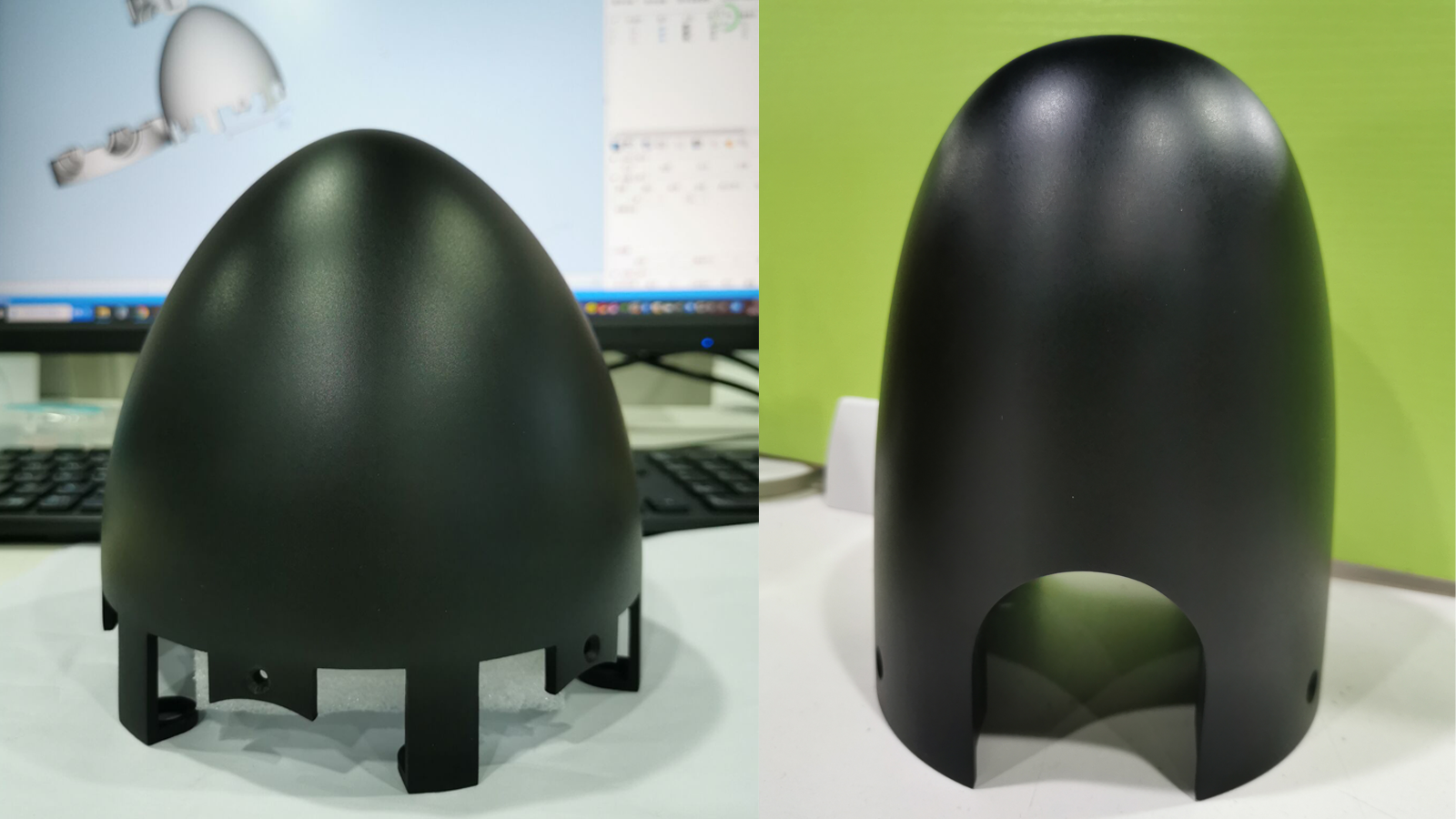
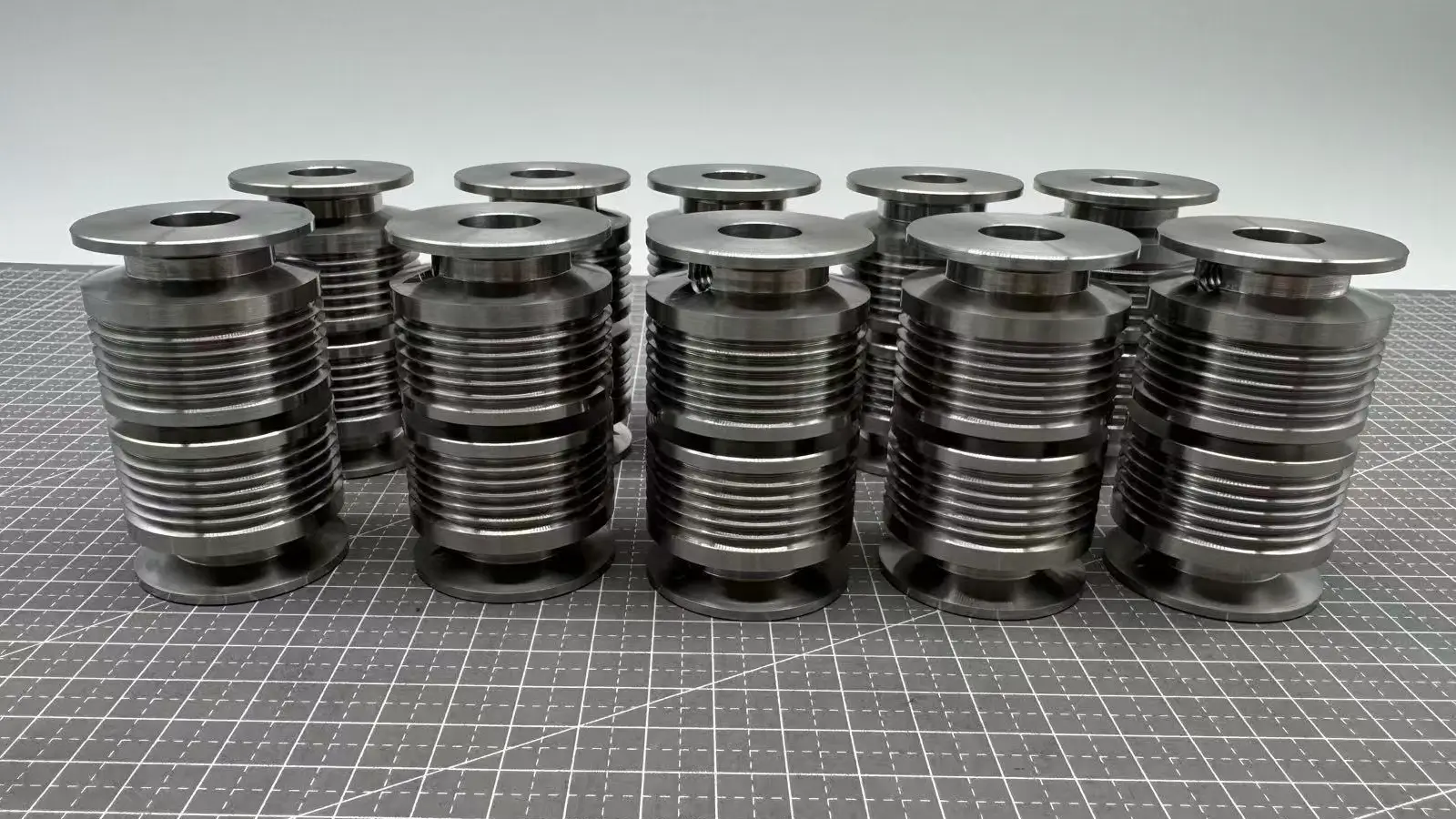
440C Stainless Steel is widely used in high-wear, high-precision components such as bearings, valve parts, knife components, and in aerospace applications.
Because it becomes very hard after heat treatment, machining 440C stainless steel can be challenging. It takes the right tooling and a bit of experience to get it right.
440C is a high carbon martensitic stainless steel. In the 400 series family, it stands out for having the highest hardness and exceptional wear resistance. In CNC machining, it’s often called the “wear-resistance king” of stainless steels.
After heat treatment, 440C typically reaches 58-62 HRC. That means it can hold a razor-sharp edge while remaining dimensionally stable even under heavy loads and high-wear conditions.
It’s often the go to material for bearings, cutting tools, and valve components.
In the 440 series, the letters A, B, and C basically tell you how much carbon is in the steel. That small difference affects hardness, toughness, and corrosion resistance in a big way.
440A usually has about 0.60%–0.75% carbon. It’s the softest and toughest of the three. Because the carbon is lower, it offers the best corrosion resistance and is the most machinable. After heat treatment, it typically reaches around 55 HRC.
It’s a great fit when you need good rust protection, complex shapes, and extreme wear isn’t the top priority. Think mid- to high-end cutlery, surgical instruments, and some industrial bearing cages. In CNC machining, 440A is pretty stable to machine, and costs are easier to control.
440B’s carbon content falls between 0.75% and 0.95%. It’s the middle-of-the-road option—a solid balance of hardness, toughness, and corrosion resistance.
Heat treated, it can reach 56-58 HRC, giving it better wear resistance than 440A while keeping more impact strength than 440C.
It’s often used for parts that need a good mix of properties: valve components, pump shafts, and certain automotive parts. If your part will see moderate loads in a mildly corrosive environment, 440B is often the smarter, more cost effective choice.
440C has the highest carbon content—0.95%–1.20%—and that’s what sets it apart.
Due to all that carbon, it can hit 58-62 HRC after heat treatment, delivering outstanding wear resistance and dimensional stability. That’s why it’s the top choice for bearings, ball screws, precision molds, and aerospace parts in high-wear environments.
But higher carbon comes with disadvantages:
Corrosion resistance is slightly lower than 440A and 440B (so be careful in strong acids or alkalis).
Toughness is lower—it can be more brittle under heavy impact.
440C is the hardest to machine, demanding more from your CNC process, tooling, and heat treatment distortion control.
440A & 440B & 440C Comparision
| Property | 440A | 440B | 440C |
|---|---|---|---|
| Carbon Content | 0.60%–0.75% (lowest) | 0.75%–0.95% (medium) | 0.95%–1.20% (highest) |
| Hardness / Wear | Good | Very good | Excellent |
| Corrosion Resistance | Best | Good | Moderate (still better than tool steels) |
| Toughness / Impact | Best | Good | Moderate (avoid heavy shock when hard) |
| CNC Machinability | Relatively friendly | Moderate | Challenging (needs special tooling) |
| Typical Applications | Cutlery, surgical tools | Valves, pump shafts | Bearings, precision molds, aerospace |
Based on our current orders, most of our U.S. and European customers use 440C, so this article focuses on what we’ve learned about machining it.
440C’s biggest strength is its ability to be heat-treated to extremely high hardness.
Typical range: 58–62 HRC—close to tool steel hardness and way above common materials like 304/316 (which don’t harden) or 4140 (usually 28–40 HRC).
With about 0.95%–1.20% carbon, it has strong hardenability. After CNC machining, precise quenching and tempering give it a very hard surface.
That hardness translates directly into excellent galling and wear resistance—perfect for high-speed bearings and heavy-duty industrial parts.
For CNC, this means parts made from 440C have outstanding compressive strength and resistance to deformation.
Whether it’s pre-hardened (above 50 HRC) or annealed, 440C contains plenty of hard chromium carbide particles. In fresh water, steam, crude oil, and moderately corrosive environments, it offers solid rust resistance.
When fully hardened and polished, its surface passivation layer is at its densest, providing the best corrosion protection.
Due to all those chromium carbides, 440C really shines in wear resistance. That means longer part life and great edge retention—in surgical tools or high-end cutters, it stays sharp even after repeated use and sterilization.
440C doesn’t move much during heat treatment. That makes it ideal for precision molds, gauges, and surgical instruments where tight tolerances (down to microns) are critical.
How you machine 440C depends entirely on its heat treatment condition.
Below, we break it down for annealed vs. hardened states.
Annealed 440C is the most “friendly” form for machining.
The hardness is around HB 200–250 (roughly 20–25 HRC) , with a fairly uniform structure. This is the best time for heavy cutting and high metal removal rates.
Even annealed, 440C is harder than mild steel, but it’s much easier on your spindle than hardened material.
Chips tend to be long and stringy, so you’ll want good chip control to keep them from tangling around the tool or workpiece.
Watch out for work hardening: even in the soft state, if your tool gets dull or you take very light cuts (like below 0.05 mm), the surface can harden quickly and cause trouble later.
Strategy: use high feed rates and deep cuts to let carbide tools really remove material. We typically remove 80–90% of the material in this stage—drilling, slotting, rough contouring, etc.
Tooling: coated carbide with TiAlN or AlTiN works well to resist wear from the carbide particles.
Since parts will go to vacuum heat treatment afterward, expect some distortion (usually linear change around 0.05%–0.1%). We leave 0.3–0.5 mm on critical surfaces like bores, bearing seats, and sealing faces for final finishing.
For complex or uneven wall parts, we often add a stress relieving step after roughing to minimize distortion during final heat treatment.
Once hardened to 58–62 HRC, machining 440C changes completely. This is no longer just “cutting”—it’s hard machining. It’s tough on tools, hard to hold precision, but it’s the only way to hit final tolerances and surface finishes.
At this hardness, the material is close to the limit of many carbide tools. Ordinary cutters wear out in minutes.
Toughness is nearly zero, so you won’t get built-up edge, and mirror finishes are possible—but the process is very sensitive to vibration. Even a little chatter can cause chipping or micro-cracks.
Heat doesn’t dissipate well; most of it stays in the cutting edge, so tools need excellent red hardness (ability to stay hard at high temps).
Hard Turning: for round parts (shafts, sleeves), we use CBN (cubic boron nitride) or ceramic inserts. CBN is the go-to for hardened steel—it’s almost as hard as diamond and withstands over 1000°C. With the right parameters (typically 80–150 m/min cutting speed, 0.1–0.3 mm depth of cut), we can turn instead of grind, achieving Ra 0.4–0.8 μm and tolerances within IT6.
Hard Milling: for complex shapes or mold cavities, we use high rigidity high-speed mills with AlTiN-coated micro-end mills. Strategy: light cuts (0.05–0.2 mm), high rpm, constant feed—keeping the tool cutting, not rubbing. Thin walls (under 1 mm) are extra challenging; we often use custom fixtures or low-melt-alloy supports to boost rigidity.
Grinding: for super precision surfaces (bearing bores, precision guideways), grinding is still the best. Hardened 440C grinds well, delivering micron-level accuracy and Ra below 0.2 μm for mirror finishes. We mainly use white alumina or CBN wheels with careful coolant control to avoid burn.
EDM (Electrical Discharge Machining): when parts have complex features—narrow slots, sharp corners, odd shapes, or tiny holes—conventional cutting is inefficient or even impossible. That’s where wire EDM and sinker EDM become the preferred methods for hardened 440C.
Wire EDM is great for 2D or through features: precision outlines, narrow slots, gear like shapes. No cutting forces, excellent profile accuracy, and crisp internal corners.
Sinker EDM handles 3D features like blind cavities, deep recesses, sharp internal corners, or complex pockets. By using custom electrodes, we can “copy” complex geometries into hardened 440C—something no milling cutter can easily do. This is common in mold components and high-precision mechanical parts.
Below is the comparison table of annealed 440C machining VS hardened 440C machining.
| Aspect | Annealed Machining | Hardened Machining |
|---|---|---|
| Typical Hardness | HRC 20–25 | HRC 58–62 |
| Nature | Conventional cutting, metal removal focus | Hard machining, precision & finish focus |
| Tooling | Standard AlTiN-coated carbide | CBN inserts, ceramic, coated micro-mills, CBN wheels |
| Strategy | Deep cuts, high feed, heavy removal | Light cuts, constant feed, high rigidity, low vibration |
| Key Challenges | Work hardening, chip control, distortion | Rapid tool wear, precision holding, thin-wall risk |
| Tooling Cost | Moderate | High (roughly 2–3× annealed) |
| Typical Applications | Roughing, drilling, slotting, stock removal | Finishing critical surfaces, precision holes, seals, complex contours |
From a production view, we typically use this approach: Rough Machining → Heat Treatment → Fine Machining. This process is best for most precision parts with complex geometry, with efficient roughing and controlled cost. But it may has heat treatment distortion.
Machining 440C is significantly harder than working with ordinary stainless steels.
This is the most hidden—and most damaging—trait. During cutting, the area where the tool contacts the workpiece undergoes severe plastic deformation, causing the surface hardness to spike quickly, sometimes approaching the hardened level.
440C contains many hard chromium carbide particles. During cutting, they act like an abrasive “grinding wheel,” wearing tools continuously. Cutting resistance is also much higher than with regular stainless.
In practice, carbide tool life when machining 440C can be just 1/3 to 1/5 of what you’d get with 304 stainless. In conclusion, finishing directly affects dimensional accuracy and surface finish—parts can start drifting out of spec mid-run.
That’s why we rely on high performance tools (coated carbide, CBN) and carefully controlled parameters. Without them, chipping, size drift, or scrapped parts become likely.
440C’s thermal conductivity is about one fourth that of plain carbon steel (like 45 steel). Heat generated during cutting doesn’t escape well with the chip—instead, it builds up at the cutting edge and on the workpiece surface.
Most 440C parts are machined in the annealed state to near finished dimensions, then hardened. During quenching, the microstructure transforms from austenite to martensite, which comes with a slight volume expansion. If the part has uneven wall thickness or complex geometry, internal stresses can cause noticeable distortion—or even cracking.
To manage this, we leave 0.3–0.5 mm of stock for final finishing after heat treatment. For demanding parts, we add a stress relieving step after heavy roughing to relax machining induced stresses, minimizing movement during final hardening.
In real CNC projects, many problems aren’t about the machine—they’re about not using the right strategy for 440C. Because it’s a high carbon martensitic stainless, treat it more like tool steel than ordinary stainless. A few key adjustments can make a big difference in tool life, process stability, and rework.
All of above tips comes from our experience machining 440C.
Passivation is one of the most basic and recommended surface treatments for 440C stainless steel, especially in medical, food, and general industrial applications.
For heat-treated 440C parts, passivation is almost considered a standard step. The process involves acid cleaning to remove free iron from the surface and forming a stable oxide layer, which significantly improves corrosion resistance.
In practical projects, if the customer does not specify any surface treatment requirements, adding passivation by default is often a value-added step that helps demonstrate professionalism and enhances product reliability.
440C has good polishability and can achieve finishes ranging from standard mechanical polishing to high-quality mirror polishing. Polishing not only enhances the visual appearance but also reduces surface roughness, which helps decrease friction and minimizes the adhesion of contaminants, thereby improving corrosion resistance.
As a result, it is commonly used for components such as seals, shafts, and medical devices that require high surface quality.
Typical polishing methods include mechanical polishing, mirror polishing, and electropolishing, with electropolishing providing a more uniform and refined surface finish.
440C stainless steel is widely used where wear resistance and hardness matter more than corrosion resistance.
One of the most common applications. Balls, races, and precision bearing assemblies often use 440C. After heat treatment, it reaches 58–62 HRC, giving excellent wear resistance and dimensional stability—ideal for high speed or continuous operation.
Industrial blades, surgical scalpels, precision cutters—440C’s high hardness helps edges stay sharp longer, and its wear resistance extends tool life. It also polishes well, which matters for high finish cutting tools.
Valve spools, sealing faces, and other precision valve parts often rely on 440C. These components experience repeated contact and friction, so high hardness improves sealing durability and erosion resistance over the long term.
High precision shafts, guide parts, and small wear resistant components. When long term dimensional stability and resistance to wear are critical, 440C helps reduce wear and deformation over extended operation.
Surgical instruments and certain precision medical tools. 440C can achieve a high surface finish and, with proper passivation, meets hygiene and corrosion requirements. Keep in mind, though, that its corrosion resistance isn’t as high as 316L, so it’s not ideal for strong corrosive environments or continuous bodily fluid contact.
High performance, high reliability components like precision bearing assemblies and wear critical structures. In these applications, hardness, durability, and long term stability are more important than corrosion resistance alone.
Overall, 440C is a performance oriented material. Its value lies in high hardness and wear resistance, making it a strong choice for bearings, cutting tools, valves, and precision machinery—but not for strongly corrosive environments. It’s used where longevity and stability matter more than maximum rust prevention.
From a CNC perspective, not really. In the annealed state, it’s moderately difficult. Once hardened to 58–62 HRC, it becomes significantly harder to machine—similar to working with tool steel.
In practice, you need high-performance tooling and well-controlled parameters. Without them, rapid tool wear, work hardening, and surface finish issues are common. That’s why most shops use a rough (annealed) → heat treat → finish (or grind) approach to balance efficiency and accuracy.
After proper hardening and tempering, 440C typically achieves 58–62 HRC. That’s one of its biggest advantages over standard stainless grades like 304 or 316.
In engineering practice, welding 440C is not recommended. Its high carbon content often leads to:
Hardening and brittleness in the heat-affected zone
Cracking in the weld area
Unpredictable overall performance
If welding is unavoidable, special pre-heat and post-weld heat treatment are required—but even then, the risk remains high. Whenever possible, consider mechanical fastening or a different material.
Tool selection is critical. Recommendations:
Carbide tools – for annealed machining
Coated carbide (TiAlN / AlTiN) – for better wear and heat resistance
CBN (cubic boron nitride) – for hardened finishing
Diamond or super abrasive tools – for high precision or specialized processes
440C is a highcarbon martensitic stainless. It can be heat treated to very high hardness (58–62 HRC) and has excellent wear resistance.
440C offers high hardness and wear resistance, while 316 provides excellent corrosion resistance and better machinability.
If your focus is wear resistance and hardness, go with 440C. If it’s corrosion resistance and ease of machining, 316 is the better fit.
440C is built for extreme hardness (58–62 HRC) and wear resistance, but it has lower toughness.
17-4PH is a precipitation hardening stainless that offers a good balance of strength, toughness, and corrosion resistance, depending on heat treatment (e.g., H900, H1150). It’s widely used in aerospace, valves, pumps, and structural parts.
17-4PH is generally easier to machine, especially in solution treated or common hardened conditions. 440C is more challenging, especially after hardening, often requiring grinding or EDM for final features.
In summary: 440C is much harder and more wear-resistant, while 17-4PH offers a better balance of strength, toughness, and corrosion resistance.
This technical guide explores why 440C Stainless Steel is the “King of Wear Resistance” and how to successfully navigate its machining challenges.
This guide breaks down:
What sets 440C apart from 440A and 440B
How to machine it in annealed vs. hardened states
Key challenges like work hardening and tool wear
Practical tips from real CNC production runs
Shall you have any other questions about 440C cnc machining or you need CNC machining services of 440C, feel free to contact us.

Lucas is a technical writer at ECOREPRAP. He has eight years of CNC programming and operating experience, including five-axis programming. He’s a lifelong learner who loves sharing his expertise.

5-Axis CNC machining is a manufacturing process that uses computer numerical control systems to operate 5-axis CNC machines capable of moving a cutting tool or a workpiece along five distinct axes simultaneously.

China is the best country for CNC machining service considering cost, precision, logistic and other factors. Statistical data suggests that China emerges as the premier destination for CNC machining.

Selecting the right prototype manufacturing supplier in China is a critical decision that can significantly impact the success of your product development project.

Machining tolerances stand for the precision of manufacturing processes and products. The lower the values of machining tolerances are, the higher the accuracy level would be.