In mechanical manufacturing, holes with a length-to-diameter (L/D) ratio greater than 5:1 are typically classified as deep holes. When that ratio extends to 100:1 or even 250:1, machining becomes exponentially more difficult—and conventional drilling methods simply cannot keep up. Deep hole drilling is one of the most effective solutions for these demanding, high-aspect-ratio hole applications.
Deep hole machining is challenging because three major problems occur simultaneously:
Deep hole drills have a long and slender structure. Under cutting forces, the tool can deflect, vibrate, or wander, causing:
Unlike shallow drilling, chips generated during deep hole machining must travel through a long and narrow hole channel.
Poor chip removal can lead to:
Because the cutting zone is located deep inside the workpiece, conventional coolant delivery is often insufficient.
Excessive heat buildup can cause:
The combination of these challenges, together with the fact that the cutting process cannot be visually monitored inside the hole, makes deep hole drilling one of the most demanding operations in precision CNC machining.
The following print shows a part we recently manufactured for a U.S. customer. The hole diameter is 12 mm, the hole depth is 350 mm, and the required surface finish is Ra 0.4.
It is clear that this requirement cannot be achieved using a conventional lathe machining(CNC turning) process.
Deep hole drilling refers to a family of precision boring processes specifically engineered for high-L/D-ratio holes.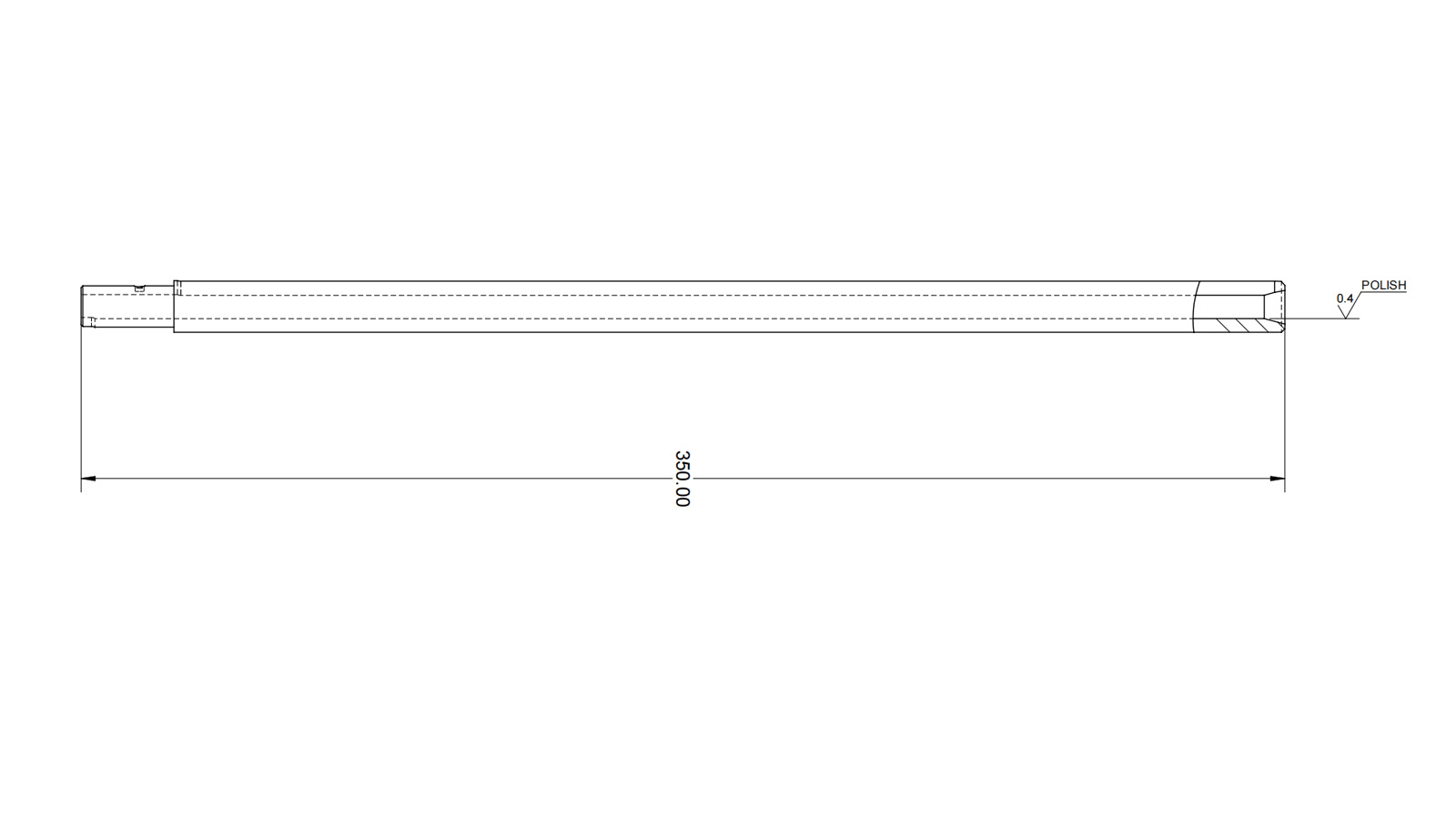
Among these, Gun Drilling is the most widely adopted method.
Gun drilling addresses the two primary barriers—chip removal and thermal management—by delivering high-pressure coolant directly to the cutting edge through an internal or external passage, then using that same fluid pressure to force chips out of the hole.
Under the right combination of diameter, material, and machine conditions, gun drilling can enable continuous one-pass machining under suitable conditions with minimal tool retraction—a significant productivity advantage over conventional peck drilling.
Typical Deep Hole Examples:
| Hole Diameter | Depth | L/D Ratio |
|---|---|---|
| Ø6 mm | 60 mm | 10:1 |
| Ø8 mm | 120 mm | 15:1 |
| Ø10 mm | 300 mm | 30:1 |
| Ø7 mm | 350 mm | 50:1 |
Deep hole drilling technologies are divided into two primary categories based on chip evacuation and coolant delivery strategy:
This is the most common configuration. Coolant flows through the center of the drill tube, reaches the cutting zone, and carries chips outward through the V shaped flute of the drill head. This method is ideal for small diameters (typically 2–20 mm) and extremely high L/D ratios (exceeding 100:1).
Gun drilling is commonly used for:
It is widely used for applications where hole accuracy and surface finish are critical.
Coolant is fed through the annular gap between the drill tube and the bore wall, and chips are expelled under pressure through the drill tube’s internal bore. The BTA system offers superior tool rigidity, making it suitable for larger diameters (typically >12 mm) with higher material removal rates and improved surface finishes.
Compared with gun drilling, BTA drilling provides:
BTA drilling is generally preferred for larger diameter deep holes, typically above approximately 12 mm.
Deep hole drilling is the go-to process for applications demanding tight tolerances, superior straightness, and fine surface finishes. The process is particularly well-suited for:
For example:
Ø5 × 100 mm
Ø8 × 250 mm
Ø10 × 500 mm
At these ratios, standard twist drills can no longer reliably maintain hole straightness, avoid tool breakage, or prevent thermal damage.
High-performance gun drilling consistently achieves IT6 to IT9 tolerance grades with surface finishes ranging from Ra0.8 to Ra3.2.
Advanced equipment can hold straightness within 0.1 mm per meter—critical for medical catheters, hydraulic valve bodies, mold cooling channels, and other components where straightness, concentricity, and cylindricity are non-negotiable.
For applications requiring sub Ra1.6 finishes, deep hole drilling can be combined with post-process treatments like AFM (Abrasive Flow Machining) to further enhance internal bore quality.
Consider a 300 mm through-hole. A standard drill must peck—drill, retract, re-enter—risking misalignment and step formation at each re-entry point. Gun drilling eliminates these interruptions, producing a clean, uninterrupted bore in a single pass.
For diameters as small as Ø2, Ø3, or Ø4 mm at 300 mm depth, standard tooling is simply inadequate. Deep hole drilling excels in these miniature, high-aspect-ratio applications, including medical needles, precision fuel nozzles, and miniature hydraulic components.
Deep hole drilling can accommodate certain blind-hole configurations. For cross-holes, non-round profiles, or other complex internal geometries, however, secondary operations (milling, EDM, etc.) are required.
Deep hole drilling is exceptionally versatile, covering virtually all common engineering materials. Drill heads are manufactured from carbide or high-speed steel (HSS), enabling machining across a broad spectrum:
Metals – Carbon steel, alloy steel, stainless steel, cast iron, copper, aluminum alloys, and other non-ferrous metals. It also handles high-strength alloys such as titanium alloys and high-temperature superalloys—though these difficult-to-machine materials require specialized tooling, reduced cutting parameters, and enhanced coolant delivery.
Non-Metals – Engineered plastics including PTFE (Teflon) and PEEK are also viable candidates.
| Parameter | Deep Hole Drill | Standard Drill |
|---|---|---|
| Deep Hole Capability | ★★★★★ | ★★ |
| Hole Straightness | ★★★★★ | ★★ |
| Cylindricity | ★★★★★ | ★★★ |
| Diameter Consistency | ★★★★★ | ★★★ |
| Surface Finish | ★★★★ | ★★ |
| Maximum L/D Ratio | 100:1+ | ~10:1 |
| Productivity | High for deep holes | High for shallow holes |
Note: Deep hole drilling delivers substantial productivity gains at high L/D ratios; standard drilling remains more cost-effective for shallow holes.
Despite its advantages, deep hole drilling is not a universal solution:
High Capital Investment – Specialized deep hole drilling machines, high-pressure coolant systems, and dedicated gun drill tooling represent a significant upfront cost. This equipment is typically found only in shops with sufficient scale or specialized capabilities.
Economically Unjustified for Shallow or Small-Batch Work – For example, a Ø8 × 60 mm hole can be drilled faster and more cost-effectively with a standard twist drill. Deep hole drilling would add unnecessary setup time and expense.
Round Holes Only – This process cannot directly machine elliptical bores, square holes, keyways, or other non-circular features. Parts with complex internal cavities or non-round openings require milling, EDM, or other complementary processes.
High Entry-Point Accuracy Required – A guide bushing or pre-machined pilot hole is essential to ensure precise entry. Without reliable guidance, the drill will deflect at the start, compromising straightness, coaxiality, and dimensional accuracy—potentially scrapping the part or breaking the tool.
Successful deep hole machining demands a carefully controlled environment:
Specialized Gun Drill Oil – Low-viscosity fluid with extreme pressure (EP) additives.
High Pressure Coolant System – Operating at 5–15 MPa with filtration ≤20 μm to ensure chips are flushed out efficiently and tool life is maximized.
Stable Workholding & Accurate Guiding – Rigid clamping and precise entry guidance are critical to maintaining straightness and machining stability throughout the operation.
Medical Devices – Catheters, biopsy needles, surgical instruments, guide tubes, and other slender, high precision components.
Aerospace – Landing gear, engine shafts, fuel nozzles, hydraulic system components.
Mold & Die – Cooling channels in injection molds and die casting dies.
Hydraulics & Pneumatics – Valve spools, cylinder bores, hydraulic rods.
Automotive – Fuel injectors, drive shafts, steering system parts.
Energy – Oilfield drilling tools, heat exchangers, nuclear power equipment.
To better understand how deep hole machining challenges are solved in practice, the following case study shows how we developed a complete manufacturing solution for a U.S. customer’s Ø12 mm × 350 mm precision deep bore.
The customer required a precision deep hole with a diameter of Ø12 mm, a depth of 350 mm, and a demanding internal surface finish of Ra 0.4. Maintaining straightness, concentricity between the internal bore and external diameter, and consistent surface quality throughout the entire hole length were the primary challenges.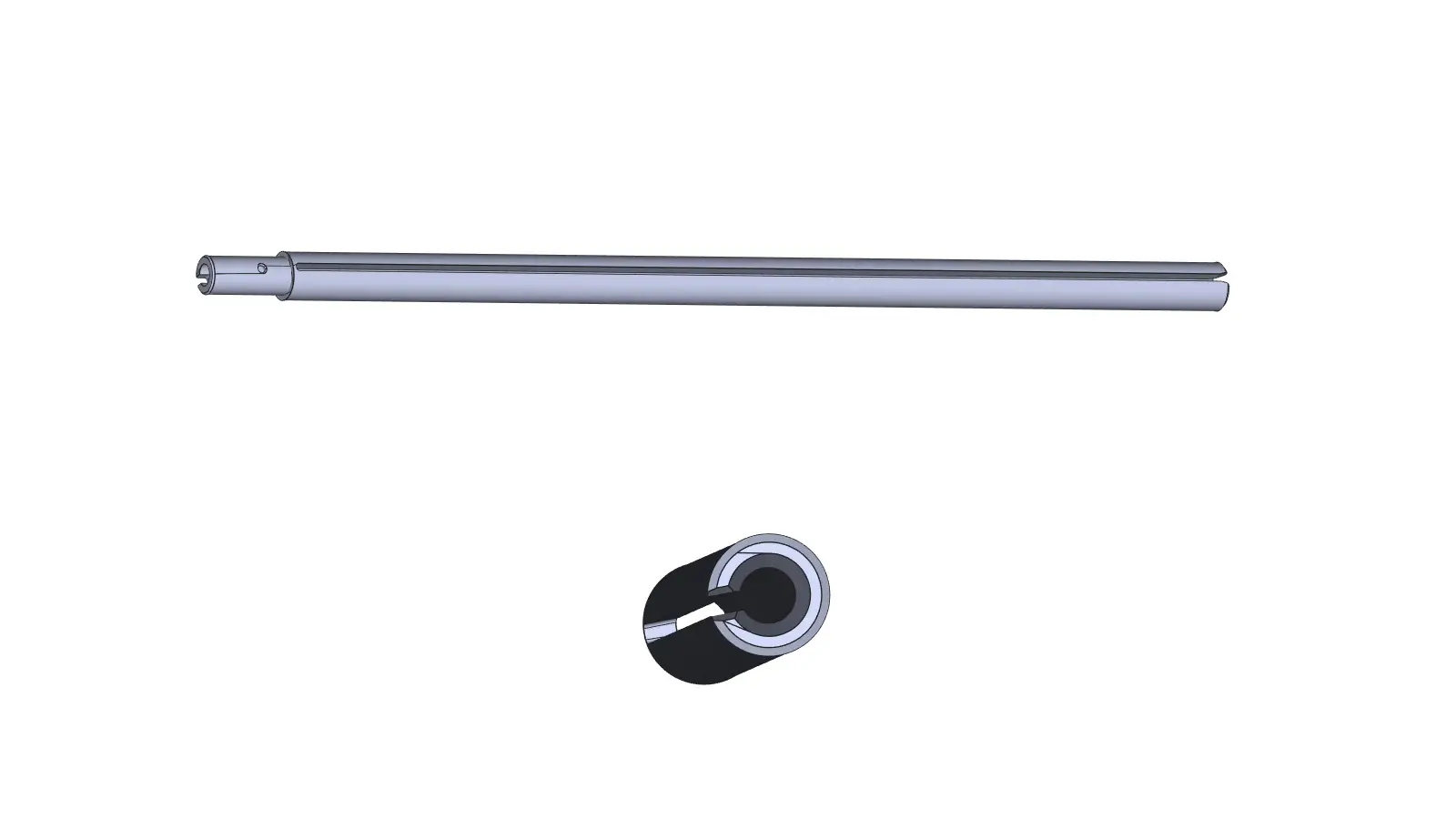
Due to the high aspect ratio (approximately 29:1), conventional drilling and turning processes could not reliably achieve the required accuracy and surface finish.
At the beginning of the project, we evaluated medium-speed wire EDM (a type of wire cutting process) as a possible solution. However, the hole accuracy at both ends was not stable enough, resulting in excessive dimensional variation and difficulty maintaining the required bore alignment.
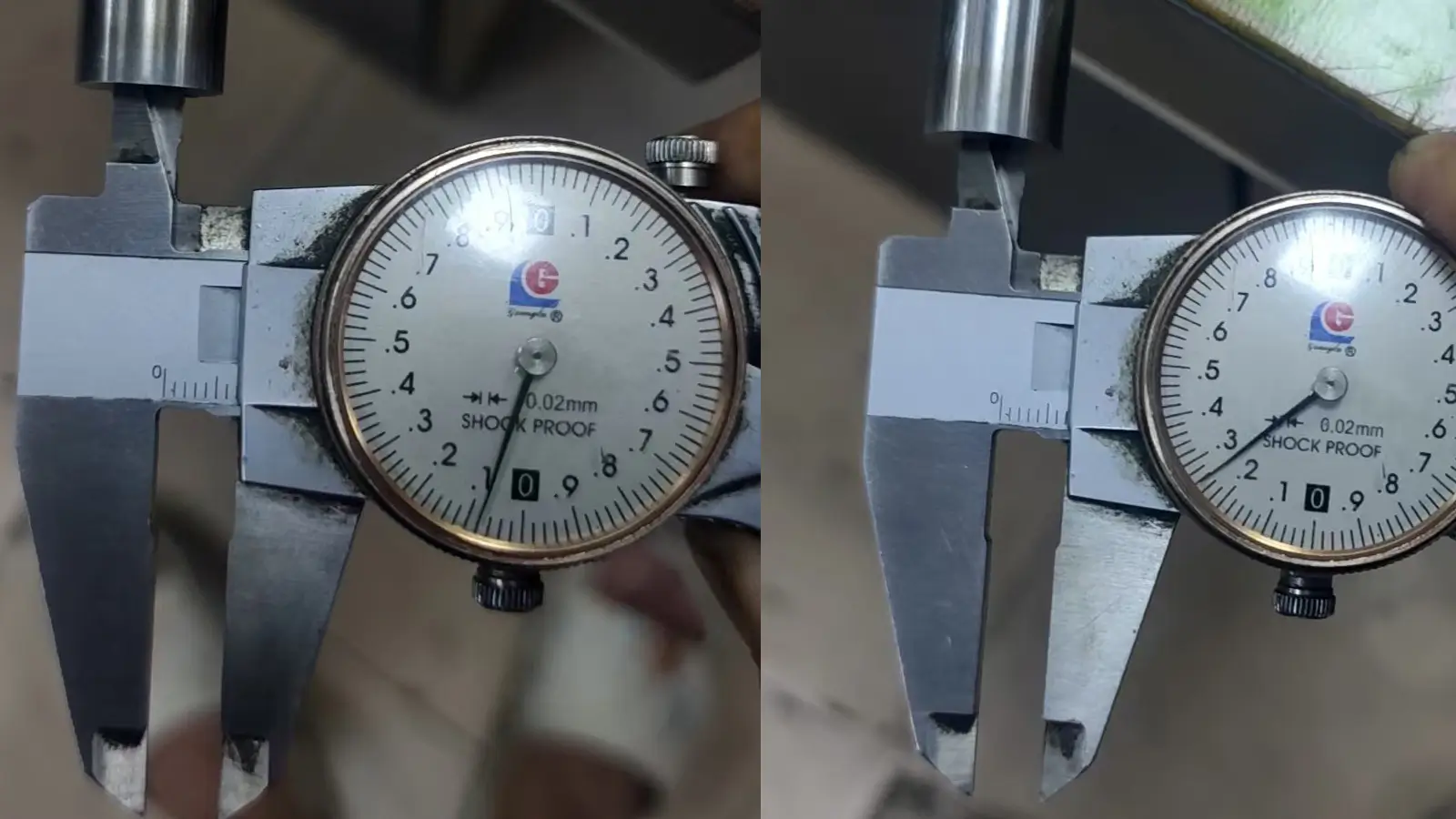
Based on the evaluation results, we determined that a dedicated deep hole machining process was required.
To achieve the required precision, we developed a multi-step machining process:
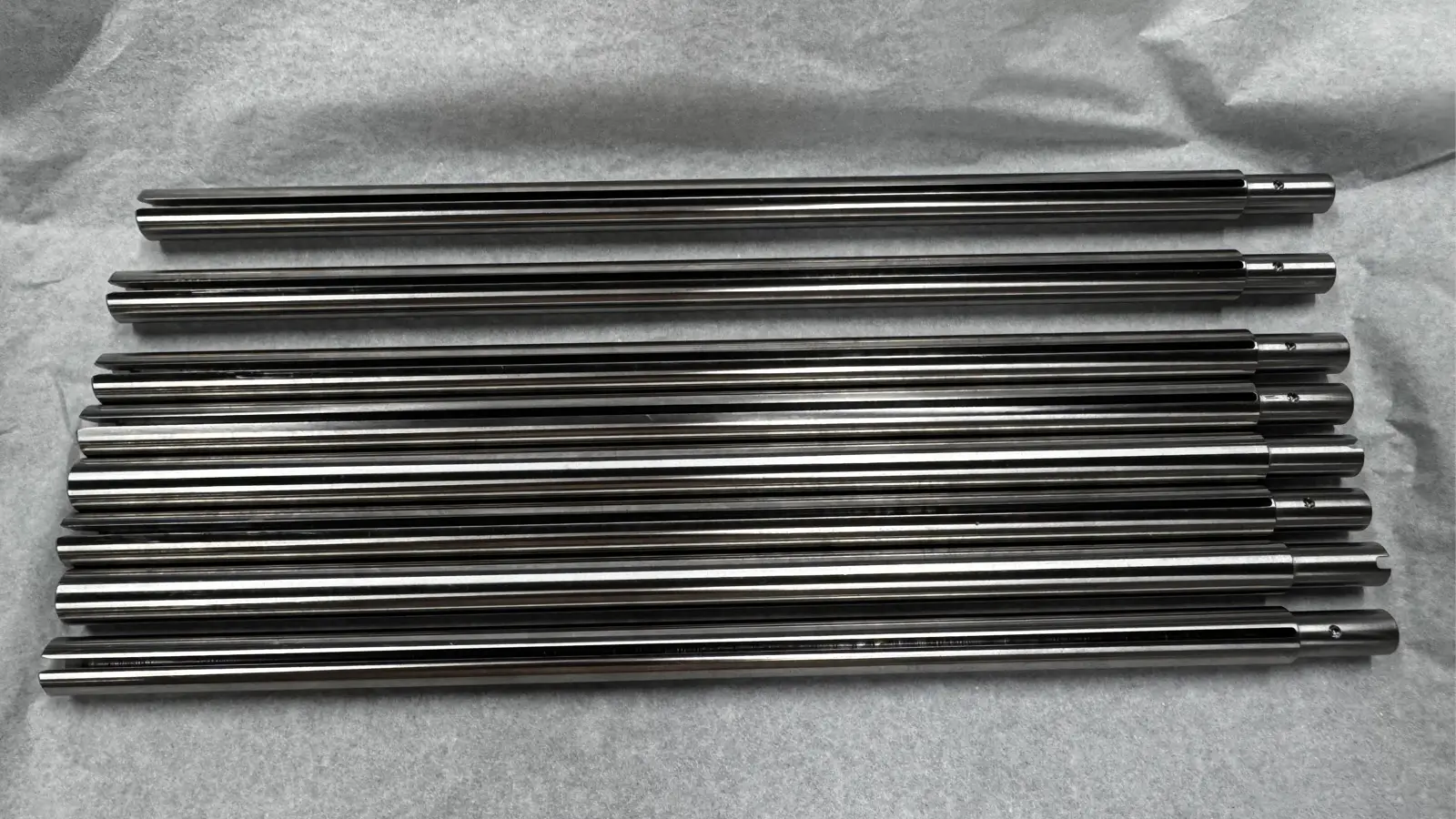
Step 1: Deep hole drilling from one side
Gun drilling was used to achieve the required hole depth, straightness, and internal bore consistency.
Step 2: External turning using the internal bore as the locating datum
The internal hole was used as the primary locating reference. The external profile was machined with 0.2 mm stock remaining on one side to correct concentricity between the bore and outside diameter.
Step 3: Centerless grinding
Centerless grinding was performed to achieve the final external diameter size and improve dimensional accuracy.
Step 4: Abrasive Flow Machining (AFM)
AFM was applied to remove internal tool marks and improve the surface finish of the deep bore.
Step 5: CNC machining of both ends
Final CNC operations were completed on both ends to produce the remaining external features and details.
The completed part achieved stable concentricity between the Ø12 mm deep hole and the external diameter. After AFM processing, the internal surface finish was improved to approximately Ra 0.8, with machining marks removed.
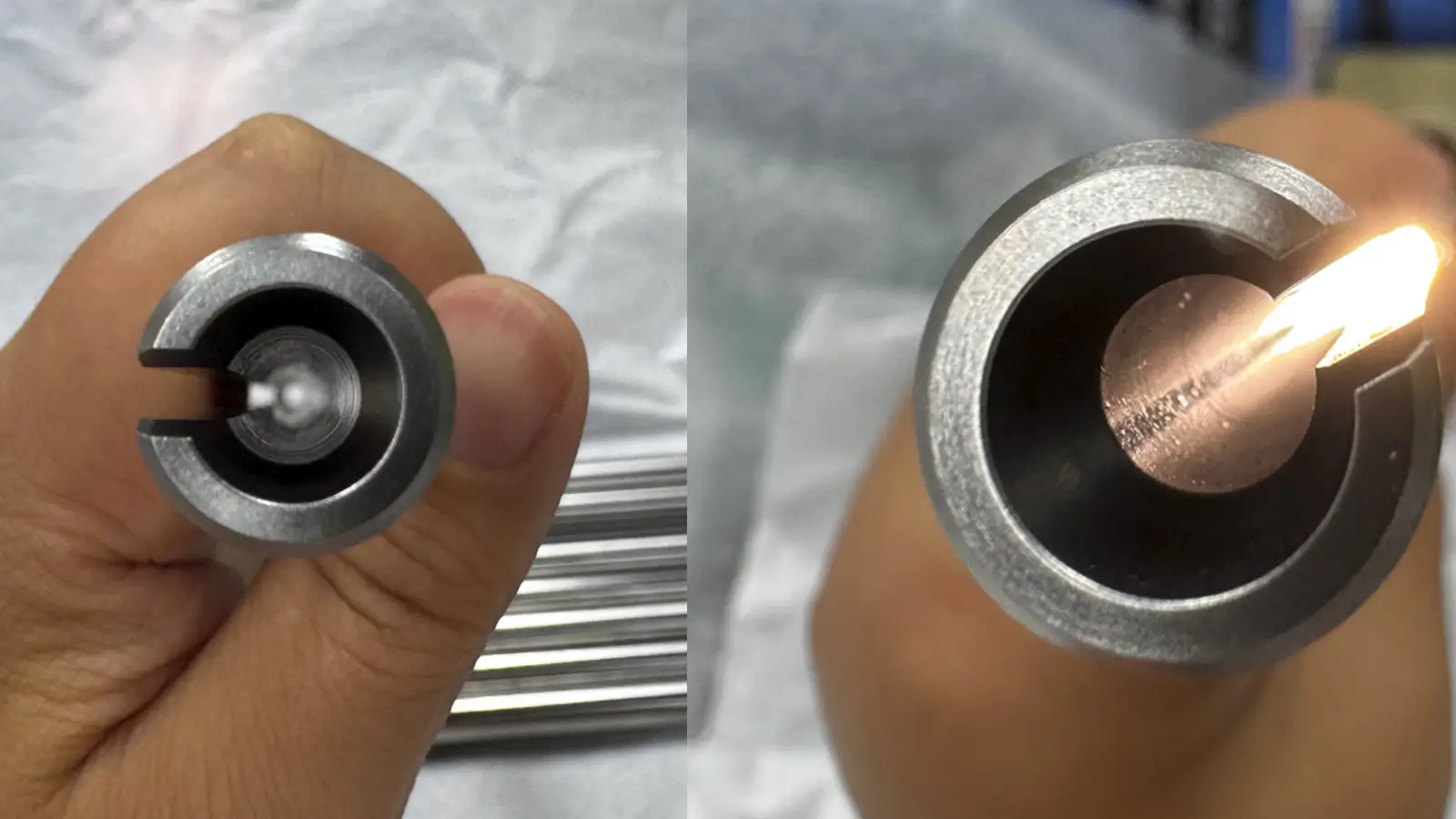
Although the original requirement was Ra 0.4, the customer accepted the final result based on the functional requirements of the application.
This project demonstrates that challenging deep hole applications often require a combination of specialized processes—including gun drilling, precision grinding, and surface finishing—to achieve the required accuracy and performance.
For components that demand deep, straight, dimensionally consistent holes, gun drilling is often the most reliable and cost effective approach compared to conventional drilling.
We offer CNC deep hole drilling services for prototypes and low to medium production volumes, supporting materials including aluminum alloys, stainless steel, and alloy steels. Whether your application is in medical devices, robotics, automation equipment, or mold components, we can tailor the right deep hole drilling solution based on your diameter, depth, and precision requirements.
Our engineering team can review your drawing and recommend the most suitable manufacturing process based on hole diameter, depth, tolerance, and material requirements.
Definitions vary by industry:
L/D > 5: considered deep hole in some sectors
L/D > 10: typical machining industry benchmark
L/D > 20: widely regarded as the threshold for truly challenging deep hole work
Depending on diameter, material, and machine capability, L/D ratios can exceed 100:1, with special applications reaching 200:1 or higher.
Gun drilling is a specific method within the broader deep hole drilling category. It uses a single flute, externally evacuating design to achieve high precision, deep-hole results.
In simple terms:
Deep Hole Drilling = the overall machining category
Gun Drilling = one of the most common deep hole drilling methods
Standard CNC machining centers can handle limited deep hole work. However, once the L/D ratio exceeds 10:1—and especially beyond 20:1—tool rigidity, chip evacuation, and coolant delivery become critical bottlenecks, making dedicated deep hole drilling equipment the preferred solution.

5-Axis CNC machining is a manufacturing process that uses computer numerical control systems to operate 5-axis CNC machines capable of moving a cutting tool or a workpiece along five distinct axes simultaneously.

China is the best country for CNC machining service considering cost, precision, logistic and other factors. Statistical data suggests that China emerges as the premier destination for CNC machining.

Selecting the right prototype manufacturing supplier in China is a critical decision that can significantly impact the success of your product development project.

Machining tolerances stand for the precision of manufacturing processes and products. The lower the values of machining tolerances are, the higher the accuracy level would be.