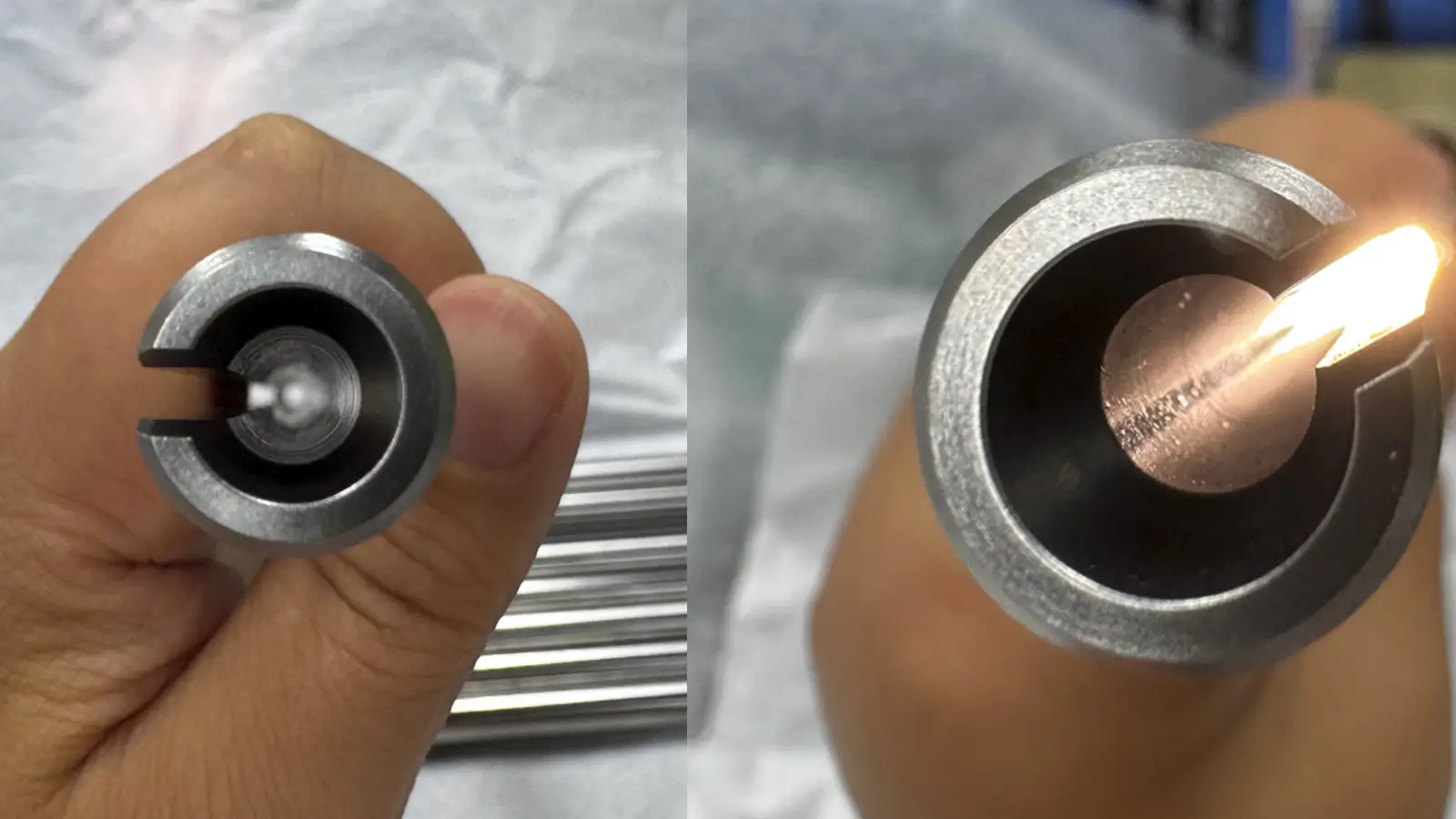
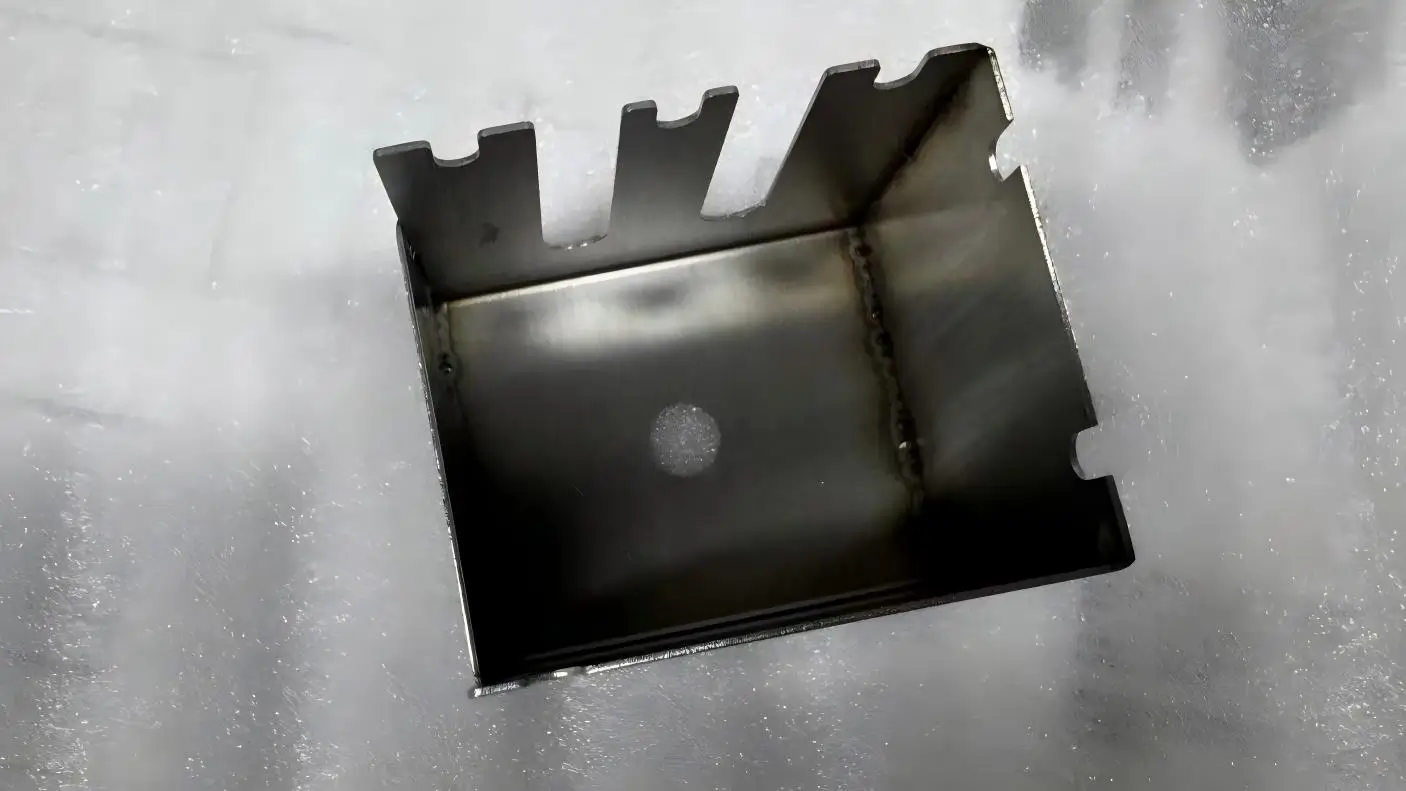
When sourcing titanium CNC machining services, selecting the right partner is critical. This guide will walk you through key considerations and introduce some of the leading titanium CNC machining factories in China.
Key Takeaways:
Selecting the right CNC machining service for titanium isn’t just about finding someone who can handle a “difficult-to-machine” metal—it’s about partnering with a team that helps you mitigate significant risks from the start.
The cost of choosing the wrong shop goes far beyond a scrapped part; it can impact your budget, timeline, and product integrity in ways that are hard to recover from.
Here’s why this choice is so critical:
Titanium is expensive—raw material can cost 10–20 times more than aluminum. A shop without titanium expertise isn’t just risking machining hours; they’re risking your valuable material.
Given the long machining cycles for titanium, a mistake often means a complete loss, not a simple rework. An experienced partner ensures it’s done right the first time.
Related blog:
Titanium vs Stainless Steel: Key Differences in CNC Machining
Titanium vs Aluminum CNC Machining: Strength, Weight & Cost Comparison
Without proper high-pressure coolant systems and optimized cutting parameters, you risk rapid tool failure and even altering the material’s metallurgical properties, which can compromise part performance.
Titanium is prone to work hardening. Incorrect cutting depths or feed rates can create an excessively hard surface layer, making subsequent machining impossible.
The right partner understands titanium’s behavior and manages the process to maintain stable, predictable part integrity.
Machining titanium requires expensive, specialized coated tools. A professional shop has established tool management strategies to balance cutting speed with tool longevity, translating that efficiency into more competitive and reliable pricing for you.
Shops inexperienced with titanium often underestimate the difficulty, offering attractive initial quotes and lead times, only to face delays, process changes, and missed deadlines later—putting your project schedule at risk.
Titanium projects thrive on engineering collaboration. If your supplier simply “follows the print” without flagging potential design or manufacturability issues, problems may only surface late in the project—when they’re most costly and disruptive to fix.
For critical applications in aerospace, medical, or high-performance engineering, switching CNC partners mid-stream often means re-qualifying, re-prototyping, and re-scheduling—a costly and time-consuming reset.
In essence, choosing a titanium CNC partner isn’t just about hiring a machine shop—it’s about ensuring your entire project against preventable risk.
Choosing a partner for titanium CNC machining requires careful evaluation. True expertise in this demanding field goes far beyond simply owning capable machines. Here are the key areas you should examine to make a confident decision.
In machining, there’s a saying: “Being able to machine aluminum doesn’t mean you can machine steel, and being able to machine steel doesn’t mean you can machine titanium.”
The gap between having “machined some titanium” and consistently producing high-quality titanium parts is immense.
A truly experienced titanium CNC supplier will demonstrate:
They should showcase complex finished parts (e.g., with deep cavities, thin walls, intricate contours)—not just promise capability.
They clearly understand the distinct process and quality requirements for industrial-grade, medical-grade, and aerospace-grade titanium alloys. Medical and aerospace projects should be handled with dedicated, controlled workflows and documentation.
True expertise is often born from understanding what can go wrong and how to prevent it.
Ask the factory to explain the difference in their cutting strategies and tool selection for Ti-6Al-4V (Grade 5) versus Ti-6Al-4V ELI. An expert can articulate the rationale behind their approach.
Titanium machining places specific demands on CNC equipment:
Exceptional Rigidity:
The machine tool structure, spindle, and tool holder must be extremely rigid to withstand high cutting forces and prevent chatter, which ruins surface finish and tool life.
High-Pressure Coolant (HPC):
A through-spindle, high-pressure coolant system (≥ 70 bar / 1000 psi) is non-negotiable. It breaks the thermal barrier at the cutting edge, flushes chips, and prevents re-cutting and tool adhesion. Ask about their system’s specifications.
Process Stability:
Is equipment under a strict preventive maintenance and calibration schedule? Is the shop environment (temperature, vibration) controlled?
5-Axis Machining:
For complex geometries, a 5-axis CNC is essential. It reduces setups, improves accuracy, and allows optimal tool approach angles—critical for managing cutting forces and heat in titanium. Ask about their 5-axis machine brands, models, and how they maintain precision.
This is the true test of process maturity, directly impacting your cost and quality.
Tooling Strategy:
A professional partner will openly discuss the cost of tooling for titanium and explain their tool life management strategy. They should use tools specifically engineered for titanium (with tailored geometries, coatings, and substrates), not generic tools.
Process Discipline:
Will they use aggressive, unproven parameters under delivery pressure? A reliable partner insists on conservative, validated parameters that ensure consistent quality and predictable, low scrap rates—even if cycle times are slightly longer.
Scrap Rate & Prevention:
Directly ask about their historical average scrap rate for titanium (below 2% is typically excellent). Understand their prevention-focused process controls: in-process inspection, tool wear monitoring, and rigorous First Article Inspection (FAI) protocols.
A top-tier supplier acts as your engineering partner, not just an order taker.
Proactive DFM Feedback:
Upon reviewing your design, can they provide actionable Design for Manufacturability suggestions? Examples include recommending larger fillet radii to reduce stress concentration, optimizing wall thickness, or modifying features to simplify machining—all of which lower your cost and improve reliability.
Risk Awareness:
Good engineers flag potential machining issues (like chatter or distortion) or design risks early and collaborate on solutions.
“Engineer-to-Engineer” Communication:
Can they connect your team with a technically fluent engineer who understands materials science and machining principles? This alignment prevents costly misunderstandings and rework.
Certifications are the baseline; the underlying practices are what ensure quality.
Certifications:
ISO 9001 is the basic framework. ISO 13485 (medical devices) and AS9100 (aerospace) represent the gold standard with stricter, risk-based, and traceability-focused systems. Prioritize suppliers with relevant industry certifications.
Inspection Capability:
The equipment and its use matter more than the certificate on the wall.
Essential: High-precision CMM, surface roughness tester, hardness tester.
Advanced: Roundness/cylindricity tester, optical comparator, spectrometer (for material verification).
Key Question: Are these tools regularly calibrated and integrated into the standard workflow, or are they just for show?
Documentation & Traceability:
Request a sample First Article Inspection Report. It should include data for all critical dimensions, GD&T, and trace back to the material certification, ensuring full lot traceability.
For international partnerships, trust built across time zones and language is critical.
Engineer-to-Engineer Communication: The best scenario is when a fluent, experienced engineer supports the sales representative, ensuring technical clarity.
Cultural Alignment: The best partners in China understand not only machining but also the high standards for transparency, proactive progress reporting, and compliance expected by Western clients. They bridge the gap effectively.
Choosing China as a manufacturing base for titanium CNC machining is driven by more than just cost. It’s the result of a comprehensive, long-established manufacturing ecosystem and supply chain advantage.
China is a major global producer and consumer of titanium, with a comprehensive, vertically integrated supply chain—from titanium ingots, rods, and plates to specialized services such as heat treatment and surface finishing. This means:
For titanium CNC machining, this inherent supply chain stability is itself a critical form of risk mitigation.
Over the past decade, China’s CNC industry has rapidly evolved from general contract manufacturing to specializing in high-complexity, precision machining.
In titanium machining specifically, leading Chinese workshops have accumulated:
Extensive, long-term experience with mainstream alloys like Ti-6Al-4V.
Proven, reliable processes for multi-axis machining, thin-wall structures, and deep-cavity complex parts.
Proprietary databases for tooling, cutting parameters, and process routes optimized for titanium alloys.
This expertise isn’t gained from just one or two projects; it’s the result of continuous iteration, problem-solving, and scaled production experience.
The cost advantage offered by top-tier Chinese shops stems from systemic efficiency, not simply undercutting prices.
This efficiency comes from:
Mature engineering workflows and production coordination.
High equipment utilization rates.
Rapid process validation and iteration cycles.
Crucially, this does not mean sacrificing quality. For high-risk materials like titanium, true cost competitiveness comes from predictable, stable processes—not from being the cheapest bid.
China offers a complete spectrum of suppliers, allowing you to find the perfect match for your project’s specific phase and needs:
This diversity means you can choose the most suitable partner for prototyping, pilot runs, or full-scale production, rather than being forced into a “one-size-fits-all” solution.
In recent years, leading Chinese titanium CNC factories have made significant strides in global compatibility, including:
Stronger English-language engineering communication.
Deep understanding of international standards (ISO, AS9100, medical regulations).
Adoption of Western-style project management practices for seamless collaboration.
This evolution has dramatically reduced the communication and coordination overhead for international titanium machining projects.
Choosing China for titanium CNC machining isn’t “betting on low cost.” It’s a strategic decision to leverage a mature, efficient, and scalable manufacturing ecosystem, made with a clear understanding of both the capabilities and how to manage the associated risks.
This list highlights representative Chinese factories with demonstrated capability in titanium CNC machining. Our selection criteria emphasized proven experience, technical capability, quality systems, and a track record of delivering complex titanium parts rather than just general machining capacity.
Here is an overview of their key strengths:
Runsom Precision is an ISO 9001:2015 certified manufacturer with over 10 years of experience in rapid prototyping and custom CNC machining. They offer a full-service model, spanning design and prototyping through to low- and high-volume production, utilizing processes such as CNC milling, turning, Swiss turning, 3D printing, and sheet metal fabrication across a wide range of metals and plastics.
Key Strengths for Titanium:
Advanced Capability: Utilizes 3-, 4-, and 5-axis CNC equipment to handle complex geometries and tight tolerances.
Quality Focus: Implements a strict quality management system and employs full CMM inspection to ensure part accuracy.
Industry Application: Serves demanding sectors such as aerospace and medical devices, where titanium is critical.
ECOREPRAP has built extensive, hands-on expertise in titanium CNC machining through practical production projects. Their capabilities span 3-axis and 5-axis milling as well as precision turning, enabling them to manufacture complex, tight-tolerance titanium components.
Key Strengths for Titanium:
Applied Experience: Possesses direct manufacturing experience with demanding titanium parts like impellers, UAV components, motorsport parts, and robotic structures.
Process Knowledge: Demonstrates a practical understanding of titanium’s machining challenges (heat, tool wear, deformation) and applies optimized strategies for stable quality and cost-effectiveness.
Performance Focus: Specializes in applications where the strength-to-weight ratio, precision, and reliability of titanium are paramount.
5-Axis Specialization: Expertise in multi-axis machining is crucial for complex titanium geometries.
Based in Zhongshan, Tirapid brings over 16 years of experience and a skilled engineering team to the table. They specialize in 5-axis CNC machining and precision parts manufacturing, supported by a broad integrated supply chain.
Key Strengths for Titanium:
Engineering Support: Offers free DFM (Design for Manufacturability) optimization and design support, which is highly valuable for optimizing titanium parts for production.
Industry Fit: Serves high-performance industries like aerospace, automotive, robotics, and medical devices.
Founded in 2010, Anebon is an ISO 9001:2015 certified manufacturer providing comprehensive services from CNC machining and 5-axis machining to casting and sheet metal. They emphasize strong engineering and lean manufacturing.
Key Strengths for Titanium:
Systematic Quality: Employs advanced quality control methodologies like APQP, SPC, and PPAP, ensuring process control and traceability vital for critical titanium components.
End-to-End Support: Supports customers from R&D through production with DFM optimization.
Technical Depth: Their focus on high-precision, tight-tolerance parts aligns well with the requirements for machining titanium alloys.
Established in 2013, LAIRUN is a medium-sized precision component manufacturer with a team of about 80 experienced staff. They offer full-service CNC machining from prototyping to mass production across a wide material portfolio, including titanium and high-performance alloys like Inconel.
Key Strengths for Titanium:
Material Experience: Explicit experience in machining titanium alloys and superalloys indicates an understanding of difficult-to-machine materials.
Scalability: Provides a scalable model from prototypes to large-scale production runs.
Industry Certification: ISO 9001:2015 certification underpins their quality management system, which is essential for consistent titanium part quality.
Disclaimer: This list is intended for informational purposes based on publicly available data and stated capabilities. It is crucial to conduct thorough due diligence, request detailed project portfolios, and communicate your specific technical requirements directly with any potential manufacturing partner before engagement.
Navigating China’s vast manufacturing landscape to find a truly capable titanium CNC partner requires a systematic approach. The “4C” framework is designed to cut through the noise and quickly identify suppliers with deep technical expertise and a collaborative mindset.
The first evaluation step is to examine real, tangible project experience. Request a specific case study: “The most complex titanium part you’ve machined, the challenges you faced, and how you solved them.”
Focus on two things:
Industry Relevance: For medical applications, scrutinize their surface finish and cleanliness control on implants. For aerospace, examine their approach to distortion control and material certification.
Process Depth: Review their documentation—problem logs, process adjustment reports. This reveals whether they have a systematic problem-solving methodology or are merely at a “we can machine it” level. This step quickly filters out shops with only basic capabilities.
Advanced machines are a prerequisite, but titanium-specific process knowledge is the real differentiator.
Hard Requirements: The supplier must have 5-axis CNC centers and high-pressure coolant systems (≥70 Bar / 1000 psi). These are non-negotiable for managing heat and complex geometries in titanium.
Soft Power: Evaluate their proactive Design for Manufacturability (DFM) capability. A competent engineering team will identify optimizations during the quoting phase—suggesting changes to reduce cost, improve reliability, or simplify manufacturing. This shift from a “job shop” to a “solutions partner” is where the real value lies.
International certifications (e.g., ISO 13485 for medical, AS9100 for aerospace) are essential entry tickets. However, daily execution matters more.
Request a sample First Article Inspection (FAI) report. Analyze the completeness of inspections, rigor of data, and traceability back to material certifications.
Verify the actual use and calibration status of key inspection equipment (like CMMs) via video tour. A quality system embedded in the workflow is far more credible than a certificate on the wall.
Smooth collaboration is critical for project success. Assess:
Technical Responsiveness: Is communication precise and in proper engineering terms? For overseas clients, is the English communication clear and unambiguous?
Project Management Maturity: Do they provide a single point of contact, clear project milestones, and transparent, proactive progress updates? A team that manages expectations well drastically reduces project risk and communication overhead.
Your Action Plan:
Create a supplier scorecard based on the 4C Framework.
Select 3 potential partners (from this list or your own research) for in-depth discussions and virtual facility audits.
Make your final decision by placing a controlled pilot order for a representative part.

5-Axis CNC machining is a manufacturing process that uses computer numerical control systems to operate 5-axis CNC machines capable of moving a cutting tool or a workpiece along five distinct axes simultaneously.

China is the best country for CNC machining service considering cost, precision, logistic and other factors. Statistical data suggests that China emerges as the premier destination for CNC machining.

Selecting the right prototype manufacturing supplier in China is a critical decision that can significantly impact the success of your product development project.

Machining tolerances stand for the precision of manufacturing processes and products. The lower the values of machining tolerances are, the higher the accuracy level would be.