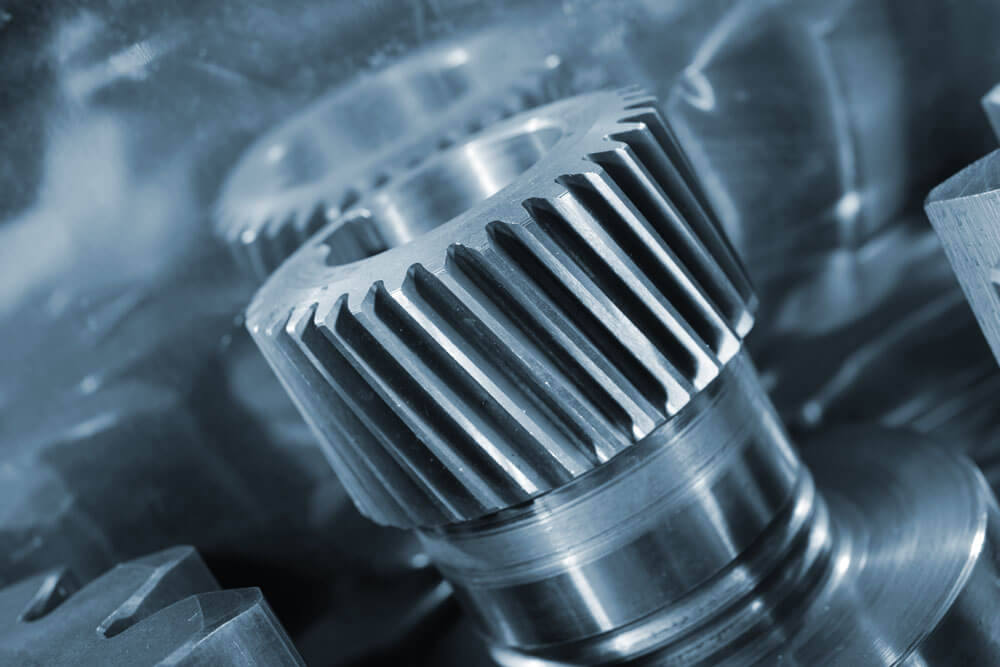
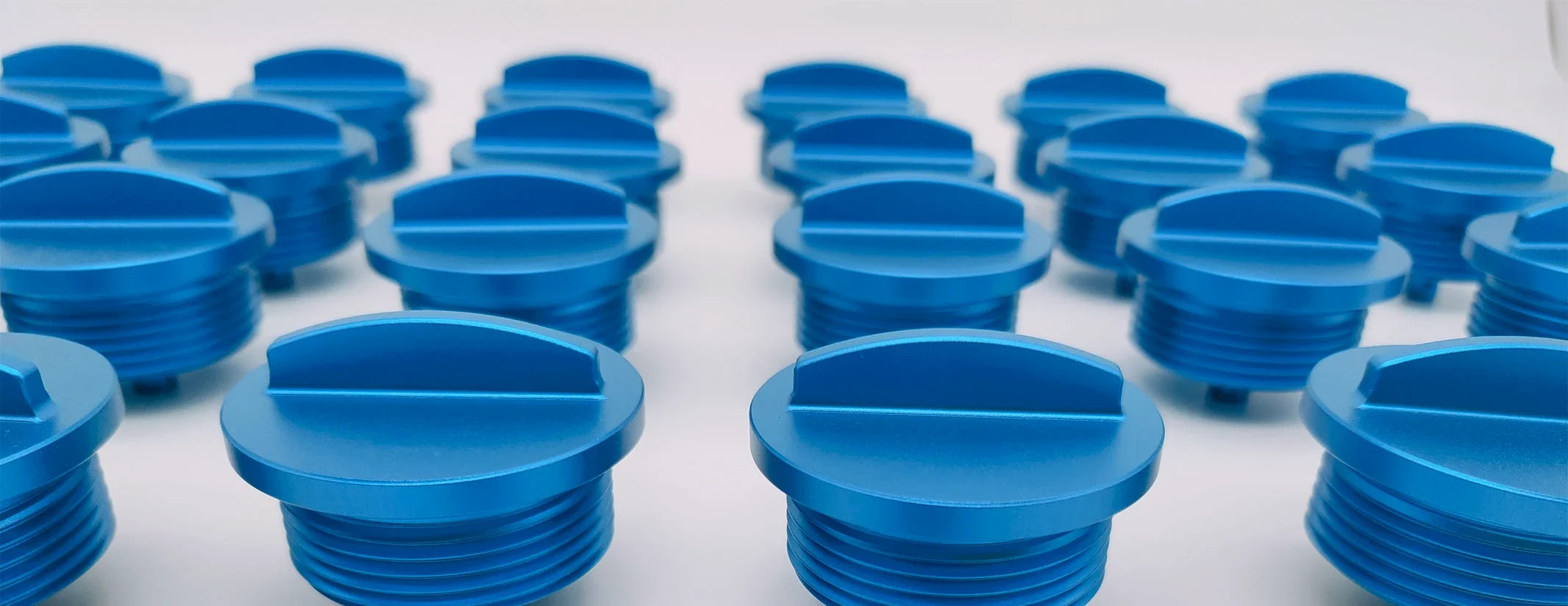
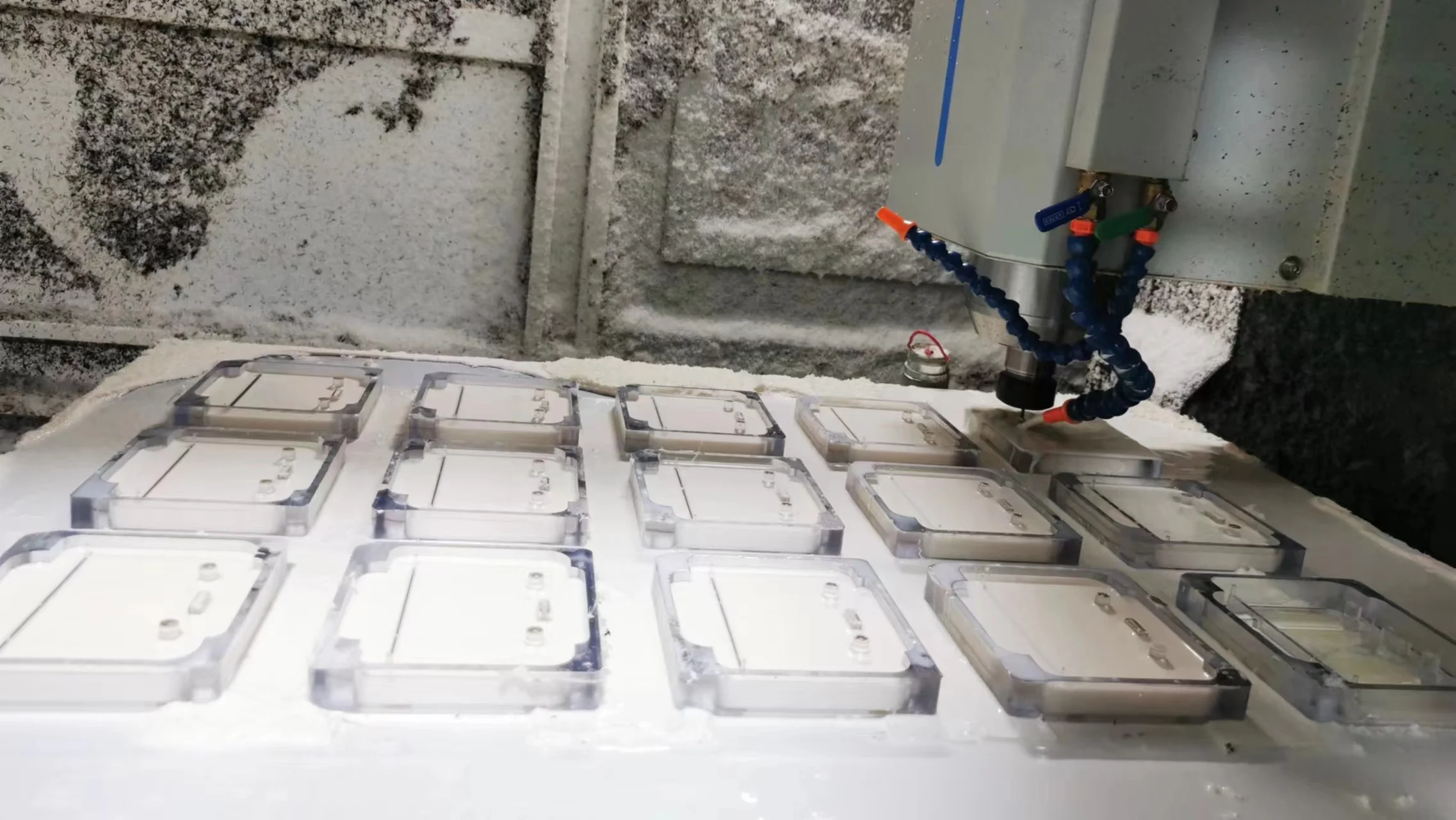
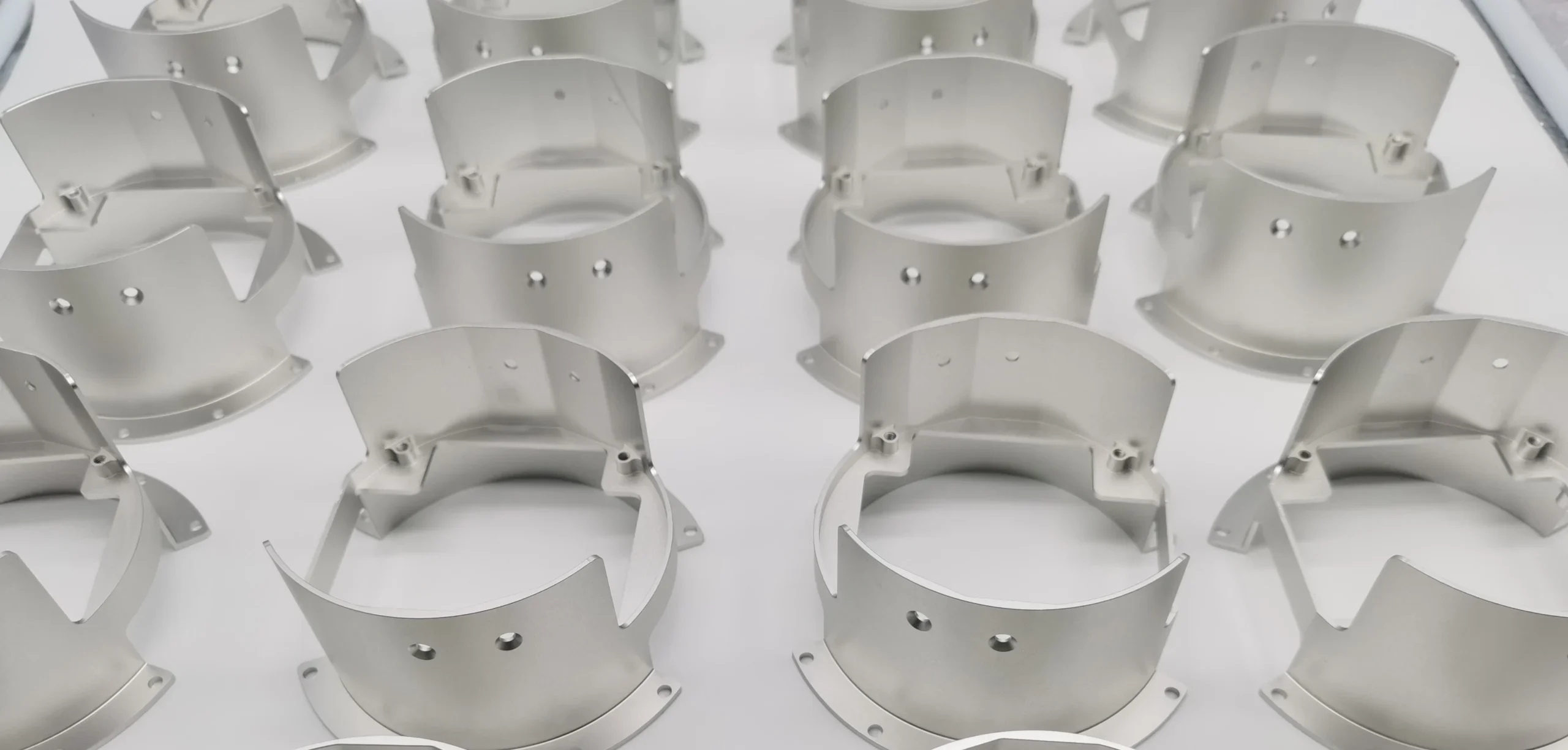
As we all know, high-quality CNC parts must be clean, smooth, and deburred as required, and be consistent to the designed geometries and dimension. CNC parts are usually required to be polished since there are always burrs left on the parts. And there are various polishing methods for CNC parts.
Vibration polishing is a kind of surface finishing methods that can smooth and brighten CNC parts by continual vibration between the parts and abrasive media. The article will provide a detailed guide of vibration polishing.
Key takeaways:
1️⃣ Vibratory polishing is ideal for precision and complex CNC parts.
2️⃣ The final surface quality depends heavily on media, machine type, and compound selection.
3️⃣ Vibratory polishing offers consistency and automation, but with trade-offs.

Vibration polishing, also called vibratory finishing, is a common surface finishing process that used vibratory energy, abrasive media, and polishing compounds within a bowl or tub to clean, deburr, brighten, smooth, and polish metal, plastic, and ceramic parts.
It is a type of mechanical polishing methods that can provide consistent and high-precision finishing. Therefore, vibration polishing is widely used for intricate parts with complex geometries, or mass parts with small size.
The core working principle of vibration polishing lies on the highly frequent vibration with low amplitude.
Once when the vibratory machine turns on, a vibratory motor would create a high-speed, orbital, or circular movement that forces the parts and abrasive media within the bowl or tub to continually rub against each other, creating a grinding or polishing action.
Compared with conventional tumbling processes, vibratory polishing would not subject parts to violent impacts, making it especially suitable for precision components and fragile parts.
There are three key tools that are required during the vibration polishing processes, including vibratory machines, abrasive media, and polishing compounds.
There are two common types of vibratory polishing machines. One is vibratory bowl finisher and the other is vibratory tub/trough finisher.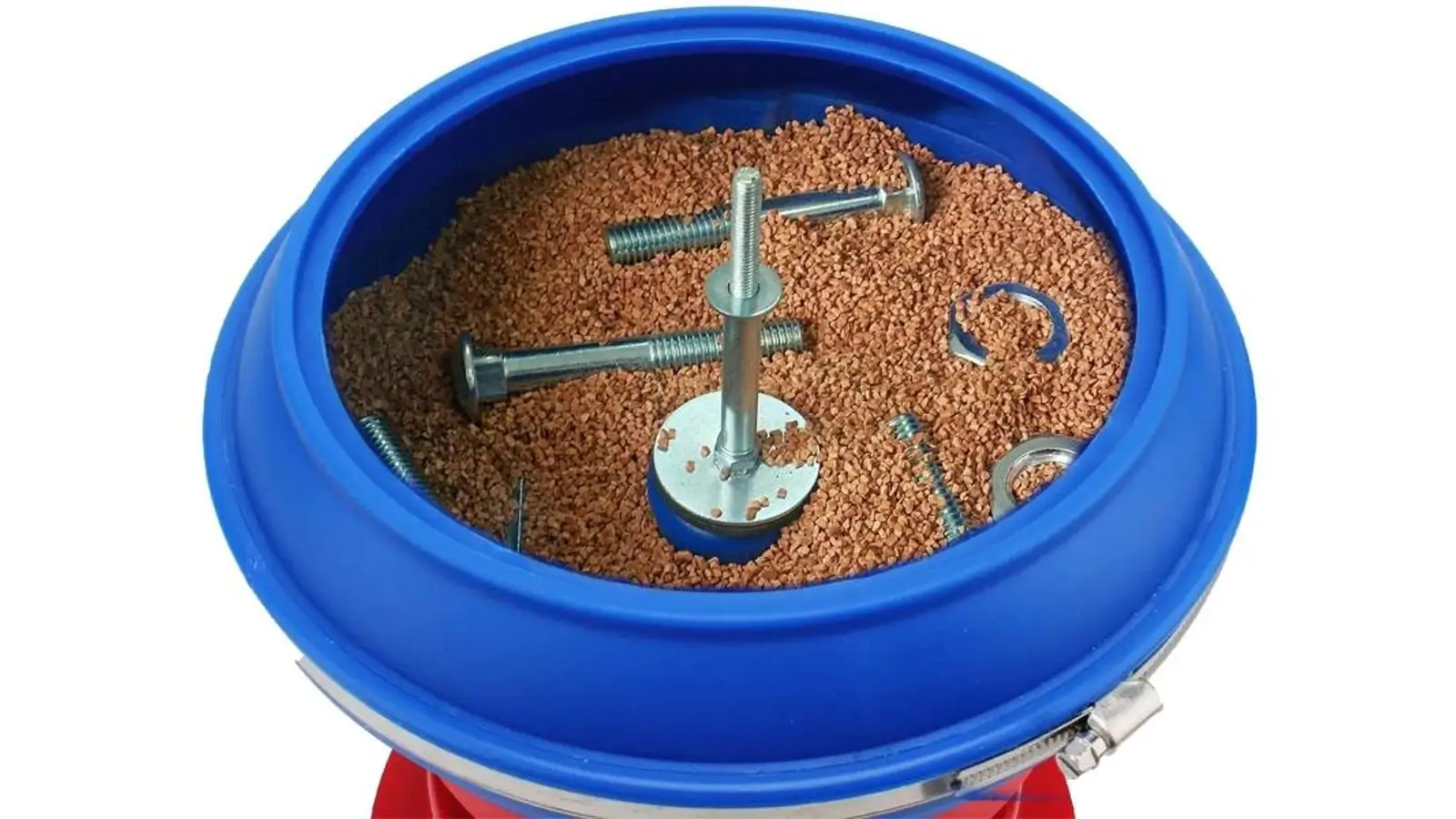
Vibratory bowl finisher is the most widely used vibratory polishing machine for industry. It is suitable for complex parts with small to medium size.
Vibratory bowl machine is typically applied to precision instruments, watches, medical devices, electronic components, and jewelry. Its basic compositions are as followed.
Container:
The container of a vibratory bowl finisher is typically ring-shaped(donut-like) and lined with thick polyurethane (PU) to provide wear resistance and reduce noise. And the spiral-shaped bottom surface is designed to promote tumbling motion of the parts during vibration.
Drive System:
The drive system to provide vibratory energy is located directly beneath the center of the container. It is a vertically mounted motor with off-center weights installed at both the upper and lower ends of the motor shaft. The upper off-center weight is to create horizontal circular motion while the lower offer-center weight is to create vertical tumbling motion.
Suspension Springs:
There are heavy-duty springs to support the entire bowl. They can confine the vibratory energy to the working zone and prevent its transmission to the base and the floor.
Vibratory Motion:
The parts and media circulate inside the bowl along a spiral flow path. They would spiral upward from the center toward the outer rim, then flow back down along the sidewall.
Vibratory tub finisher is much more suitable for mass parts with long shape and large size, or extremely fragile parts. It is typically applied to automotive components, hardware tools, standard parts, locks, and fasteners. Its basic compositions are as followed.
Container: The container of a vibratory tub finisher is a U-shaped trough.
Drive System: Compared with the vibratory bowl machine, the motor of the tub machine is typically mounted on the side or bottom of the trough and drives multiple eccentric weights via a long shaft.
Dividers: The controllable dividers are the key feature of a vibratory tub finisher. The inserted partitions can divide the trough into multiple independent compartments, preventing precision parts from colliding with each other during the polishing process.
Vibratory Motion: The parts and media move through the trough in a reciprocating linear flow pattern. They would be fed in from one end and discharged from the other, or circulated between both ends.
| Comparison | Vibratory Bowl Finisher | Vibratory Tub Finisher |
|---|---|---|
| Container | Bowl | Trough |
| Flow Pattern | Spiral circulation (center → outer edge → downward return) | Reciprocating linear flow (end-to-end) |
| Suitable Parts | Small, complex-shaped parts | Medium to large, regular/elongated parts |
| Finish Quality | Uniform and fine; ideal for precision polishing | High efficiency; risk of localized over-finishing |
| Processing Efficiency | Moderate; suitable for small to medium batches | High; ideal for large-volume continuous production |
| Automation | Discharge often requires shutdown; harder to automate | Continuous infeed/outfeed; well-suited for production lines |
| Footprint | Compact; efficient vertical space utilization | Longer horizontal layout; requires extended floor space |
| Noise | Lower noise; smoother operation | Higher noise, especially at high speeds |
| Maintenance | Easy to clean | Harder to clean; debris tends to accumulate at corners |
There are mainly four types of abrasive media for vibratory polishing.
Ceramic Media is the most widely used media in industrial applications.
With high hardness, strong cutting ability, and high density, they are typically used for deburring, edge rounding, rust removal, and heavy-duty grinding of ferrous metals such as steel, stainless steel, and hard alloys.
The common types of ceramic media cover cutting type and polishing type. The high cutting one contains more abrasive.
They are used for rapid material removal. The polishing one contains little abrasive with smooth surface. They are used for pre-polishing or brightening.
They are usually made by compressing fine abrasives with polyester resins.
Lighter than ceramic media, they provide gentle impact, which can prevent pitting on surfaces.
Plastic media are more suitable for non-ferrous metals such as aluminum, zinc alloys, copper, magnesium, and plastic parts.
Providing fine matte finish, they are ideal for surface preparation before plating or coating.
They are typically made from stainless steel or high-carbon steel. Steel media are typically used for bright polishing.
Through gravitational impact and friction, the metal surface undergoes plastic deformation, filling tiny pits to achieve a mirror-like finish. And they must be used with a specialized anti-rust polishing solution to prevent the steel media from rusting.
They are usually sued for dry polishing to achieve maximum brightness. Walnut shell powder and corn cob are the two of the most common organic media. They are usually used for final mirror-brightening of jewelry, eyeglass frames, and precision medical devices.
It is supposed to impregnate them with polishing wax or paste, which can polish the parts and absorb moisture and oils from them, leaving them dry and shiny.
Cutting Compounds:
Cutting compounds usually contain fine abrasive particles or acidic components to accelerate the abrasive action on the surface. They are typically used to remove heavy burrs and oxide layers.
Degreasing Compounds:
With highly surfactant content, they can provide strong emulsifying capability to remove oils, emulsions, and metal debris from the parts, preventing these contaminants from coating the media and causing media failure.
Burnishing Compounds:
Containing natural or synthetic soaps, they can form a very thin lubricating film on the surface. This helps to reduce deep cutting and instead perform surface burnishing. They are usually used during the final polishing step to enhance the metallic luster of the parts.
Passivation Compounds:
They are typically applied to rust-prone materials such as cast iron and carbon steel. They can form a protective layer on the metal surface.
To achieve good surface quality, it is important to operate the vibration polishing machine correctly. Right usage can also keep the machine in good condition and then prolong the service life.
The best steps of machine process and maintenance are as follows.
Step 1: The primary note is the environment. It is crucial to place the machine in the condition of proper temperature, humidity and clearness.
Step 2: The right installation is also important. The machine must be installed strictly in accordance with the manual regulations.
Step 3: It is supposed to operate the machine by people who is well trained and professional. The vibration frequency, voltage, and other parameters are all important during the polishing process.
Step 4: Aside from proper operation, the operator should also know about the maintenance. If the machine keeps working every day, it is better to check the parts, clear the barrel and lubricate the machine regularly. If the machine is not in use for long time, it is better to power on it for a period of time regularly and keep it dry.
The vibration polishing processes usually include four steps.
Step 1-Deburring: The first step is to remove rough edges, sharp points and heavy burrs by hard abrasive media.
Step 2-Smoothing: The second step is to level out the surface by softer abrasive media.
Step 3-Pre-polish: The third step is to smooth every last bump by fine media for even texture.
Step 4-Final Polish: The final step is to polish the part by walnut shell or corncob media until achieve a bright, clean, and shiny surface.
There are various pros and cons of vibration polishing. Depending on them, you can decide whether vibration polishing is suitable for the parts or not.
Compared with traditional barrel polishing, vibratory polishing applies more uniform and gentler forces on the parts. It does not involve violent rolling and impacts, which can properly preserve sharp edges, small features, and precision threads of the parts. In addition, it has virtually no effect on the part’s dimension.
As long as the proper media is applied, vibratory polishing can reach into grooves, holes, and complex internal cavities of the part. It can achieve excellent surface uniformity without obvious directional scratch marks.
A large vibratory finishing machine can process hundreds or even thousands of parts in a single run. And it can ensure uniform surface quality across each batch. With automatic separation screens, parts and media can be separated automatically, significantly reducing labor costs.
Compared with sandblasting or high-speed centrifugal finishing, vibratory polishing requires longer cycle times. If the surface has very deep scratches or heavy oxide scale, vibratory polishing alone may take several hours or even more than ten hours to achieve the desired result.
If the media size is not proper, the media may become lodged in holes or slots of the parts. Once jamming occurs, the media often has to be removed manually one by one, which would highly add cost of time and labor up.
For extremely thin sheet-like parts or plastic parts with very low density, the finishing quality of vibratory polishing is limiter. They would float on top of the media instead of entering the active contact zone, resulting in uneven finishing.
And for certainly heavy parts, they would sink to the bottom, leading to insufficient polishing and potentially causing wear to the polyurethane lining at the base of the machine.
Vibratory polishing machines would generate highly frequent noise and typically require sound enclosures. Additionally, wet polishing process would produce wastewater containing metal fines and chemical additives, which must be treated in accordance with environmental regulations.
Tip 1-Choose the Right Media:
It is critical to select the appropriate abrasive media for each polishing step. Too rough media may damage the parts while too soft media may leave burrs on the parts.
Tip 2-Choose the Right Media-to-Parts Ratio:
There are various media-to-parts ratios. It is better to choose the proper one for the parts.
The 0:1 ratio means no media within the machine, which can provide very aggressive deburring.
The 1:1 ratio is usually for rough surface, which is useful for castings. The 3:1 to 5:1 ratio is ideal for non-ferrous metals with moderate part contact.
The 6:1 to 10:1 ratio provides minimal contact, which is great for delicate parts.
And the 20:1 ratio is best for ultra-fine finishes, which is virtually on part-on-part damage.
Tip 3-Use Compounds Properly:
It is supposed to add proper compounds during the vibration polishing processes to clean and protect the parts or reduce dust. But don’t overuse.
Tip 4-Check the Machine Regularly:
Before turn on the machine, you should check the motor and springs correctly. In addition, since the media would wear out over time, you should check if them should be replaced.
Vibratory polishing is one of the most common polishing methods in industries. If the parts are complex, fragile, or in huge batch, vibratory polishing would be a good choice for excellent polishing performance.
Related blog: What is Magnetic Polishing?

5-Axis CNC machining is a manufacturing process that uses computer numerical control systems to operate 5-axis CNC machines capable of moving a cutting tool or a workpiece along five distinct axes simultaneously.

China is the best country for CNC machining service considering cost, precision, logistic and other factors. Statistical data suggests that China emerges as the premier destination for CNC machining.

Selecting the right prototype manufacturing supplier in China is a critical decision that can significantly impact the success of your product development project.

Machining tolerances stand for the precision of manufacturing processes and products. The lower the values of machining tolerances are, the higher the accuracy level would be.