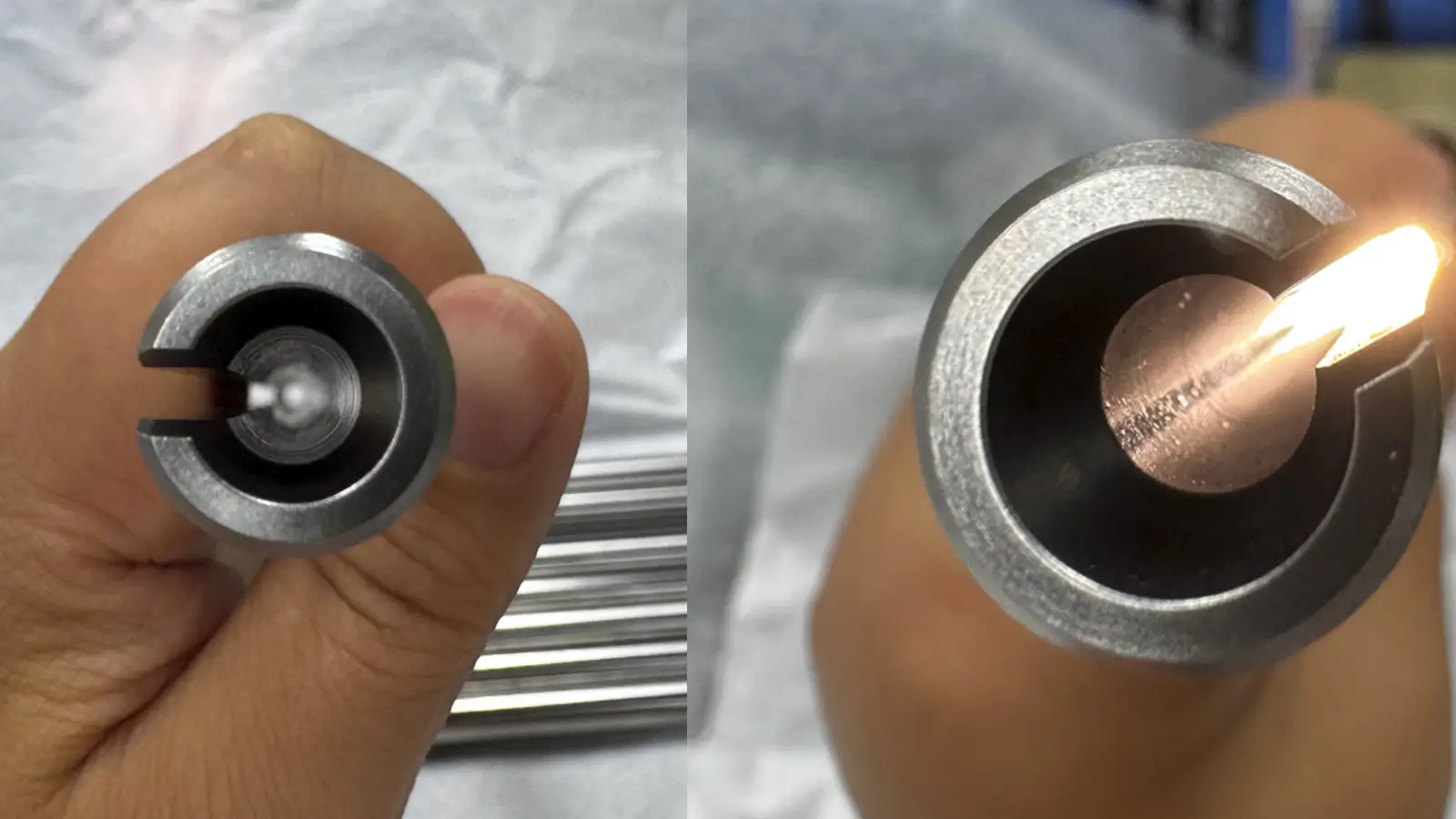
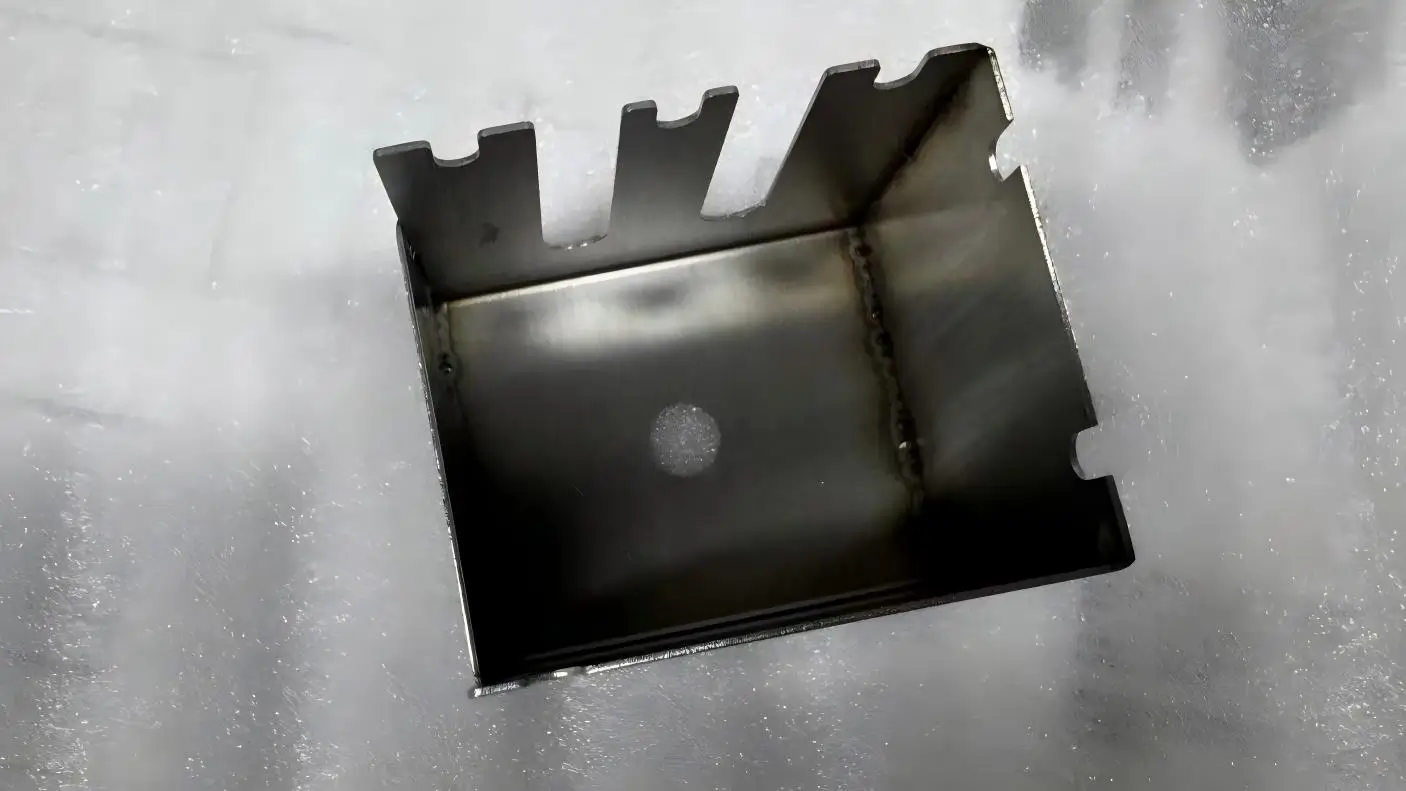
When it comes to excellent mechanical performance and minimal dimensional change, QPQ(Quench-Polish-Quench) is a recommended surface treatment for CNC machined components, especially that made of ferrous metals.
Standing out over excellent corrosion resistance, fatigue strength, wear resistance, and low surface distortion, QPQ is widely applied to iron and steel parts for defense, firearms, automotive, chemical industry, mechanical equipment and more.
This article will provide detailed guide of QPQ for CNC machined parts, including what is QPQ, how to do QPQ, what materials can QPQ apply to, as well as what are QPQ’s benefits and limitations.
Key Takeaways:
QPQ stands for Quench-Polish-Quench. It is a specialized thermochemical surface treatment designed to enhance the mechanical performance of ferrous metal parts, primarily steel and cast iron.
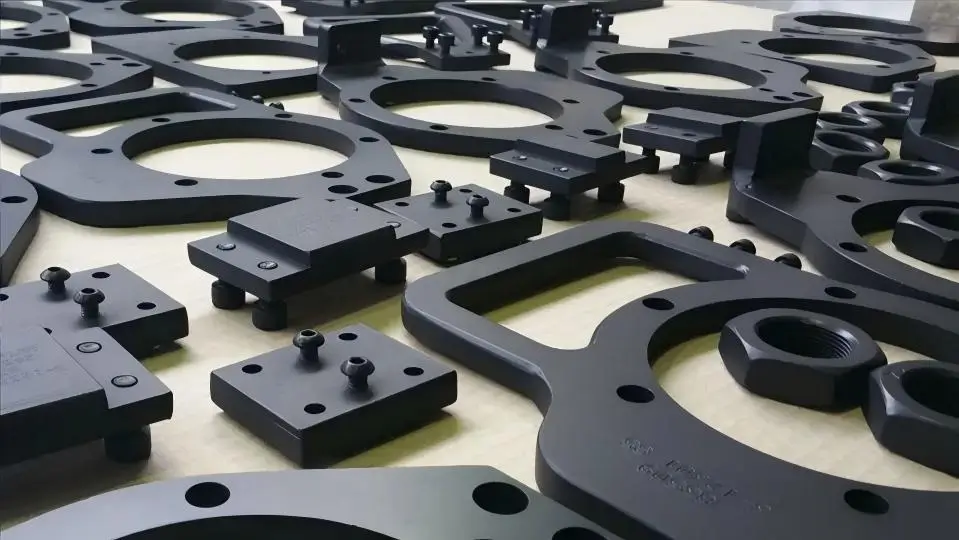
The name Quench-Polish-Quench directly refers to the three key steps of the surface heat treatment. The first “Quench” refers to salt bath nitrocarburizing, which is the most essential process of QPQ.
The “Polish” points to mechanical or chemical poshing process following the nitrocarburizing step. And the second “Quench” stands for a post-oxidation process that coats the parts with a black oxide protective layer.
In addition, QPQ is also referred to as salt bath nitriding, or by brand names such as Melonite, Tufftride, and Tenifer.
Unlike traditional hardening or plating, QPQ does not just a coating, but a diffusion process. It diffuses nitrogen, carbon, and oxygen into the metal’s surface to create a durable and high-performance composite layer.
QPQ coating typically results in a hard, matter black surface finish with minimal dimensional distortion. It makes workpieces much harder, more durable, more resistant to corrosion, and less prone to fatigue failure.
Therefore, QPQ is a popular surface treatment for precision CNC machined components where tight tolerance and long-term durability are always the primary requirement.
As a salt bath heat treatment, QPQ processing consists of nitrocarburizing, polishing, and secondary oxidation quenching as key steps to form a durable and uniform magnetite layer on metal surfaces. Below is a detailed step-by-step guide to the whole QPQ processing.
Before the parts enter any bath, they must be cleaned completely. Clean and smooth surfaces without any contaminants can ensure consistent treatment results.
Firstly, degrease and rinse the parts by proper alkaline solution and clean water to remove oil stains, dust, rust, and machining residues left from CNC processing or forging.
Residual grease and impurities will block salt bath penetration, causing uneven surface layers and poor finishing quality.
After multiple clean water rinses, dry the components completely to avoid water residue in subsequent high-temperature salt baths.
Next, preheat the cleaned parts at 300-350°C. This can evaporate internal moisture and stabilize metal microstructure. More importantly, it can prevent thermal shock during high-temperature nitrocarburizing.
The first quench is the core hardening stage of QPQ processing. Place the prepared metal parts into a high-temperature molten salt bath at 540-580°C.
The nitrocarburizing salt typically consists of balanced cyanate and carbonate compounds. During an immersion period within 60-120 minutes (depending on case depth required), active nitrogen and carbon atoms in the salt bath would gradually penetrate and diffuse into the metal surface.
This chemical reaction forms a dark gray, hard and compact epsilon iron nitride compound layer on the surfaces, with a typical thickness of 10-20 micrometers.
The newly formed layer can raise metal surface hardness to 900-1200 HV. Therefore, wear and fatigue resistance of the metal components are significantly enhanced.
After nitrocarburizing, remove the parts out for air cooling and initial hot water rinsing to wash off residual surface salt slag.
The polishing step determines the final surface smoothness. After the first quenching process, there would be tiny pores on the surfaces, with minor roughness and dull color.
Mechanical polishing such as vibratory finishing, centerless grinding, and lapping can smooth out the pores and burrs from the metal surfaces, without removing the hardened nitride layer.
Finally, the polished components can achieve smooth and uniform surfaces. The base surfaces provide the parts with tighter bonding of the following oxidation layer.
Although both the first quenching and the second one are salt bath nitriding, they have different functions for the QPQ coating.
The first quenching process provides the surfaces with excellent hardness and wear resistance, while the second quenching process gives brilliant corrosion resistance and final dark black finish.
Compared with the first salt bath nitriding, the post-oxidation is required to maintain low temperature and shorter time. Just immerse the polished components into an oxidizing salt bath at 400-450°C for 20-30 minutes.
The polished surfaces would fully react with oxygen in the molten salt and then form a dense and stable magnetite layer being 3-4 micrometer-thick.
This compact oxide layer finally provides the part with a uniformly black and matte finish. More importantly, it would seal all residual pores of the nitride layer and block any air and moisture erosion.
After secondary quenching, it is required to clean and dry the parts. Firstly, rinse the parts by hot clean water repeatedly to completely remove residual oxidizing salt from the surfaces.
Then dry the parts by hot air or a warm oven. No further sealing, painting, or oiling is required. You can also apply a light anti-rust oil to the surfaces for long-term storage.
Although QPQ finishing is a heat treatment that can brilliantly enhance surface mechanical properties, you cannot apply it to every metal component.
It is designed for ferrous metals because it works by diffusing nitrogen into the surface and forming a dense iron oxide layer.
And the material composition directly affects the thickness, hardness, finish uniformity, and corrosion resistance. The common metals compatible with QPQ are as follows.
Carbon steels are the primarily ideal base materials for QPQ. Low-carbon steels like AISI 1018 and 1020, medium-carbon steels and high-carbon steels such as AISI 1045 and 1060 are all popular materials for QPQ.
Containing stable iron-carbon microstructure, they can easily absorb nitrogen and carbon atoms during salt bath nitrocarburizing.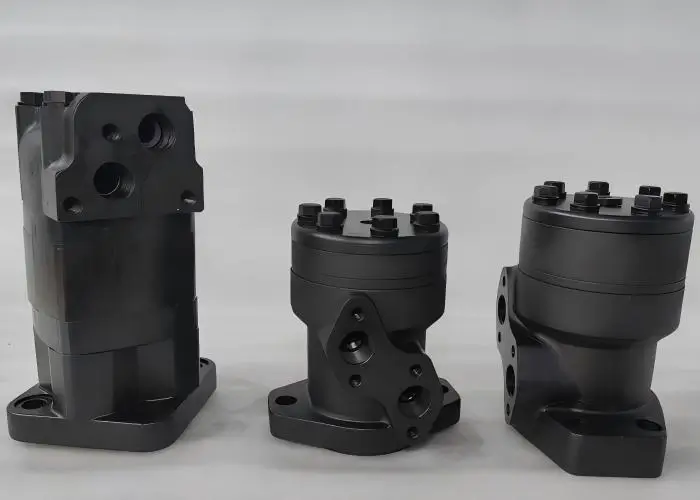
After standard QPQ quenching, polishing and oxidation, carbon steel parts form a uniform matte black surface. The treated parts then achieve a desired jump in surface hardness up to 50-70 HRC (depending on carbon content).
Their scratch resistance and rust-proof performance can also be well improved. And these components are widely used for shafts, gears, pistons, and fasteners.
Most common alloy steels are fully suitable for QPQ processing, including AISI 4140 steel, 4340 steel, 8620 steel, and manganese steel.
Containing a trace of alloying elements like chromium and aluminum, they react with nitrogen to form even harder nitrides. The alloy elements can also enhance the adhesion and density of the nitride layer.
Compared with carbon steels, alloy steels can obtain higher surface hardness and stronger fatigue resistance after QPQ treatment. This makes alloy steels the preferred material for heavy-duty mechanical parts.
Popular cast irons such as gray iron and ductile iron are all compatible with standard QPQ coating. Their high silicon and carbon content react well within salt bath nitrocarburizing.
QPQ treatment effectively seals the inherent porous structure of cast irons. The hardness of cast iron components treated through QPQ can be improved up to 45-55 HRC.
They are widely used for hydraulic valves, pump housings, engine blocks, and industrial rollers.
Common tool steels, including D2 steel, A2 steel and H13 steel, are excellent base materials for QPQ processing.
Tool steels require extreme surface hardness and anti-abrasion performance to withstand repetitive impact and maintain a sharp edge.
The formed compact nitride and magnetite dual layer effectively helps to reduce galling, improve part release and extend tool life.
QPQ coating can also be applied to stainless steels such as 304, 316, 410 and 420. But passive chromium oxide films on stainless steel surfaces would hinder salt bath penetration.
Before formal QPQ treatment, it is required to break the passive film by customized activation. Then the hardness can enhance to 55-70 HRC depending on tempering heat.
More importantly, attention to that QPQ will brilliantly increase the surface hardness of stainless stees, but it might slightly reduce the chemical corrosion resistance of the 300 series. It is best for where wear resistance is the priority.
As a surface finishing technology that is popularly applied to precision CNC machined components, QPQ heat treatment does have specific benefits on various aspects. Below is its common advantages.
One of the most outstanding advantages of QPQ treatment is its superior surface hardness and wear resistance. During the nitrocarburizing stage, ferrous metal workpieces form a hard iron nitride compound layer on the surface.
The surface hardness can reach 900-1200 HV. This hardened layer can effectively reduce friction, scratching, and mechanical abrasion during long-term cyclic operation.
Therefore, QPQ is commonly used for moving mechanical parts, tool accessories, and sliding components.
QPQ coating can also provide the parts with brilliant resistance to rust and corrosion that outperforms zinc plating, nickel plating, black oxide, powder coating, and even hard chrome plating.
Consisting of a hard nitride base layer and a dense Fe₃O₄ magnetite top layer, the unique dual-layer structure can fully seal surface tiny pores on metal parts.
This tight barrier can block oxygen, moisture, and salt spray from corroding the QPQ treated metals. Standard QPQ finished steel parts can pass hundreds of hours of salt spray testing.
This makes QPQ ideal for outdoor equipment, marine hardware, and parts working in humid and corrosive environments.
Compared with traditional heat treatments that would usually cause parts to warp or crack, QPQ is a relatively low-temperature process.
During the QPQ processing, the physical structures of parts would not be changed since the temperature stays below the transformation point of most steels.
This avoids expensive post-processing grinding or straightening that traditional heat treatment often requires. Therefore, it is popular for high-tolerance molds, precision automotive components and miniature fasteners.
QPQ can increase the endurance limit of steel components. Since the diffusion of nitrogen atoms would create compressive strains on the metal surfaces, the fatigue resistance of treated components can be improved by up to 20%-40%.
Consistent surface appearance is critical for hardware products that require both good mechanical performance and appealing decoration. QPQ processing offers a smooth and uniform matte black finish without streaks, color fading, burrs, or exposed metal spots.
Different from glossy electroplated black finishes, the natural matte black texture of QPQ coating is more resistant to scratch and will not peel off over time.
This makes QPQ perfect for consumer hardware, automotive exterior parts, and mechanical decorative components.
Compared with electroplating and spraying that form an external layer on the metal surface, QPQ treatment is not a simple coating process. The hardened layer is formed by chemical penetration and metallurgical bonding with the substrate.
Therefore, the integrated layer will not peel, flake, or separate from the base metal even under continuous friction and impact. The stable bonding reduces cost of frequent part maintenance and replacement.
While QPQ offers good durability, precision, and corrosion resistance over electroplating, powder coating, and traditional oxide finishing, it still has distinct limitations in material compatibility and appearance options.
Below is the common disadvantages of QPQ.
The primary limitation of QPQ coating is its strict material restrictions. QPQ relies on salt bath nitrocarburizing reactions that only work stably on ferrous metals.
Non-ferrous materials including aluminum alloys, copper, brass, zinc, and magnesium cannot form effective nitride and magnetite layers during QPQ treatment.
Even for stainless steel, it is required to apply extra activation pre-treatment and customized parameters to achieve qualified results.
QPQ finishing only produces a consistent matte black surface. Unlike powder coating and anodizing that support custom colors and gloss levels, QPQ has fixed aesthetic performance.
In addition, QPQ cannot create high-gloss mirror surfaces. Its inherent matte texture limits its application on products that require bright and reflective appearances.
Although QPQ causes nearly no dimensional distortion, it is still ideal for ultra-thin sheet metal, tiny fragile parts, and extremely fine precision components that are prone to bending, cracking, or surface damage during polishing and furnace loading.
Benefitting from its excellent durability, abrasion resistance, precision and corrosion resistance, QPQ finishing is widely applied to fields such as automotive, machinery, hardware, hydraulic, and aerospace industries.
Automotive industry is one of the most popular applications of QPQ. Automotive parts required strict tolerance control, strong fatigue resistance, and stable performance under long-term vibration, friction, and humid environments. QPQ treatment meets all of these demands.
Common QPQ treated automotive components include brake system components, engine fasteners, suspension parts, throttle valves, and hardware accessories.
Hydraulic and pneumatic parts such as valve bodies, piston rods, cylinders, and sealing accessories require extremely high precision and anti-corrosion performance. Even tiny dimensional deviations or surface rust can lead to oil leakage, air leakage, and system failure.
QPQ processing forms a dense protective layer on the surface of hydraulic metal parts without changing component tolerances. It resists corrosion caused by hydraulic oil, water, and humid environments, and meanwhile reduces friction between moving parts.
Standard fasteners including bolts, screws, nuts, and pins are essential consumables for almost all mechanical equipment. Precision fasteners treated by QPQ have stronger surface hardness, better slat spray resistance, and tighter tolerances resisting loosening.
Molds, cutting tools, and stamping dies require high surface hardness, good release performance, and low friction. Traditional heat treatment easily causes mold deformation, while ordinary coating layers peel off after repeated use.
QPQ surface treatment hardens the mold surface while retaining the internal toughness of mold steel. The smooth compact oxide layer reduces friction between the mold and raw materials.
QPQ effectively reduces tool wear and prolongs the service life of industrial molds and cutting tools.
Outdoor engineering parts and marine hardware face harsh working conditions, including strong humidity, salt spray, and ultraviolet erosion, which easily cause metal oxidation and corrosion.
QPQ finishing provides desired salt spray resistance. It can withstand long-term coastal and outdoor exposure without rusting, fading, or surface peeling.
Common applications include marine mechanical components, outdoor hardware, , pipeline connectors, and engineering support parts.
All in all, QPQ(Quench-Polish-Quench) is a useful heat treatment working by salt bath nitrocarburizing followed by polishing and oxidation. Due to its excellent abrasion resistance, durability, fatigue strength, and carrion resistance, it is widely used for various CNC machined components.
If you still have any confusion about QPQ, contact us freely.
The typical thickness of a QPQ coating is between 10 and 30µm, among which the nitride layer is about 10-25µm and the oxide layer is about 1-3µm.
This is the region beneath the compound nitride layer where nitrogen has diffused into the base metal. The depth of this zone is usually 100µm to 500µm.
No, dyeing or color painting cannot be directly applied to QPQ coating. You can dye the parts treated by QPQ after coating a Cerakote coating on the oxide layer, but the hardness would be decreased.
No, QPQ cannot be applied to non-ferrous metals. It is specifically designed for ferrous metals because the entire process relies on the chemical reaction between nitrogen and iron.
No, QPQ cannot be applied to parts that are already powdered or painted. QPQ processing is a thermochemical treatment that requires direct contact with the bare metal atoms to work.
No, you cannot repair a damaged QPQ layer because it is a chemical change to the metal surface. But you can reprocess the entire part to restore the coating after completely removing the remaining layer.

5-Axis CNC machining is a manufacturing process that uses computer numerical control systems to operate 5-axis CNC machines capable of moving a cutting tool or a workpiece along five distinct axes simultaneously.

China is the best country for CNC machining service considering cost, precision, logistic and other factors. Statistical data suggests that China emerges as the premier destination for CNC machining.

Selecting the right prototype manufacturing supplier in China is a critical decision that can significantly impact the success of your product development project.

Machining tolerances stand for the precision of manufacturing processes and products. The lower the values of machining tolerances are, the higher the accuracy level would be.