Home » Blog » Why Production Time Matters in Prototype CNC Parts Manufacturing?

Why Production Time Matters in Prototype CNC Parts Manufacturing?

By Lucas Lo

Published: Oct. 31.2025

Table of Contents

    Production time, or prototype lead time, is critical in CNC manufacturing as it shapes the entire product development cycle.

    Whether you’re using CNC Milling Services for complex prototypes or CNC Turning Services for cylindrical parts, the efficiency of each process directly impacts overall project timelines.

    Shorter lead times enable faster design iterations, reducing R&D costs and minimizing errors before mass production.

    A quick prototyping process accelerates time-to-market, helping companies capture early market share and stay ahead of competitors.

    It also allows more testing and refinement, improving product reliability and customer satisfaction.

    Additionally, efficient prototyping speeds up tooling validation and process optimization, enhancing overall manufacturing efficiency for large-scale production.

    Infographic showing the rapid path from design to market, highlighting how fast prototyping helps companies gain a competitive edge

    Why Production Time Is Critical in CNC Prototype Manufacturing?

    Production time, or prototype lead time, is paramount in CNC manufacturing as it dictates the speed of the entire product development cycle.

    • R&D Cost Control: Shorter lead times enable faster design iterations, meaning errors are identified and corrected earlier. This significantly reduces R&D costs associated with labor, overhead, and materials, as fixing a design in the prototype stage is vastly cheaper than fixing it in mass production.
    • Market Entry & Competitive Edge: Speed is key to winning the market. A fast prototyping process ensures a quick time-to-market, allowing companies to gain the first-mover advantage, capture early market share, and quickly capitalize on trends before competitors do.
    • Customer Satisfaction: Rapid iteration allows for more thorough testing and refinement, resulting in a higher quality, more reliable final product. When customer feedback is incorporated quickly, it boosts satisfaction with the final release.
    • Manufacturing Efficiency: The prototyping phase serves as a trial for production. Fast prototyping forces strong Design for Manufacturing (DFM) practices and accelerates the validation and optimization of tooling and production processes, directly improving overall manufacturing efficiency when scaling to high volume.

    How Long Does It Take to Produce Prototype CNC Parts?

    The typical production time (lead time) for prototype CNC parts is often 2–7 business days.

    However, with rush services for simple geometries and readily available materials, this can be as fast as 1 day.

    Conversely, for highly complex parts or unique materials, the lead time can extend to 2–4 weeks.

    FactorDescriptionImpact on Lead Time
    MaterialAvailability (stock vs. special order) and machinability (e.g., aluminum machines faster than titanium).Shortens or lengthens raw material sourcing time and machining cycle time.
    Design ComplexityParts with intricate geometries, tight tolerances, many features (pockets, holes), or multi-axis requirements.Requires longer programming time, more machine setup, and slower cutting speeds.
    Post-ProcessingSecondary operations like heat treatment,Aluminum Anodizing Services, anodizing, plating, or complex polishing.Often involves third-party vendors and can add several days or weeks to the schedule.
    QuantityWhile prototypes are low volume, a larger batch still requires more total machine time.Increases overall cycle time, but the setup time is amortized over more parts, making the per-part time efficient.

    Key Parameters That Influence CNC Machining Speed

    CNC machining speed and efficiency are primarily controlled by three interdependent parameters, which must be carefully balanced for optimal results:

    1.Tool Rotation Speed

    • What it is: How fast the cutter spins against the material.
    • Impact: Determines the rate of material removal. If it’s too fast, it creates excessive heat, rapidly dulling the tool and potentially warping the part.
    • Balance: Must match the material being cut (e.g., steel requires slower speeds than aluminum).

    2.Tool Travel Speed

    • What it is: How quickly the spinning cutter moves across or through the material.
    • Impact: Controls the thickness of the chip being cut. Too fast results in a poor, rough surface finish and can cause the cutter to break.
    • Balance: A slower travel speed is necessary for achieving high precision and a smooth, final surface.

    3.Depth of the Cut

    • What it is: How much material the tool removes in a single pass.
    • Impact: Taking deep cuts removes material very quickly (Roughing), which saves time but puts maximum stress on the machine. Taking shallow cuts (Finishing) is slower but essential for achieving tight tolerances and high accuracy.
    • Balance: Operators start deep (for speed) and finish shallow (for accuracy).

    The Goal: The CNC process is about efficiently balancing these three controls to maximize production speed while strictly maintaining the required part quality.

    Optimizing CNC Milling for Faster Prototyping

    To achieve rapid CNC prototyping, shops focus on optimizing two core areas: toolpaths and automation.

    Partnering with a provider offering Precision CNC Machining Services ensures these optimizations translate into higher accuracy and reduced cycle times.

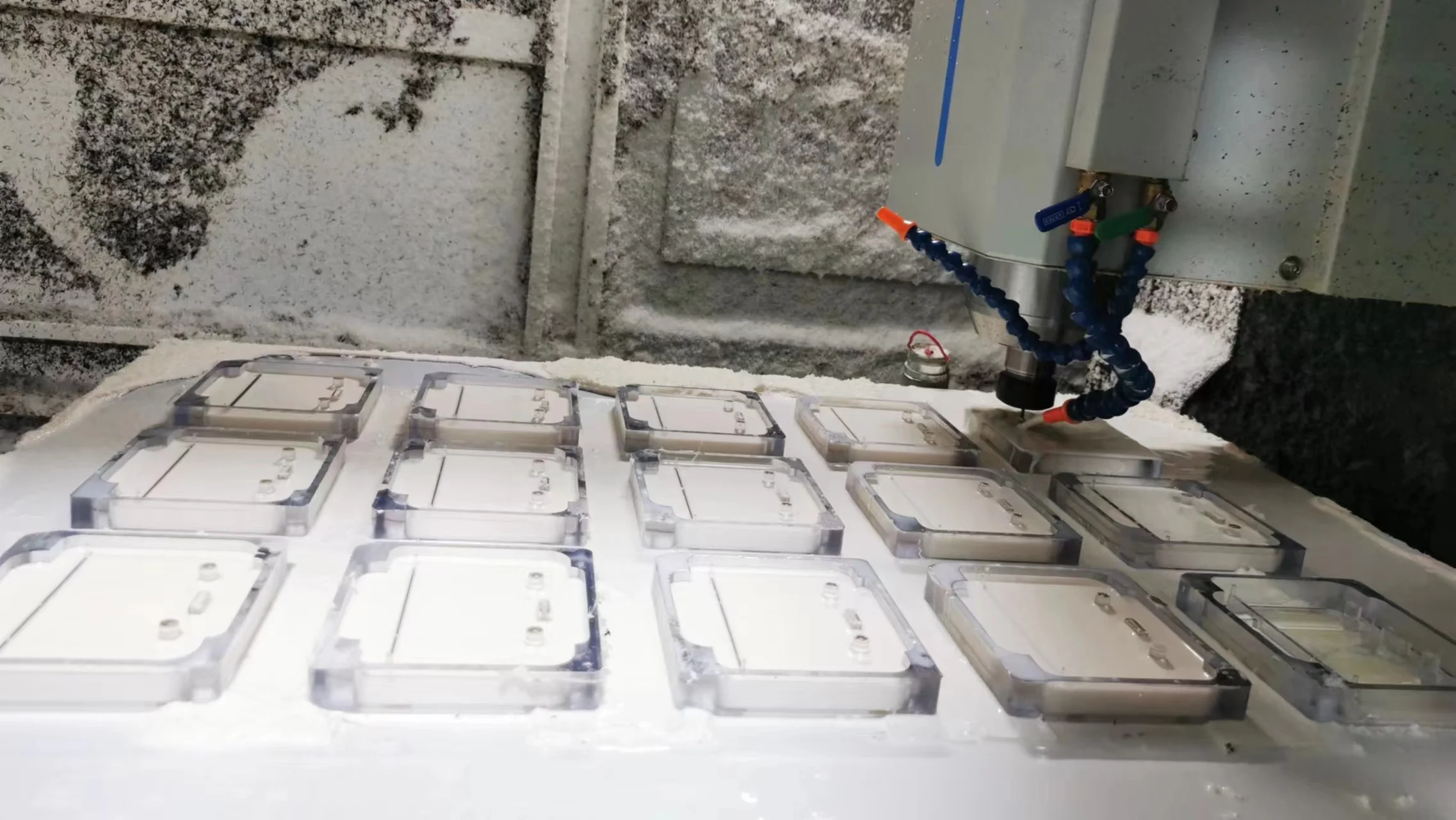
    CNC cutting tool machining a part, showing the impact of tool rotation, travel speed, and depth of cut on machining efficiency

    1. Toolpath Optimization

    Advanced programming techniques are crucial for speed.

    Instead of traditional straight cuts, modern CNC milling uses High-Efficiency Milling (HEM) toolpaths, which often feature:

    • Constant Tool Engagement: The cutter maintains consistent contact with the material, allowing for sustained, aggressive speed without stressing the tool.
    • Trochoidal Milling: The tool makes smooth, circular movements rather than sudden turns, which dramatically reduces heat and vibration, leading to faster feed rates and a longer tool lifespan.

    2.AI and Automation

    Automation and Artificial Intelligence (AI) improve efficiency by reducing non-cutting time:

    • Automated Fixturing/Loading: Systems rapidly swap out workpieces and tools, maximizing machine uptime.
    • AI Programming: AI can quickly analyze part geometry to generate the most efficient, collision-free toolpaths much faster than a human programmer.

    3.Real-World Trade-Off

    Optimization is a balancing act between speed and durability.

    • Example: You could increase cutting speed by 20% to finish a part faster, but this might reduce tool life by 50%.
    • Solution: Optimization software calculates the perfect balance point, finding the fastest possible speed that allows the tool to complete the entire job without replacement, ensuring the overall prototype lead time is minimized.

    Lead Time Optimization & Prototyping Efficiency

    Shorter CNC lead times (the time from order to delivery) are essential because they accelerate the product testing and iteration loop.

    A 2-day lead time allows engineers to test and refine a design multiple times in a week, instead of just once, drastically speeding up the overall time-to-market.

    FeatureCNC Machining3D Printing (Additive)
    Speed AdvantageFaster for large, solid parts and higher batch quantities (e.g., 50+).Faster for small, intricate parts and single, low-cost iterations.
    Part QualitySuperior material strength, tightest tolerances (±0.025mm), and final production materials.Lower strength; tolerances are often wider; great for form/fit checks.
    Best Used ForFunctional prototypes requiring final material properties and high precision.Early-stage concepts and visual models where speed and complexity are key.

    Tips to Reduce Delays in CNC Production

    Delays are often caused by issues before the machine even starts cutting. To minimize them:

    • Prioritize DFM (Design for Manufacturability): Simplify part geometry to reduce complex setups and machining time. Avoid unnecessary features or overly tight tolerances.
    • Choose Standard Materials: Select common materials (like Aluminum 6061) that are readily stocked and machine quickly.
      For most prototypes, opting for an As Machined Surface Finish can save additional time compared with extra polishing or coating processes.
    • Minimize Setups: Design the part to be machined with the fewest possible machine setups (often using 5-axis machines), eliminating manual re-orientation time.
    • Optimize Communication: Provide the manufacturer with complete files and clear specifications up front to avoid quoting delays and back-and-forth clarifications.

    Why Choose Our CNC Machining Services?

    ECOREPRAP focuses on maximizing speed and quality assurance to accelerate the product development cycle for various demanding industries.
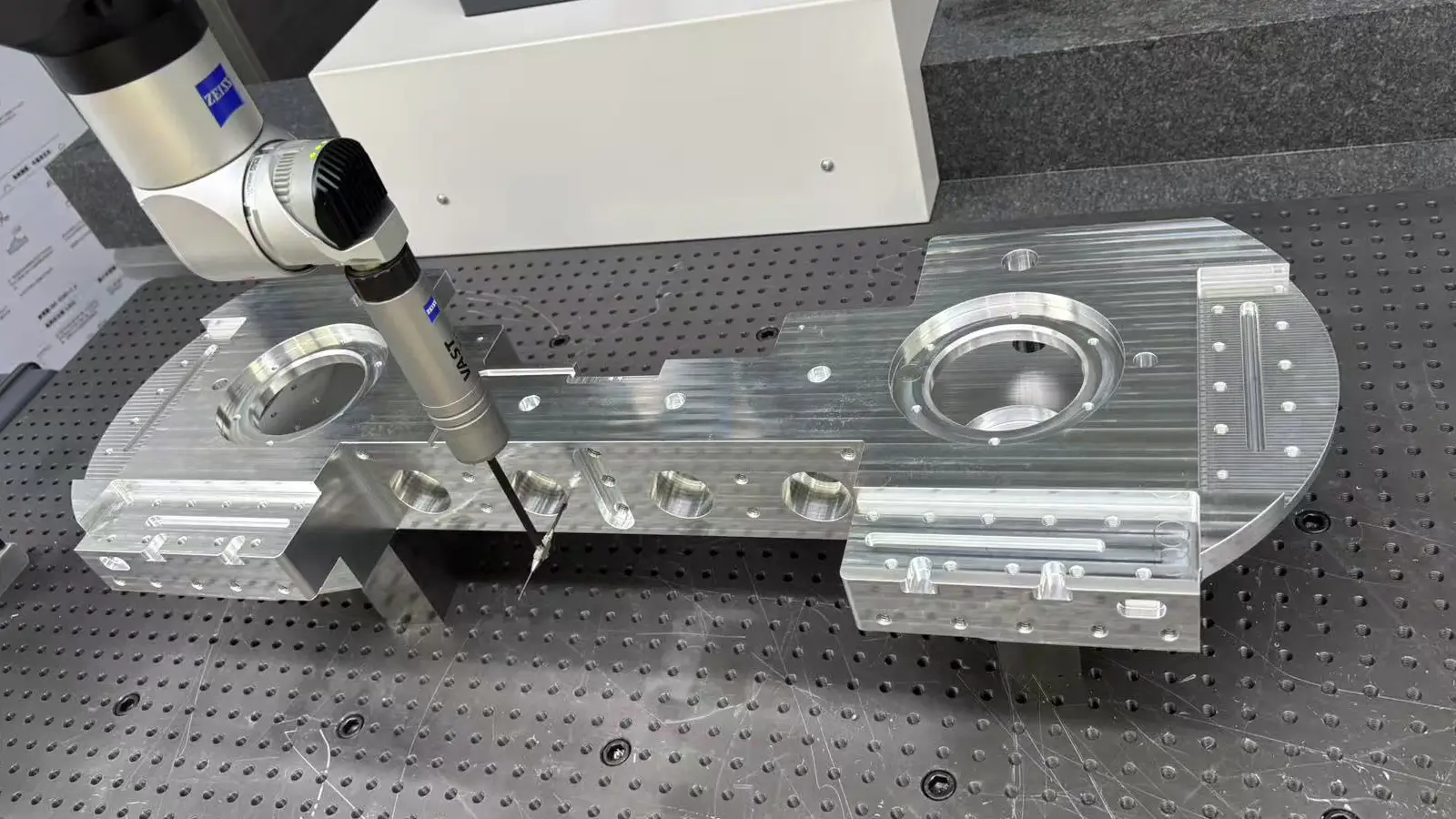
    ECOREPRAP CNC workshop with multiple machines operating, showing high-quality production and ISO certification

    1.Speed and Efficiency

    • Rapid Turnaround: ECOREPRAP provides fast quotes (often within 24 hours) and production lead times as quick as 3 to 7 days, enabling customers to rapidly validate designs.
    • Case Example: Through optimized manufacturing processes and strong engineering support, the company has demonstrated the capability to significantly reduce prototype delivery time, in some cases by as much as 40%, compared to industry standards.

    2.Quality and Capability

    • In-House Equipment: Utilizing in-house multi-axis CNC machinery ensures full control over the manufacturing process, from start to finish, supporting high precision (down to general ISO 2768-mk tolerances).
    • ISO Quality Assurance: A strict quality management system, backed by ISO certifications (including ISO 9001), guarantees consistent quality, dimensional accuracy, and adherence to required standards across every production batch.

    3.Industry Expertise

    The company leverages its precision manufacturing capabilities to serve clients in high-stakes fields that require superior quality and reliability:

    • Automotive
    • Aerospace
    • Electronics
    • Robotics

    Choosing ECOREPRAP CNC Machining Services means partnering with a manufacturer committed to seamlessly blending speed (fast quotes, delivery in as fast as 3 days) with rigorous quality assurance (ISO certification, in-house production).

    Whether your project is in the rapid prototyping stage or requires low-volume production, we are equipped to provide robust support in critical industries like automotive, aerospace, and electronics.

    Conclusion

    ECOREPRAP’s commitment to fast quotation and rapid production turnaround provides a significant competitive edge, allowing you to reduce time-to-market by up to 40%.

    Combined with in-house ISO quality assurance, we ensure your critical components for the Automotive, Aerospace, and Electronics sectors are delivered quickly and to specification.

    Ready to accelerate your product development? Request a rapid CNC prototype quote today!
    Lucas

    Lucas is a technical writer at ECOREPRAP. He has eight years of CNC programming and operating experience, including five-axis programming. He’s a lifelong learner who loves sharing his expertise.

    Learn More about Lucas.

    Other Articles You Might Enjoy

    5 axis CNC machining equipment photo

    What is 5-axis Machining? A Complete Guide.

    5-Axis CNC machining is a manufacturing process that uses computer numerical control systems to operate 5-axis CNC machines capable of moving a cutting tool or a workpiece along five distinct axes simultaneously.

    simultaneous 5 axis machining aluminum

    Which Country is Best for CNC Machining?

    China is the best country for CNC machining service considering cost, precision, logistic and other factors. Statistical data suggests that China emerges as the premier destination for CNC machining.

    5 axis cnc milling machining services

    Top 5 Prototype Manufacturing China

    Selecting the right prototype manufacturing supplier in China is a critical decision that can significantly impact the success of your product development project.

    bladed disks (blisks) check by CMM

    CNC Machining Tolerances Guide

    Machining tolerances stand for the precision of manufacturing processes and products. The lower the values of machining tolerances are, the higher the accuracy level would be.
    Let's get your projects started, together!

    Get custom parts machined in high quality, delivery on time.